Table of Contents
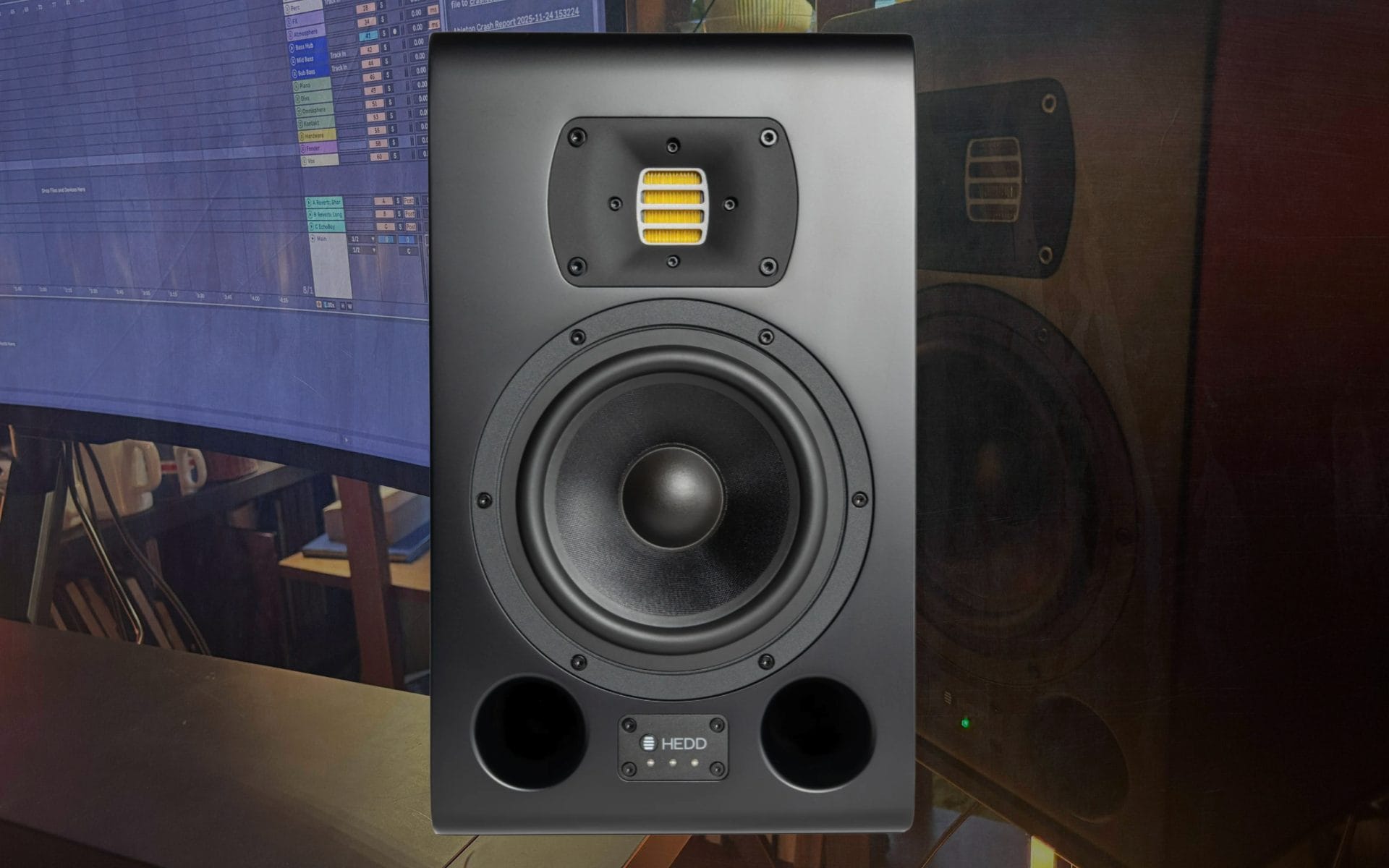
When I got my hands on a pair of HEDD TYPE 07 A-CORE monitors, I wanted to take as direct an approach to a review as possible and focus primarily on the most important thing we should be thinking about when upgrading the sound in our studio.
My first focus for the first couple of months of using these monitors was solely on being mindful of everything I could now hear in my mixes that I had been blind to with the previous monitors I used (iLouds and the KRK Scott Storch monitors as a backup reference pair).
HEDD TYPE 07 A-CORE Monitors First Impressions
I considered my iLouds some of my favorite monitors I had ever mixed on, and also my first pair of non-beginner monitors, having used KRK RKT Fives basically since I started making music over a decade ago. HEDD TYPE 07 A-CORE monitors are arguably another step above the rung from high-quality mid-tier monitors like the iLoud MTM MKIIs (The HEDD TYPE 07 A-CORE costs $822 per monitor where as the MTM MKIIs cost less than that much for a pair on average), but not as expensive as some of the creme-of-the-crop offers from HEDD, which can run you $3,000 or more.
The bump in clarity and quality was immediate and could be felt as much as heard within the first few minutes of firing these up. I caught myself forgetting that I was testing new monitors at all, simply because I was getting sucked into the world of the mixes in a way that – and pardon the editorialization on this – I had never experienced before.
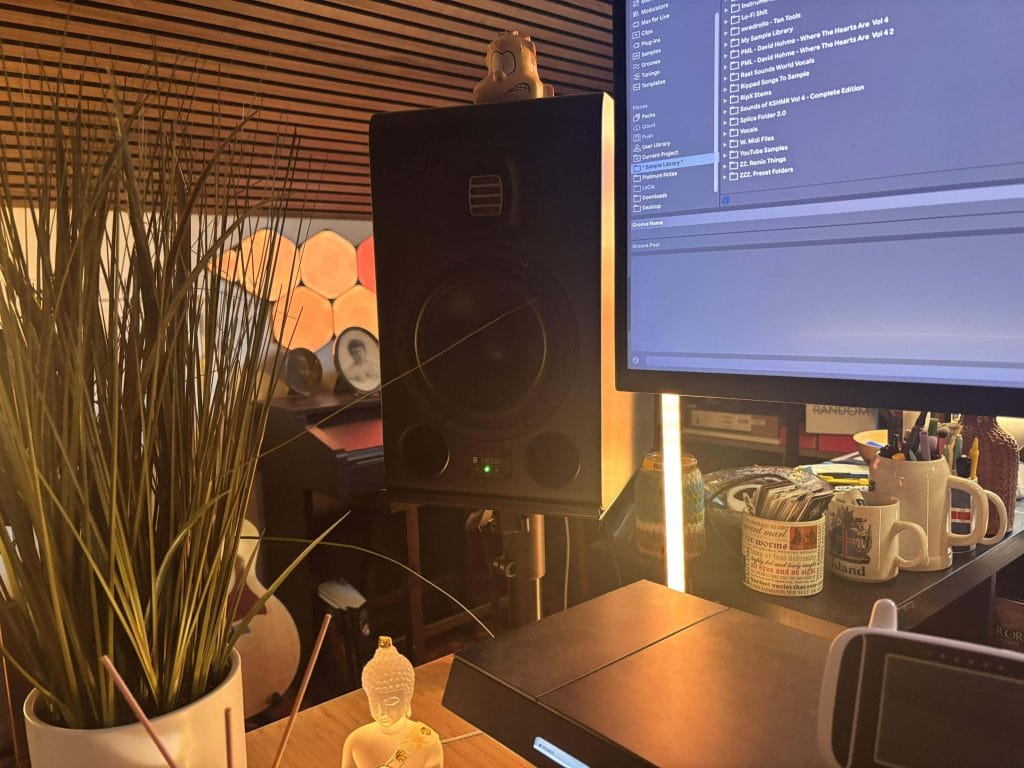
Monitors are a product you need to take your time with, though, since it takes a while for your ears to calibrate themselves to the new monitors in your studio.
Still, now that I’ve been using these things every single day in the studio for the better part of the last few months, I think I am more than ready to share my complete and comprehensive thoughts on them. Each time I sat down, I felt the speakers helped me stay locked into the material. They gave me a clear picture of the mix and made it easy to trust.
That trust is important because it reduces hesitation during creative work. The more I used them, the more I understood that this line aims to provide producers with a direct, accurate monitoring tool that punches far, far above its weight and price point and may be one of the best consumer-priced pairs of monitors you can buy for your studio.
Editor’s Choice Award
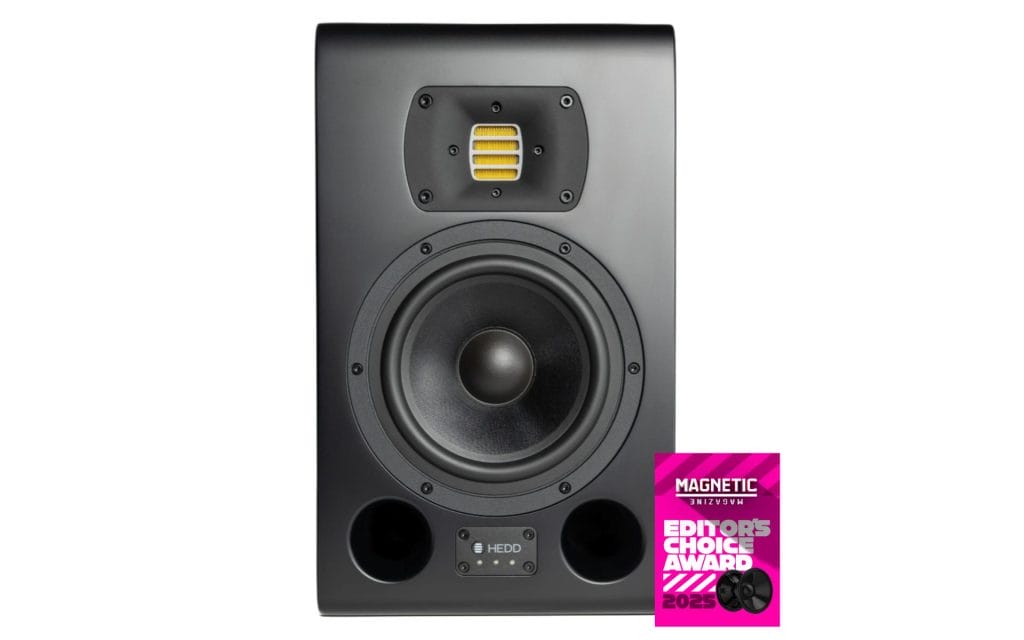
The HEDD TYPE 07 A-CORE snagged the Editor’s Choice Award because it delivered a level of clarity and reliability that is almost unmatched this year in 2025.
The low self-noise and clean AMT response gave the monitors an edge in vocal editing, spatial work, and detailed production tasks, and I also appreciated how steady the low end stayed in a small studio, making bass work easier than expected. The build quality, front-port design, and flexible inputs helped the monitors fit easily into multiple workflows without slowing anything down.
After producing over three full EPs on these, from creative idea generation all the way up to final masters to be released next year, the TYPE 07 A-CORE proved itself as a tool that supports creators with dependable performance every time it powers on.
So now let’s get into the nitty-gritty on every detail we loved (and maybe some room for improvement) in this affordable, high-bang-for-your-buck studio monitor.
Build Quality and Design
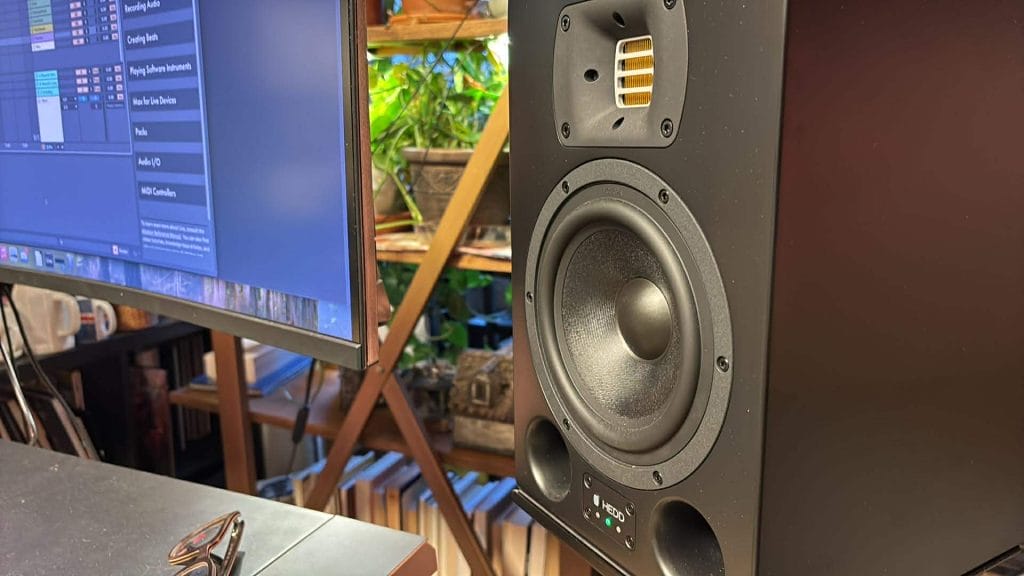
The build quality hit me first, right as I was unboxing these in the studio.
The cabinets feel sturdy and dense when you lift them, which sets the tone for the experience. Placing them on my stands gave me confidence that they could handle high volumes and long sessions without vibration or unwanted movement.
The honeycomb woofer and AMT tweeter sit in a layout that matches the rest of HEDD’s lineup, and everything feels tightly assembled and balanced, and also makes them almost instantly recognizable.
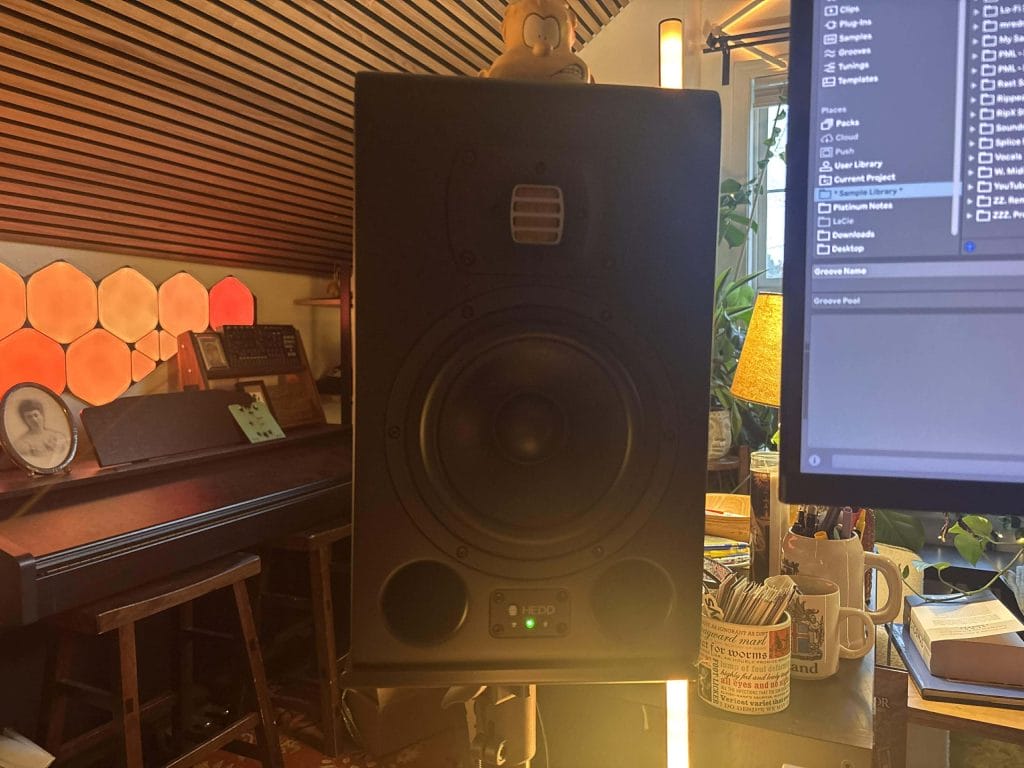
Connecting them was easy. I tried XLR first, but opted for balanced cables for the long term, which is what I use for most of my gear. I tested RCA later out of curiosity, but I feel like RCA cables are more for HiFi listeners than studio engineers and producers, so I didn’t dive too manically into that.
Everything locked in without any issues, and I was up and running with these things in less than ten minutes. The gain control and shelving EQ switches on the back are straightforward to understand at a glance and helped me dial these into how I wanted them really easily. I also ended up using the front standby switch more than I expected because it made it simple to pause work when I stepped away.
The Analog Signal Path
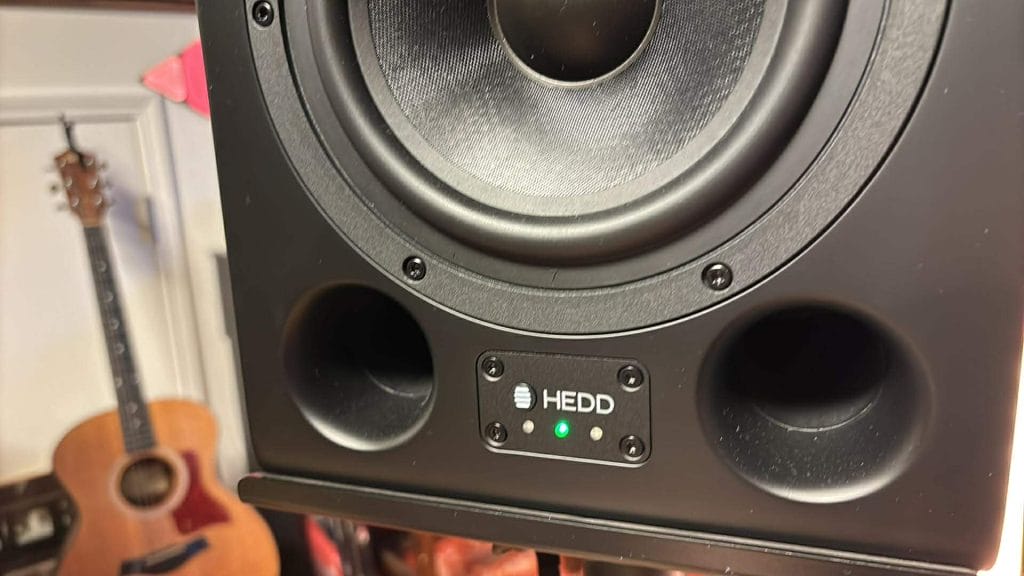
Once I started working, the fully analog path revealed one of the key strengths of the A-CORE line and really did a ton of heavy lifting when it comes to these monitors snagging the Editor’s Choice Award (ECA) mentioned above. Latency stayed incredibly low and this made tracking feel natural.
When I recorded vocals, the response felt snappy and responsive. I never sensed any lag or softness in the transients, and it’s this clarity that I think makes these so damn powerful for imaging. I know this is a very granular thing to notice. Still, the transient information on delayed signals was the clearest I’ve ever mixed on, which, to reinforce further that idea mentioned in the intro, was a massive thing I, until now, never knew that I was missing.
Knowing that the A-CORE line uses the same core components (drivers and other internals) as the MK2 series gave me confidence in what I was hearing. I’ve never used the MK2 models before, but I’ve done a fair share of interviews and gear roundups with artists, and they’ve been a crowd favorite among the artists I follow and feature on the site for a long while now. Bringing that sonic identity into a strictly analog monitor feels like a hyper-practical move that might not be the sexiest thing on paper, but is a game-changer for producers who want a streamlined workflow.
Frequency Response and Tonal Behavior
The low-frequency extension impressed me early on. When a monitor reaches down to 38 Hz in a controlled way, it gives you useful information about sub energy without needing a larger cabinet. I tested bass-heavy techno projects and paid close attention to how the kicks and bass lines interacted. The response stayed tight and stable. I found it much easier to shape low-end relationships because the speakers made details clear without forcing me to guess.
The mids and highs behaved with a smooth sense of clarity.
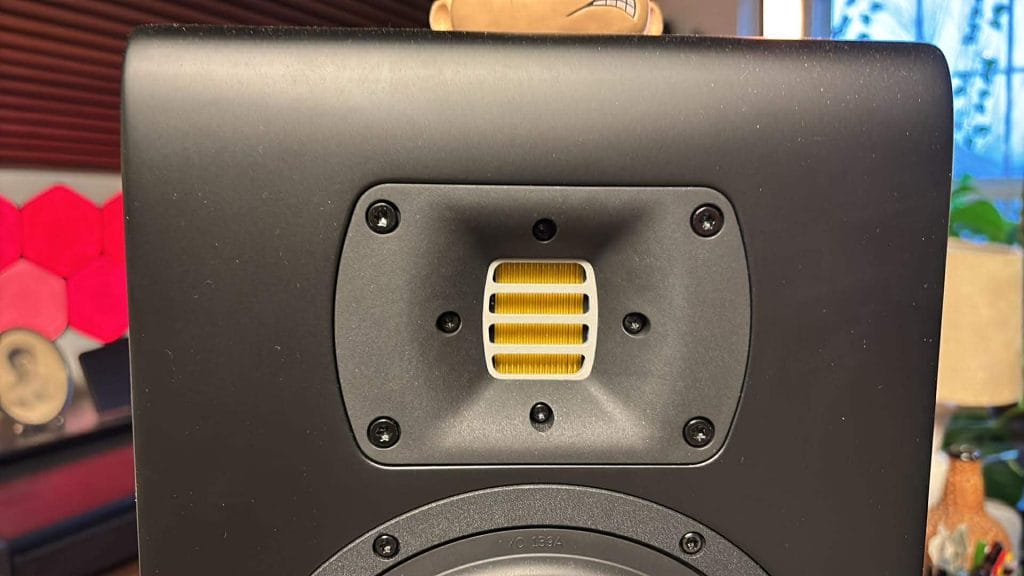
The AMT tweeter played a huge role here. It delivered transient detail without feeling sharp, which is rare at this price point. I spent a few mornings editing vocals and noticed how easy it was to hear timing shifts, sibilance, and pitch details. Even on long sessions, I never felt fatigue building up in my ears. The monitors kept the upper range controlled, which helped me stay productive.
Imaging and Translation
Imaging on the TYPE 07 A-CORE stood out in a way I did not expect, even outside of the transient clarity mentioned above. When I pulled up wide ambient tracks or complex arrangements, the stereo placement felt super clear. I loved how easy it became to identify slight movement in reverb tails and automation. This gave me a better handle on spatial balance and helped me tighten the mix faster.
Translation across other systems reinforced my trust in these monitors too.
Mixes checked on car speakers and small Bluetooth speakers lined up with what I heard in the studio, unlike some of the other monitors I’ve used over the years. I did not encounter any surprises in the low mids or the vocal region. I also appreciated how the tone stayed consistent when played back on headphones.
During writing sessions, the monitors made it easy to hear details at lower levels, which is something I, as somebody who does all of their creative audio work after 8pm once my baby daughter and toddler are asleep, prioritize now more than ever. Plus, I like to start ideas quietly because it keeps my mind relaxed and focused, and these monitors still revealed what I needed to hear. Pads, percussion, and soft synths stayed clear even when the volume sat unusually low.
When tracking vocals, I noticed how clearly I could hear consonants, vibrato, and subtle timing differences too which is another thing I never realized how blind I was to until I got these monitors up and rolling.
Editing drums felt equally intuitive because ghost notes and micro-groove variations showed up with precision, and the transitions on the snares and hats were so, so much easier to dial in correctly. I worked on a few sample-based tracks, and the monitors helped me find tonal conflicts right away. I liked how quickly I could identify clashing frequencies without sweeping on EQ for long stretches.
Technical Specs in Practice
The dual 100W ICEpower amps delivered more than enough output for my room. I pushed the volume during stress tests and the speakers stayed controlled at higher levels. Low end stayed tight, mids kept their clarity, and the highs never lost definition. I checked the frequency response using sweeps and the range matched the published specifications accurately.
Self-noise was impressively low.
When I leaned in close to the AMT tweeter, the hiss was faint. At my listening distance, it disappeared entirely. This makes them especially helpful for editing or quiet-level production. I also noticed that power cycles behaved cleanly. There were no pops or strange noises when turning the system on or off, which added another layer of confidence in the build quality.
Who These Monitors Are Best For
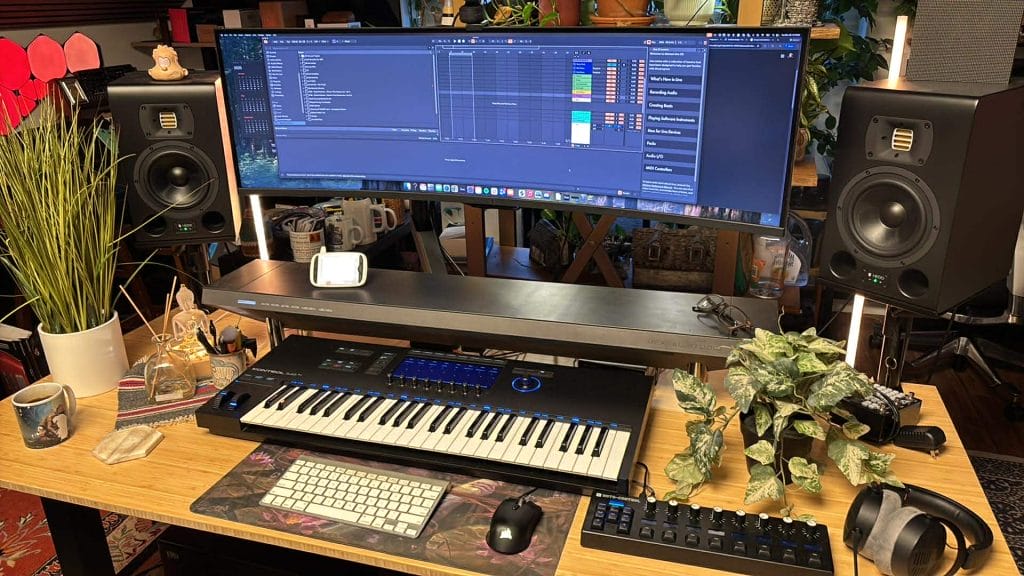
After working with them across countless situations (producing, mixing, mastering, audio editing A&R work for our record label, and jsut casual listening), I can see these monitors fitting into almost any types of studio. Producers working with electronic music will appreciate the low-end control. People scoring films or working on vocal production will enjoy the clarity in the upper range and stereo field. DJs running hybrid setups can take advantage of the wide range of input options and simple gain structure.
And while I didn’t listen much from an audiophile’s perspective, as I said above, I can confidently recommend these to my HiFi peeps as well, for any other reason that they simply look amazing and would be an excellent look for your vinyl setup.
Anyone building an immersive rig can integrate several units and keep the tonal character steady across channels. Home studios will benefit from the front ports and compact footprint. Professional rooms can use them as mains or part of a larger system.
Final Thoughts
After spending extended time with the HEDD TYPE 07 A-CORE, I felt very comfortable with them. They helped me make decisions faster, which is one of the qualities I value most in a studio monitor. The analog signal path gives them a steady and predictable character that supports long sessions. I liked the feeling of sitting down, loading a project, and knowing I would get dependable information from the speakers.
The low end felt controlled across multiple genres. The mids stayed clear and informative. The highs delivered detail without forcing me to raise the volume. These qualities made the monitors feel like long-term tools rather than temporary upgrades. They fit neatly into the kind of workflow I prefer and encouraged a more focused approach to each project.
For producers who want clarity, consistency, and a direct path from source to speaker, the TYPE 07 A-CORE deserves serious consideration. They feel reliable, grounded, and tuned for real creative environments. I left each session feeling like the monitors supported the work rather than shaping it, and that is exactly what I want in a studio tool.

Will Vance is a professional music producer who has been involved in the industry for the better part of a decade and has been the managing editor at Magnetic Magazine since mid-2022. In that time period, he has published thousands of articles on music production, industry think pieces and educational articles about the music industry. Over the last decade as a professional music producer, Will Vance has also ran multiple successful and highly respected record labels in the industry, including Where The Heart Is Records as well as having launched a new label with a focus on community through Magnetic Magazine. When not running these labels or producing his own music, Vance is likely writing for other top industry sites like Waves or the Hyperbits Masterclass or working on his upcoming book on mindfulness in music production. On the rare chance he's not thinking about music production, he's probably running a game of Dungeons and Dragons with his friends which he has been the dungeon master for for many years.