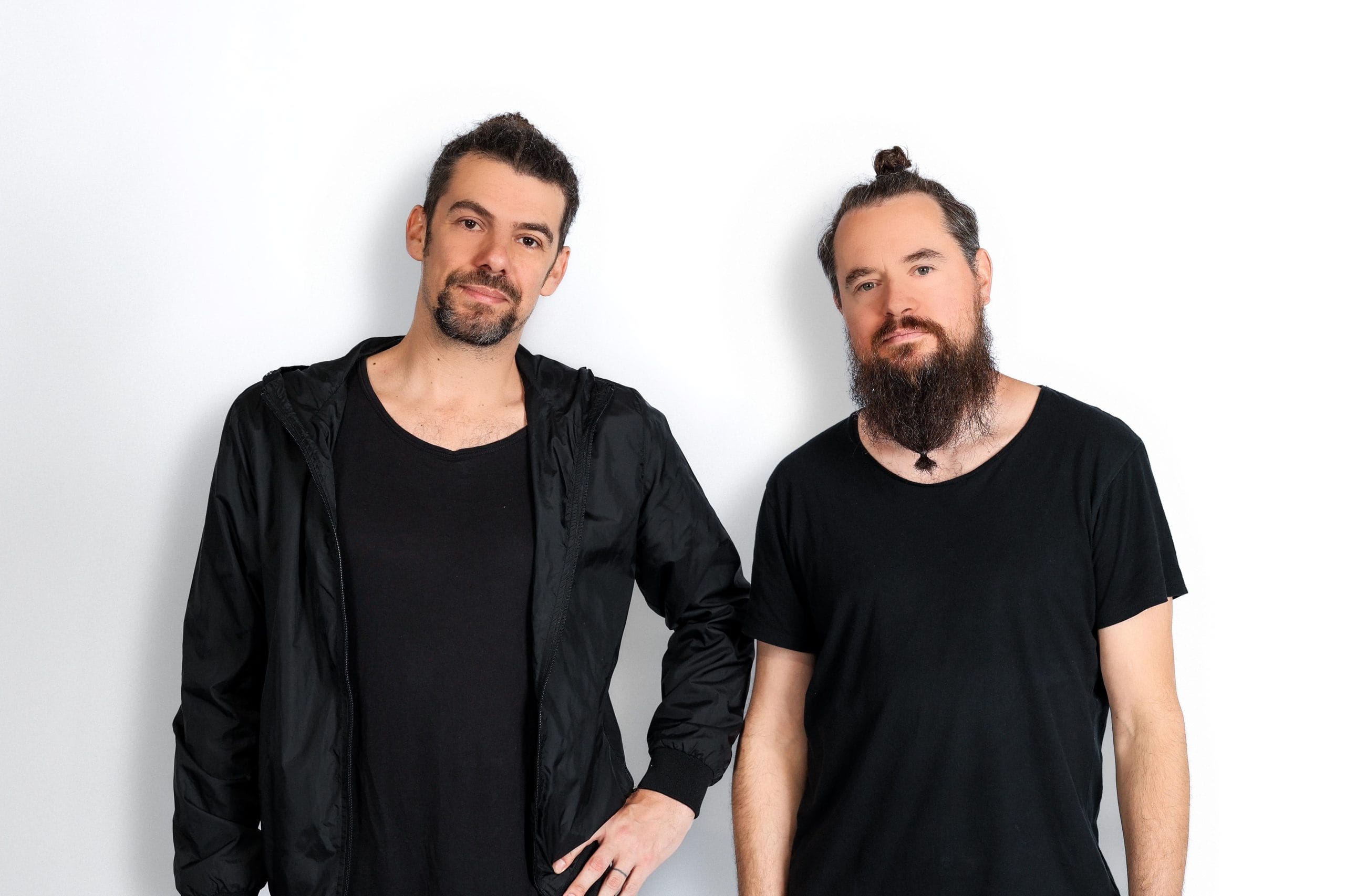
German duo Tube & Berger returned to Kittball Records this summer with No Phones, a vocal-driven house track built on heavy kicks, rolling bass, and sharp synth horns. The single puts its message front and center through the commanding line, “No phones on the dancefloor,” which sets the tone for the energy that follows.
The track captures a shift that has been gaining momentum in nightlife, where more clubs and festivals are experimenting with phone-free dancefloors to bring focus back to connection. Tube & Berger approached the theme with intention, combining hypnotic grooves and vocal delivery that feels like a call to reclaim the physical space of the rave.
On a production level, No Phones balances raw impact with careful detail. The bass and percussion keep the groove locked while the vocal cuts through with clarity and weight. Every element works together to create a record that is direct, powerful, and designed for maximum effect in the club.
Vocal Processing
The core element of “No Phones” is definitely the vocal. It was written, recorded and performed by myself, using an intentionally raw, American-inspired hip-hop accent to give it a strong attitude and presence. To get the tone just right and make sure it translated across different systems, I ran the vocal through Sonarworks SoundID Reference. That helped the vocal cut through the mix and gave it a confident, upfront feel while still sounding personal and unpolished in a good way.
Kick and Low-End Power
To give the kick more punch, we used a combination of IDX Intelligent Dynamics and Bloom by oeksound. IDX handled the transient shaping and helped control the dynamics in a very musical way. Bloom brought out the snap and impact of the transient, and we found the sweet spot by blending it in at exactly 55 percent using the parallel mix control. To fill out the sub area, we added Waves R Bass. That helped give the low-end extra weight without stepping on the kick or muddying the mix.
Xfer Serum 2
Serum 2 is a versatile wavetable synth that combines surgical sound design with intuitive visual feedback. It’s precise, clean, and extremely flexible, which makes it a go-to for shaping detailed basslines and aggressive textures. The updated filters and modulation options make it easy to create movement without clutter.
We used Serum 2 to create the bassline in “No Phones.” It’s a two-layer setup. The top layer is a saw-based midrange bass, high-passed to keep things clean. The bottom layer is a sub patch designed for weight and consistency. Both layers were EQ’d independently and processed separately to give us tight control over the entire low-end spectrum. We also modulated the filter with Envelope 2 to add subtle dynamics and keep the bass moving.
For Bass House and Tech House, Serum 2 works incredibly well when you split the low-end and midrange elements like this. Keep the sub simple and clean, and use movement and modulation on the mids to give it rhythm. It also reacts really well to distortion or saturation on just the mid layer if you need more edge.
u-he Diva
Diva is a virtual analog synth that models iconic hardware filters and oscillators. It delivers warmth and movement that’s hard to match in digital instruments. It works especially well for leads, pads, and warm basses with analog flavor.
In “No Phones,” we used Diva for the plucky lead sound that comes in during the drop. It’s a short, percussive melodic element with fast decay and sharp attack. We processed it with Soundtoys Decapitator to give it some grit and saturation, which helped it cut through the mix and gave it a slightly distorted texture that worked well with the vocal. We also used Diva’s built-in chorus to widen the stereo image without cluttering the midrange.
If you’re building melodic or percussive synth elements for this genre, Diva gives you a very natural analog behavior. Try modulating the filter envelope and layering it with subtle saturation or drive. You’ll get a tone that feels alive but still works in a clean, punchy mix.
IDX Intelligent Dynamics
IDX is a smart dynamics processor that adapts in real-time to the incoming signal. It gives precise control over transients and overall energy without sounding compressed or lifeless. It’s especially good for rhythmic material where traditional compression can sometimes flatten the feel.
We used IDX on the kick drum channel to shape its transient profile and balance its level without over-compressing. It helped maintain clarity and punch through the entire track. We didn’t need to tweak it endlessly – the adaptive response was spot-on and worked well in tandem with Bloom downstream in the signal chain.
For Bass House and Tech House, IDX is great for tightening kicks, snares, claps, and even synth stabs. It keeps elements present without creating a pumping effect or crushing the transients. It’s fast, clean, and reliable.
Bloom by oeksound
Bloom is a transient enhancer that allows detailed control over the attack portion of any sound. It adds energy and clarity without relying on compression or EQ tricks. It’s subtle when needed, but powerful when pushed.
We used Bloom on the kick drum with the parallel mix set at 55 percent. This setting gave us the exact balance between punch and warmth. It added definition and presence without making the kick sound clicky or artificial. It worked best when used after IDX, which had already controlled the transients dynamically.
For any genre that depends on tight drums, Bloom is a very effective tool. Use it lightly on kicks, claps or even percussive synths. Always use the parallel mix knob – that’s where the magic happens.
Waves R Bass
R Bass enhances the perceived low-end by adding harmonics that translate better on smaller systems. It doesn’t just boost sub frequencies – it builds harmonic content that makes the low-end more consistent and audible.
We used R Bass on the sub layer of the bassline in Serum. It was tuned around 60 Hz to avoid clashing with the kick and added just enough energy to bring out the bass on club speakers and headphones alike. It was especially useful for getting the sub to feel solid even at lower playback volumes.
In Bass House and Tech House, sub basslines are often lost in translation. R Bass helps bring those frequencies forward without overloading the mix. Use it carefully and always check it against your kick to avoid masking.
TrackSpacer by Wavesfactory
TrackSpacer is a frequency-dependent sidechain plugin that ducks specific frequency ranges in real time based on an input signal. Instead of general volume sidechaining, it creates space where it’s actually needed, frequency by frequency.
We used TrackSpacer throughout the mix to carve space around the vocal, especially in the synth and drum elements. It helped reduce midrange buildup and kept the vocal intelligible without needing to rely heavily on EQ or automation. It also allowed us to keep the vocal loud and clear even during busy parts of the arrangement.
TrackSpacer is incredibly useful when you’re working with layered elements. It lets you keep all the energy of your synths and drums while still giving space to the vocal. Just don’t overdo it – it’s easy to go too far and hollow out the mix.
Quick Fire Tips For Making Bass House / Tech House
Tip 1: Split your bassline into sub and mid layers and treat them separately to keep the low-end clean and punchy.
Tip 2: Use Bloom in parallel on your kick to bring transient snap without losing weight.
Tip 3: Record your own vocals and treat them with precision tools like SoundID to lock in the tone across systems.
Tip 4: TrackSpacer is your best friend for carving space in crowded mixes. Use it especially around vocals and leads.
Tip 5: Serum for control, Diva for warmth. Use both and let them play different roles in the same track.
By Magnetic
Magnetic byline note: This byline is used for staff produced updates and short announcements, often based on press materials and official release information.
Editorial responsibility: David Ireland (Editor in Chief) and Will Vance (Managing Editor).
About: https://magneticmag.com/about/
Masthead: https://magneticmag.com/masthead/
Contact: https://magneticmag.com/contact/