Kiki Botonaki has been a steady force in Greece’s underground scene for the past decade. From her long-running radio show to sets at some of the country’s most respected clubs and festivals, she’s built her reputation on consistency and a clear artistic identity. Her studio output follows the same path, threading together Afro house and deep house with a refined sense of groove that has landed her high in international charts.
Her next release, I Know What Love Is, arrives on Fiona Kraft’s Non Merci Music on August 29, 2025. The single highlights Botonaki’s ability to create rhythm-driven tracks that still carry a strong melodic and emotional presence. It follows records like We Fly and collaborations with Lazarusman, which helped her reach a global audience while staying rooted in her regional community.
Follow Kiki Botonaki: Instagram – Soundcloud – Beatport
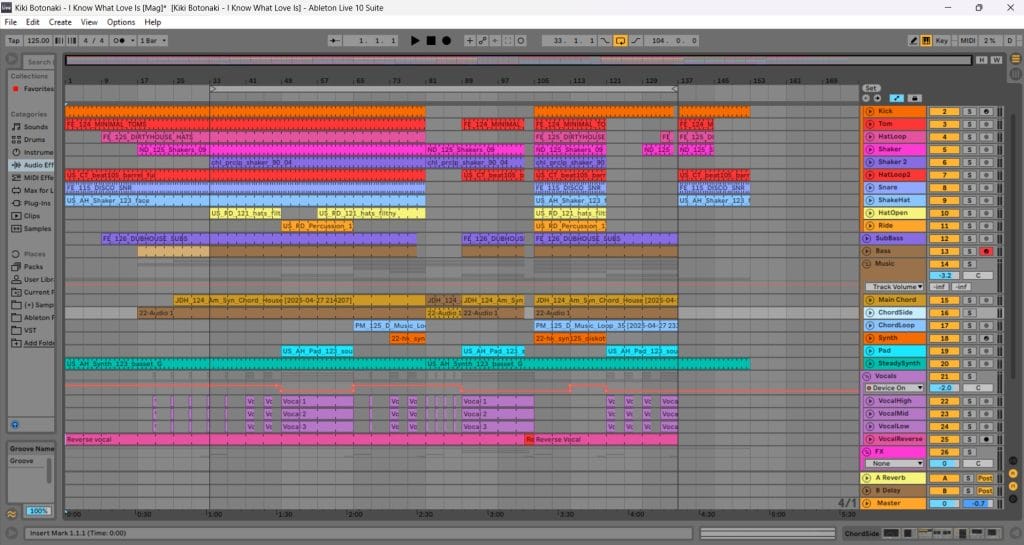
On I Know What Love Is, Botonaki leans into layered pads, subtle vocal textures, and a warm, hypnotic flow that feels designed for late-night floors. It’s a focused release that builds on her catalog while pointing toward where she’s headed next, adding another chapter to the story she’s been shaping across clubs, festivals, and studios for years.
Using Ableton’s Analogue to create the bass
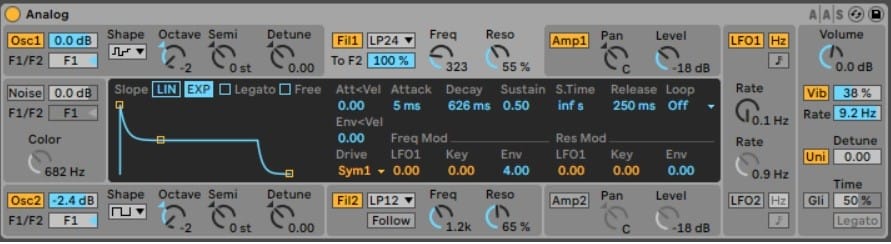
For the bassline, I used Ableton’s Analogue with two sawtooth oscillators tuned two octaves down for a deep, driving foundation.
Oscillator 1 ran through a 24 dB low-pass filter to keep it warm and rounded, while Oscillator 2 went through a gentler 12 dB filter for a touch of midrange clarity. A bit of resonance on both added character, and subtle unison voices gave the sound extra width.
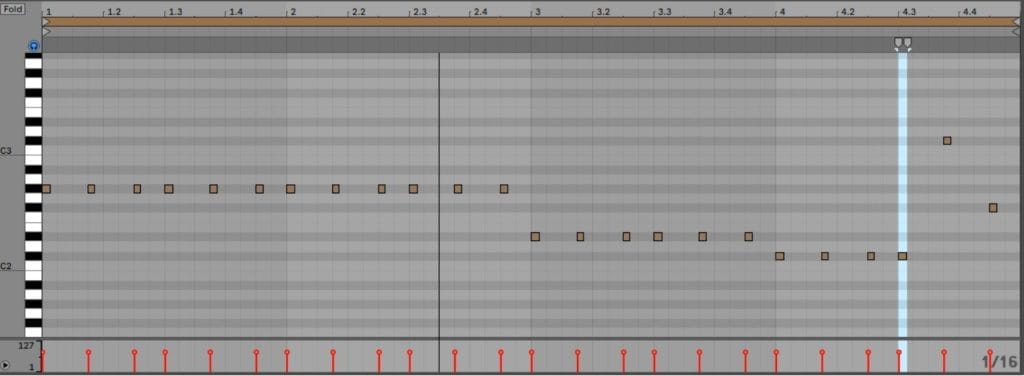
To shape it further, I applied EQ to tighten the low end, added a saturator for harmonic richness, and used an Auto Filter with an automated LFO for evolving movement. Finally, I sidechained the bass to the kick to lock it perfectly into the track’s rhythm and keep the low end clean.
NI Massive + Ableton Simpler (Basic Synth)

For the basic synth, I built the entire layer in Native Instruments’ Massive, starting from a warm, synth to give it depth and movement. Played with one or two oscillators until I got a sound that fits my style and reshaped the Filters to my taste, adjusting mainly cutoff and resonance.
I shaped the tone with Ableton’s EQ Eight to carve out space in the mix, then ran it through a phaser set to high frequency with mid-level feedback. To add rhythmic variation. I used Beat Repeat to create unexpected stutters, followed by reverb and delay for width and atmosphere.
A touch of saturator brought extra harmonic weight, and I finished it off with an Auto Filter set to mid frequency and low resonance to keep it fitted within the track’s groove.
Vocals – Royalty-Free Sample Pack (Triplicated for Chorus Effect)

I took the chosen vocal clip and layered it three times, offsetting each slightly and panning them for stereo width. Chopped the takes at random points to transform them into adlib-style phrases.
Applied light EQ to enhance natural sound, giving depth and air with a reverb. I also used an Auto Filter at select moments to introduce a warm, slightly muddy texture for added character. A reversed loop of the vocals was used as additional FX giving a chaotic essence at the end of each 4-bar section.
Tip of the day: Hum or sing your track in your head before you start producing

For rich, captivating productions in this genre, I like to layer analog synths with sampled textures for a full, dynamic sound and keep things fresh by adding evolving filter movement.
Tempo-synced delay brings both character and groove, while multiplying vocals with subtle timing offsets and panning helps widen the mix.
Most importantly, I always always try to sing the track in my head and see the crowd moving before I start producing—after that, Ableton takes over, assisted by a mix of built-in tools and trusted external plug-ins like NI’s Massive and iZotope’s Effects.

Magnetic byline note: This byline is used for staff produced updates and short announcements, often based on press materials and official release information. Editorial responsibility: David Ireland (Editor in Chief) and Will Vance (Managing Editor). About: https://magneticmag.com/about/ Masthead: https://magneticmag.com/masthead/ Contact: https://magneticmag.com/contact/