Table of Contents
Soundproofing a room is one of those things that’s always eluded me.
It just seems so tedious and borderline pretentious. “Is your room asymmetrical by a single inch? Is there a single spot on your wall that isn’t soundproofed? Congratulations, your room sounds terrible and you can no longer produce.” That’s always how it’s felt for me. And, being a producer who’s never worked in a true studio (it’s always been a bedroom, a basement, a dorm room, et cetera), I never once considered treating my room as I just never had the space or ability to.
It seems like GIK Acoustics caught onto this sentiment. It’s becoming harder and harder for producers without designated studios to treat their rooms, and it seems like they’ve come up with the solution: free-standing totems of acoustic treatment known as StackPacks. Each pack comes with 3 SoundBlocks, two with wooden plates for sound diffusion and one featuring GIK’s “FlexRange” to absorb low frequencies up to 50k Hz. To speak in everyman’s terms: GIK claims that these StackPacks have the power to not only increase the sound quality of your room, but also to increase the “aesthetic appeal” with three different styles to choose from.
If these StackPacks do everything they say they do, then this could be a game changer for any and all music producer looking to soundproof their room. I got my hands on a couple, and here are my thoughts.
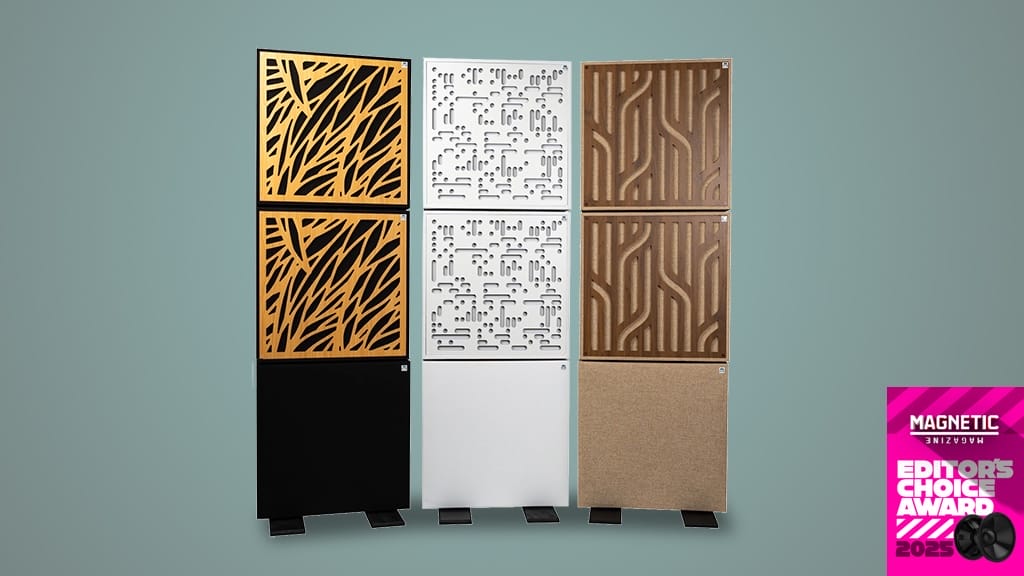
Editor’s Choice Award
Spoiler alert: it’s a game changer for any and all music producer looking to soundproof their room. It’s easy to set up and works just as effectively as you’d hope it would. For those of you working in bedrooms, basements, and other spaces that aren’t even close to being ideal for music production, you finally have your treatment solution. Read on to see just why I love it.
Unboxing & Setup
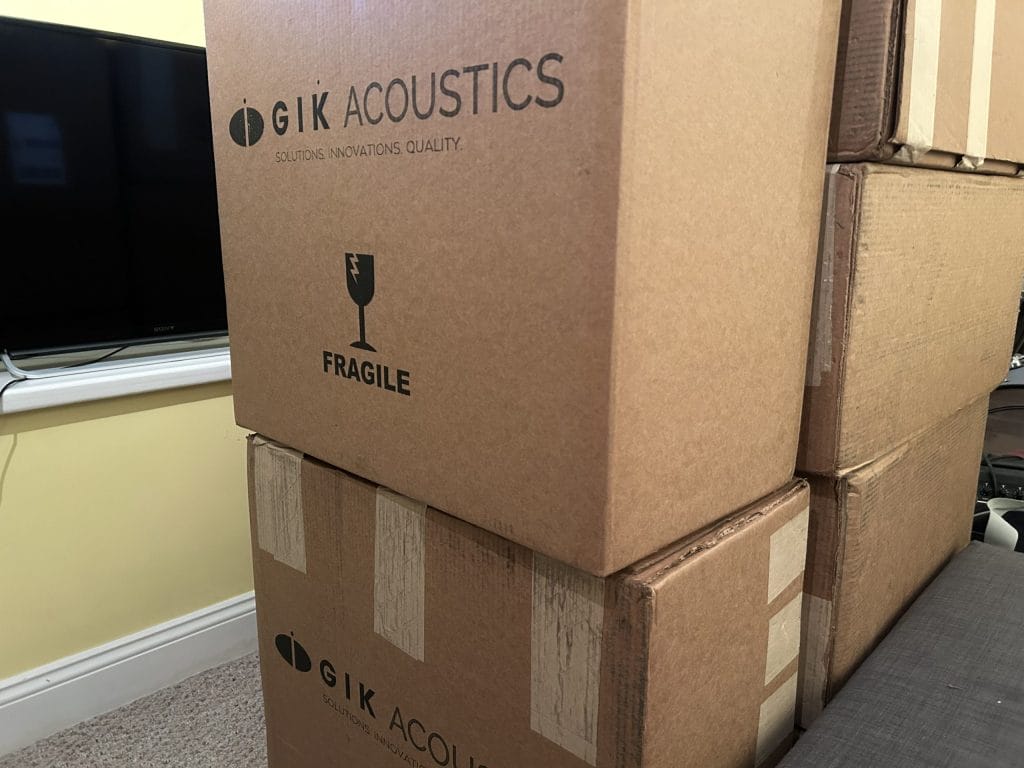
Imagine my surprise when six massive rectangles arrived at my door. I couldn’t even fit all of the boxes in one photo. That being said, they were easy enough to move around and into my studio, even if they did take up quite a bit of space.

When opening the box, you’ll be greeted by some of the strongest plastic wrap you’ve ever seen, as well as panels on either side of the SoundBlock to ensure nothing gets dinged up on the ride. Considering this is pretty precious cargo, they get an A+ for protection. Plus, there isn’t a significant amount of waste in each package, which is always a nice bonus.
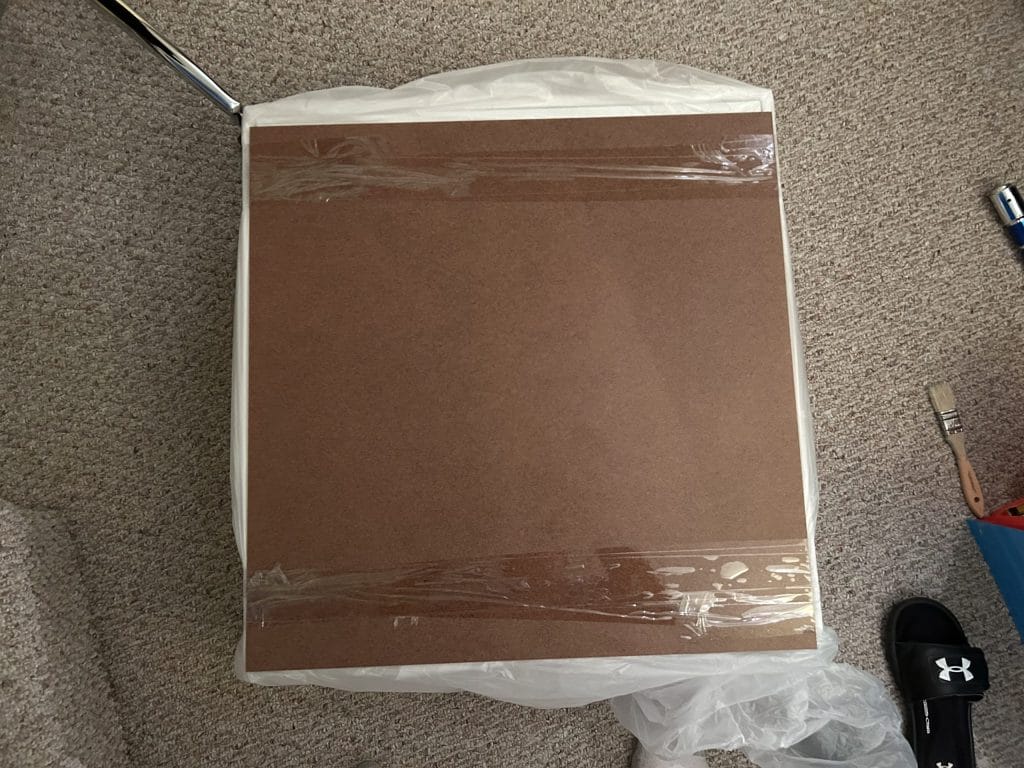
Here’s the first SoundBlock outside of the box. Note just how well it’s wrapped up – it took me some time to get all of this stuff off of it, which was tedious but necessary. After that, you’ll be greeted by this.
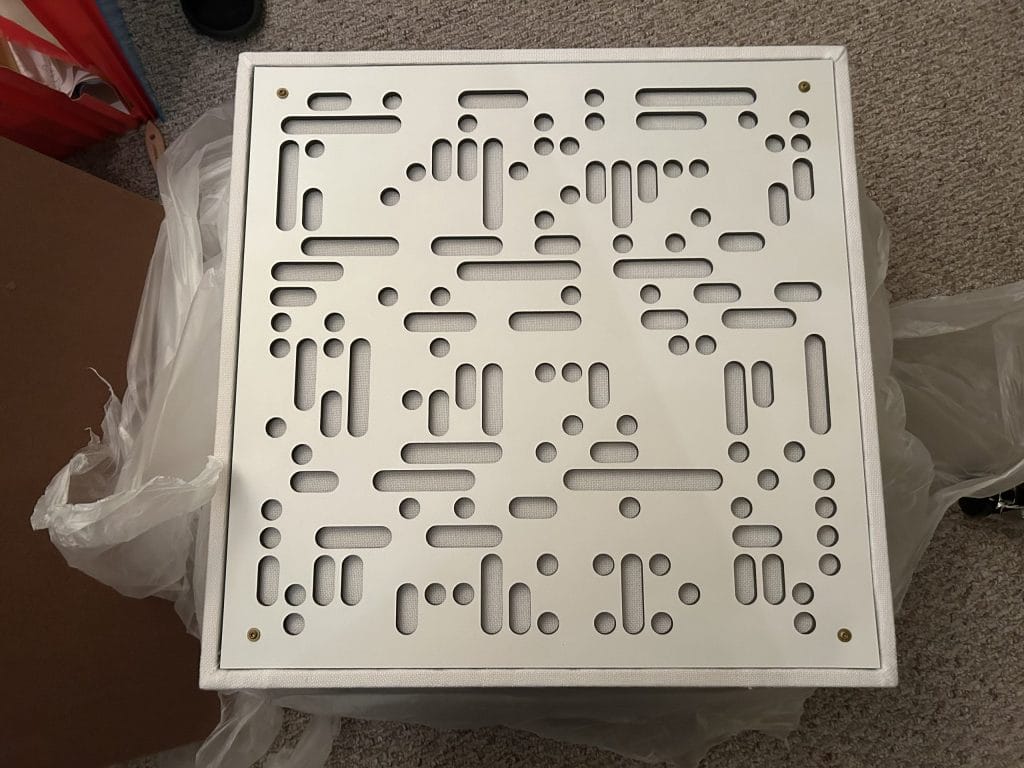
I chose to go with the “White Hot” design, as I thought it looked the coolest. It did not disappoint – looks like paneling in some kind of spaceship. Each block is about two feet tall and maybe 6 inches wide. You’re also going to want to have some good arm strength, as these things are a bit heavy.

This is how the blocks stick together – a very simple sliding mechanism. Just line the blocks up (the sides of the black stripes are slanted so you can easily lock them together) and slide. It may take some finagling to get everything properly lined up, but it’s so satisfying when you get it.
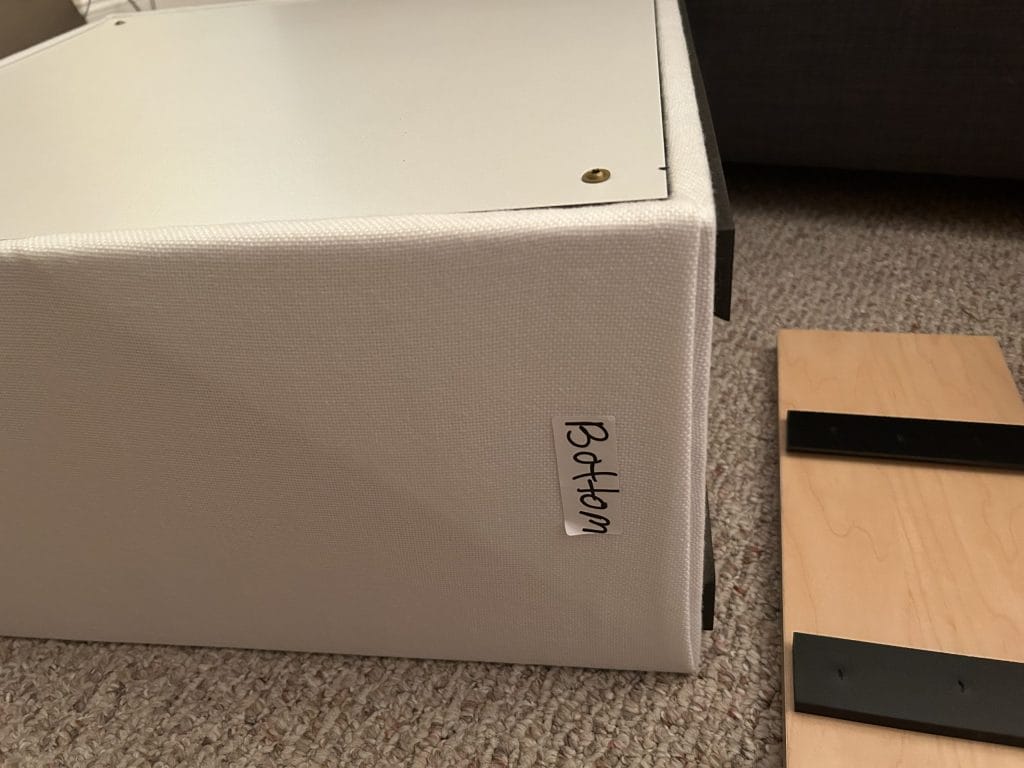
The same thing applies to the bottom block and the wooden feet that it stands on. Note that they provide little notes on which block is which so you don’t get confused.
The entire process took me about an hour – unbox, position, slide. While I can’t lie and say it wasn’t a little bit of a grind, it was nice not having to screw or nail anything in. The process was a lot easier than it could have been, and definitely a lot easier than mounting anything on my wall.
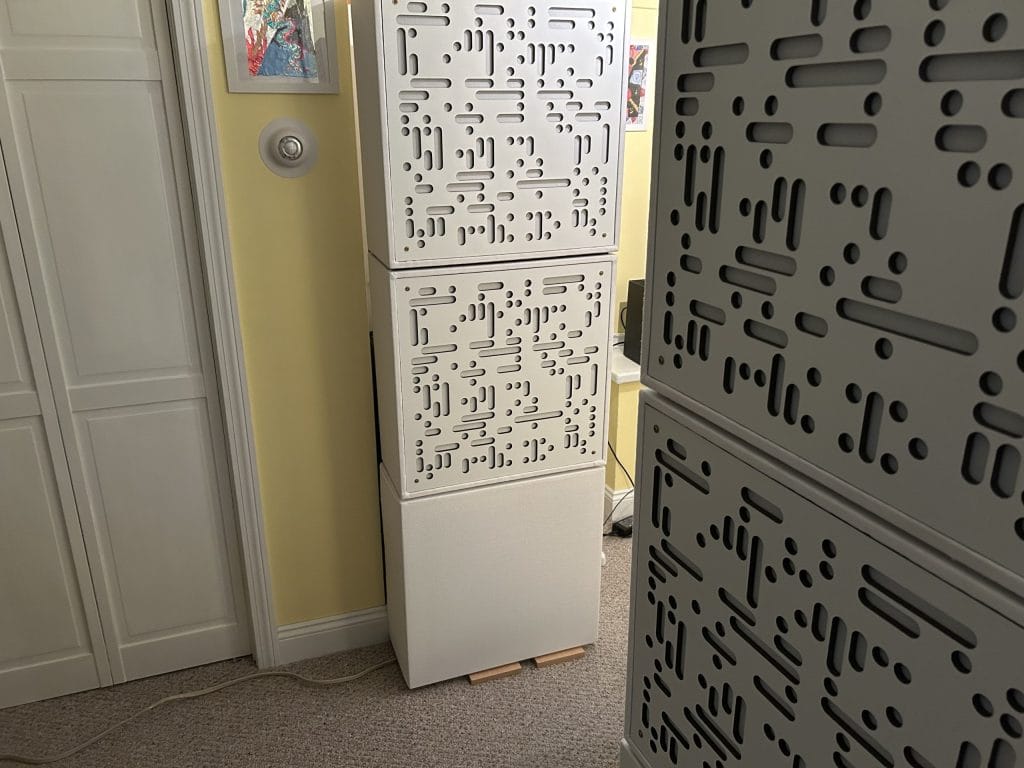
Finally, here they are. I positioned both of them in a way that I could still walk through my room, but could easily move them if I find that I’d rather have them set up a different way (for instance, both of them facing my back instead of just the one on the right). I’m about six feet tall and both of these stacks come up to my head, so keep that in mind if you’re setting them up. Also note that you can use just the bottom and the top blocks and completely forgo the middle if you don’t have enough space.
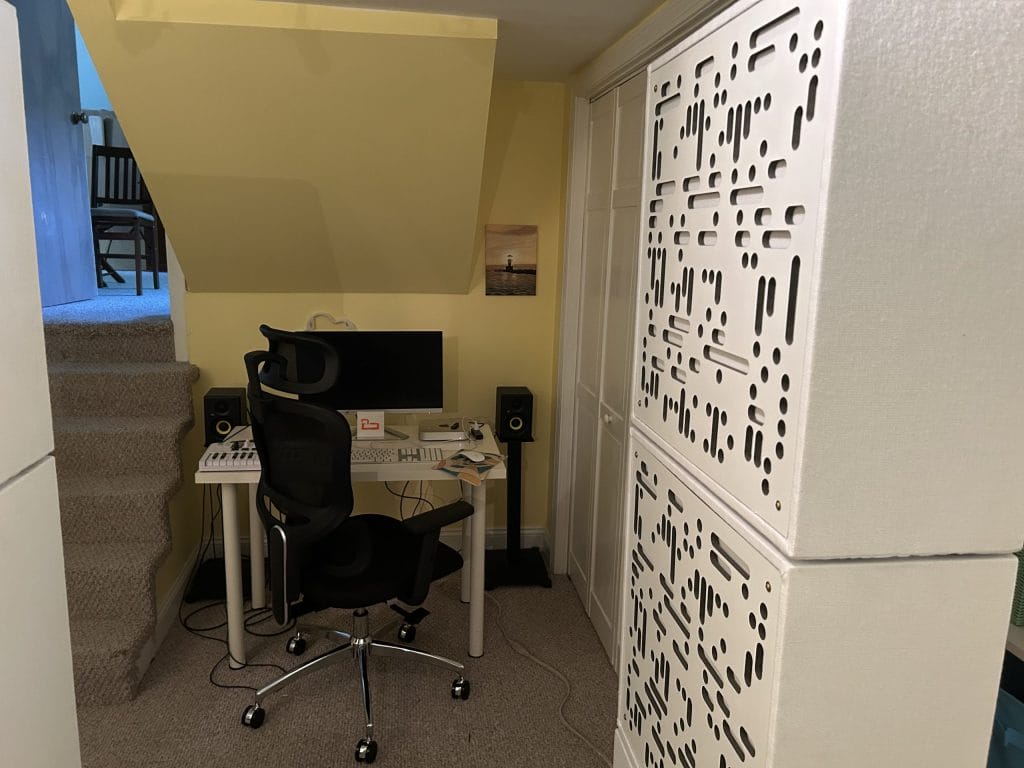
With everything set up, it was time to use them and see if treating my room was worth the hassle.
Results
As you can tell, my studio isn’t made for producing music. It’s actually my basement. I produce under a staircase like Harry Potter, and my Xbox setup is across the room. There’s also a ton of clutter (including an old drumset) that makes frequencies bounce, reverberate, and overall sound unpleasant to the point where it can be pretty much futile to produce with studio monitors down here.
The StackPack changed all of that. The way this room sounds is now literally night and day. I am genuinely not sure how they did it.
I can hear my basses better than ever before, and all of the adverse effects I had experienced before setting these totems up were minimized to the point of no longer being issues. They aren’t even set up symmetrically, as you can see, and they’re STILL working like a charm. Also, they look awesome. Granted, the aesthetics are less important than the function, but my basement now feels like more of a modern-studio than a cluttered yellow room.
This has changed the way I see room treatment. I used to think it was a myth and unnecessary. That is very obviously so far from the truth, and all it took was an accessible and flexible tool like this one.
Pros & Cons
Pros:
It WILL make your room sound better.
This is a guarantee. All of the science behind these blocks clearly paid off, as even my basement now sounds like a professional studio. Now, I’ll be able to focus on producing rather than being upset about the annoying echo from the back of the room, and really hone in on subtle mixing changes.
It’s such an easy setup process.
No screws, no nails, just sliding blocks. Sure, the unboxing itself is a hassle, but when you’re done with it, you can easily stack all of the blocks together in just under five minutes. Re-arranging them is similarly easy. And, if your room isn’t tall enough to accommodate all three blocks in a pack, you can just lose the middle block and get the same exact result.
Cons:
It’s quite the investment.
The only drawback here is the price. You’re going to be spending close to 1,000 USD on a single StackPack.
I get where the price comes from. You’re getting a pre-assembled, full-range treatment solution. You hypothetically could get a bunch of acoustic panels and bass traps that’ll cover all ends of the frequency spectrum for the same price, but then you’d have to deal with hooking them onto your wall and setting them up properly. The StackPack is just an easier solution all around.
However, it’s hard for me to be enthusiastic about a near four-digit price tag, regardless of how much I love the product. The best thing I can say is that you are getting your money’s worth here. If you’re able to make this purchase, you will not regret it.
Conclusion: Should you get it?
If you are looking to invest in your home studio and have the money for it, I would 100% recommend getting these. They are going to make your room sound just like a professional studio, no matter how un-professional your room may be. And, if you’re looking to take that next step in your music career, these may be the tools that help you get there.
Buy the GIK Sound Block StackPack here.

Ben Lepper is a music producer and journalist from Boston, Massachusetts.