Table of Contents
Guitar playing looks a lot different than it did even five years ago.
More people are recording into laptops, working from shared spaces, and squeezing in sessions between other responsibilities. The full-stack amp and mic’d cab setup isn’t the starting point anymore—it’s something you might use when the situation allows, not what you rely on every day.
The gear that gets used the most now tends to be the stuff that’s quick, quiet, and easy to move. If it takes more than a couple minutes to get going, it usually doesn’t make the cut. Players want to sit down, dial in a tone, and hit record—no need for a separate room or a bunch of extra gear.
That shift has pushed things like silent practice, onboard effects, and compact builds from niche features to everyday essentials. It’s not about chasing convenience. It’s about removing delays so the work actually gets done and we’re going to talk about how this accessible trend might just be the future of guitar playing in this article which was made in collaboration with Donner.
Playing Guitar Has Become a Private, Headphones-On Activity
The way people practice guitar is changing fast—and it’s not just because of gear.
Life has gotten louder, busier, and more unpredictable.
For a lot of younger players, free time happens in the margins—between school, after-school activities, and family logistics. Parents are running three schedules at once, and sometimes, the only time a kid can play guitar is in the backseat of the car, a waiting room, or the lobby of their sibling’s dance class.
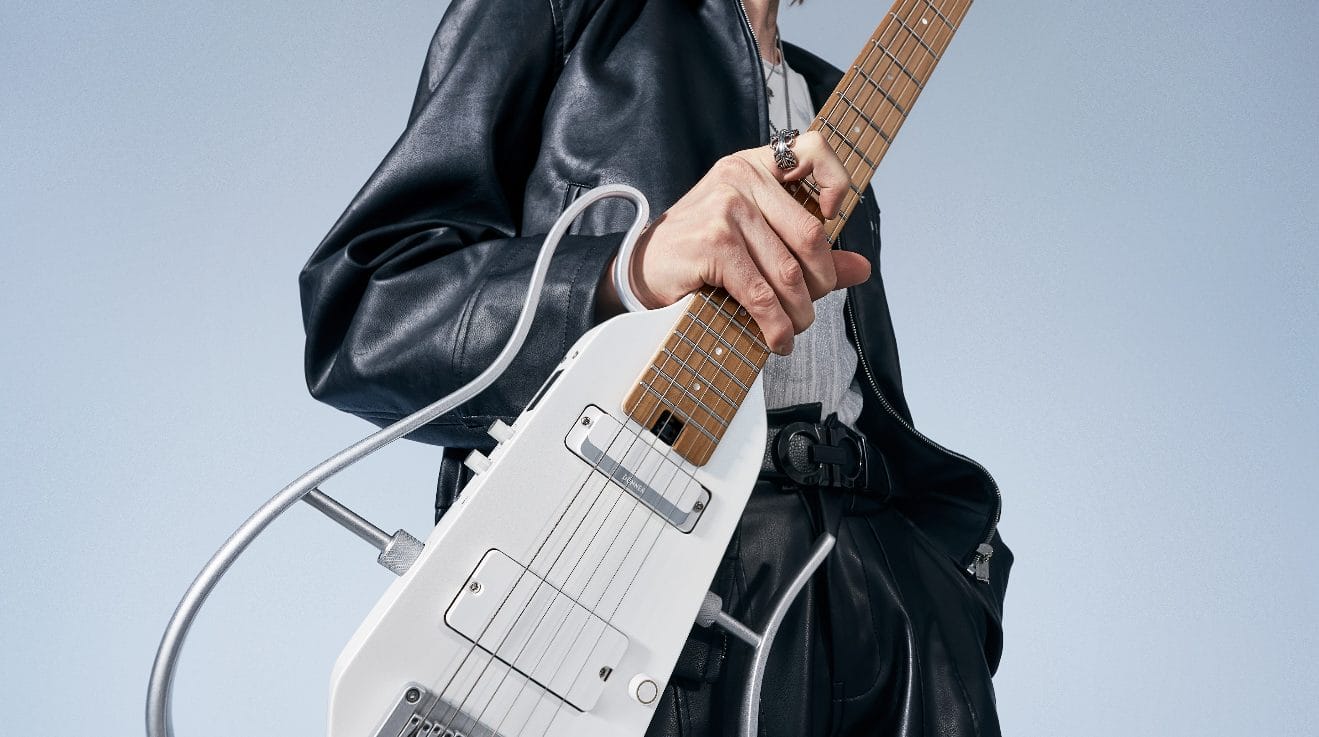
Guitars like the Donner HUSH series guitars are starting to fill that gap.
With headphone output, Bluetooth playback, and onboard tone simulations, it’s the kind of tool that makes practice possible anywhere, even when there’s no amp or power outlet nearby. That level of portability gives players a real shot at building consistency, even in chaotic environments.
It keeps the guitar in their hands, which is the only thing that actually leads to growth.
This is the context the next generation of musicians is growing up in. Practice happens quietly, on the go, and often without a traditional setup. Silent playing and onboard tone aren’t fringe features anymore—they’re part of how musical expression fits into everyday life. Tools like the HUSH-I Pro acoustic-electric guitar reflect a growing expectation: if you’ve got ten spare minutes and a quiet space, you should be able to get a meaningful session in.
Not when you get home. Now.
Onboard Effects Are Becoming the Default Starting Point
Once silent playing becomes part of the routine, it’s only natural that players want tone that keeps up. And for most people starting out—especially younger musicians or mobile producers—that doesn’t mean building a pedalboard from scratch.
It means picking up a guitar that sounds good right out of the bag.
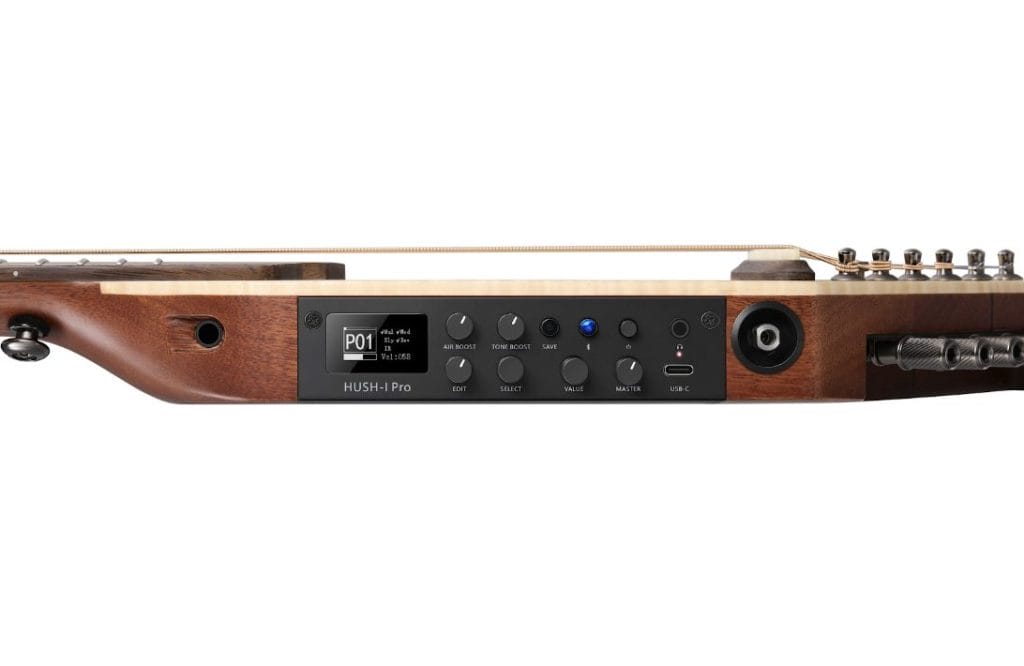
That’s where onboard effects start to matter. The HUSH-I Pro includes four to eight acoustic guitar tone simulations, 5-band EQ, and a complete multi-FX chain—all accessible from a one-knob interface. Reverb, delay, modulation, overdrive—it’s all baked in, and the user can load up to 40 third-party impulse responses for even more control. You don’t need to buy pedals, run power, or navigate a DAW just to shape your sound.
For beginner guitarists growing up in apartments, cars, and lobbies, that kind of instant setup is what keeps them engaged. And for in-the-box producers, a self-contained guitar rig that plugs straight into an interface is a smarter starting point than trying to simulate a full amp chain.
What’s happening here is a shift in expectations. Gear that used to be “extra” is now table stakes. The guitar isn’t just a source—it’s becoming the rig. And as that continues, models like the HUSH-X Pro series aren’t going to be seen as alternatives. They’ll be seen as what a modern guitar is supposed to do.
Portability Is Changing What “Pro” Gear Looks Like
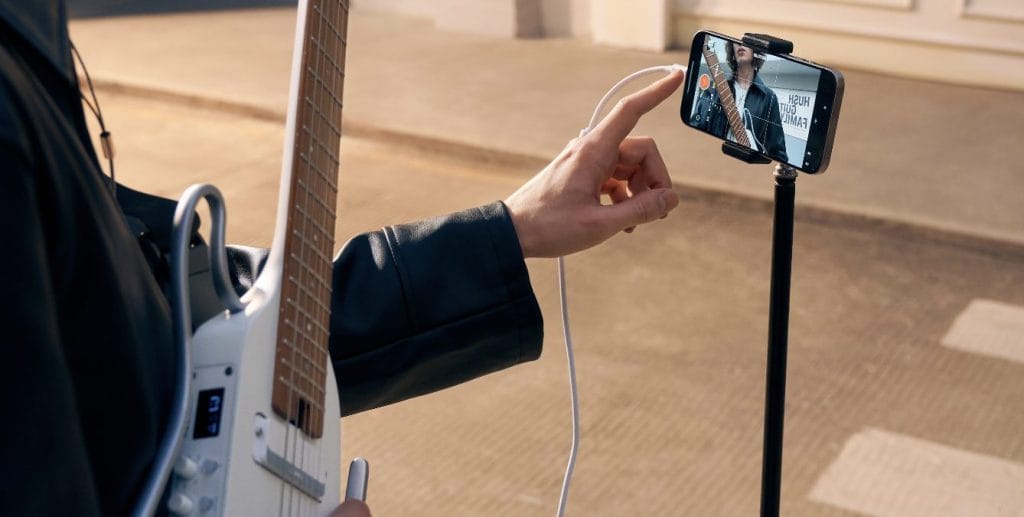
Once tone and silent practice are built in, the next question becomes: how easy is it to bring that setup with you? Portability is now a deciding factor in what gets played and what collects dust. If you can grab your guitar, power it up in seconds, and play without needing an outlet, you’re going to use it more. That kind of consistency matters whether you’re learning your first chord or trying to finish a track before a deadline.
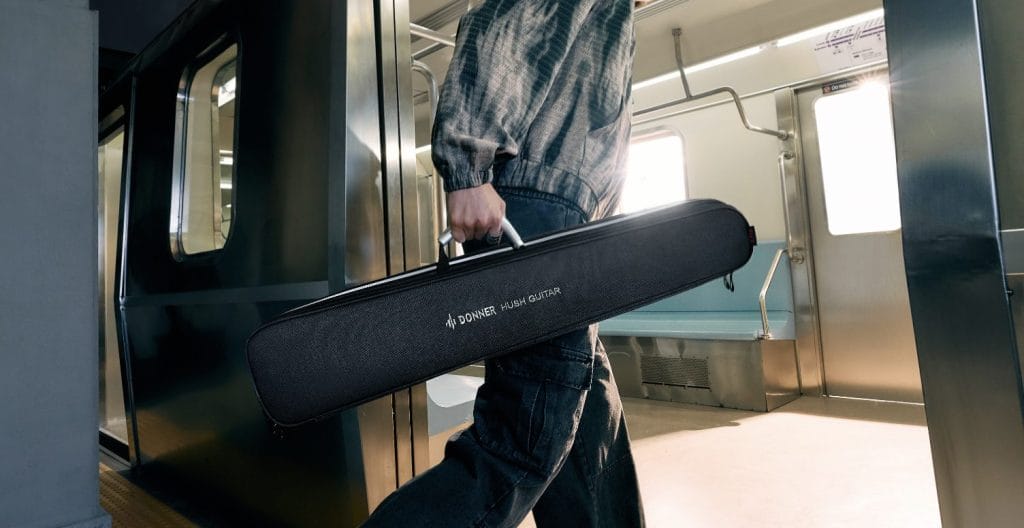
That’s what makes designs like the Donner HUSH-I Pro feel so current. Besides the acoustic guitars, there’s also an electric guitar model in the HUSH series, the HUSH-X Pro. A detachable frame, headless design, and total weight under five pounds mean it fits into a small bag and sets up fast. The USB-C rechargeable battery frees it from wall power entirely. You can play it in a hotel, backstage, or a friend’s apartment without building a whole rig to make it happen.
A compact, cable-free guitar that sounds good through headphones or straight into an interface doesn’t feel like a compromise—it feels like a smart way to work. And that’s where the line between beginner and pro gear is starting to blur. Tools like return loops, DI outputs, and onboard IRs aren’t just helping new players avoid a steep learning curve. They’re also speeding up the workflow for experienced musicians who don’t want to build out a pedalboard every time they need to track something clean.
This new tier of guitar gear is more about responsiveness than tiered product classes. It works for anyone who needs to write, practice, or record without wasting time or space. Portability, flexibility, and built-in tone aren’t signs of entry-level design anymore—they’re what allow players at all stages to actually stay in motion. And staying in motion is what gets songs finished.
Conclusion: The Shift Is Already Underway
“In terms of the HUSH-I Pro, I was really amazed by the IR (impulse response) feature. Being able to simulate the body shapes of different guitars and spatial sounds is really special. For the price point, it’s incredible to have so many tones in one place, and it’s perfect for travel. The design is clever, too—you can attach and detach the body shape, which is really cool.” – Yvette Young
The way people play guitar has already changed.
We’re not talking about some far-off trend. We’re talking about features that are actively reshaping how and where music gets made. Quiet play, mobile-first builds, and onboard tone aren’t gimmicks—they’re responses to the real conditions musicians are working in now: tighter schedules, less space, and a growing need to stay productive between everything else.
For younger players, this is already the norm.
For working musicians, it’s a faster, more efficient workflow. And for anyone trying to stay creative without waiting on the “perfect setup,” it’s often the difference between capturing an idea or letting it slip.
Guitars like the Donner HUSH-X Pro reflect that shift. It’s not some stripped-down practice tool—it’s a full instrument, with built-in amp modeling, third-party IR support, and a rechargeable battery that runs without wall power. The onboard effects chain includes everything from modulation to overdrive to EQ, all controlled from a single OLED screen. It’s designed to move fast, work anywhere, and get real results.
This isn’t about replacing traditional setups.
It’s about removing the friction that keeps people from playing. Gear like this gives players more chances to make music—at home, on the road, or wherever they happen to be. And that shift isn’t coming. It’s already here.

Magnetic byline note: This byline is used for staff produced updates and short announcements, often based on press materials and official release information. Editorial responsibility: David Ireland (Editor in Chief) and Will Vance (Managing Editor). About: https://magneticmag.com/about/ Masthead: https://magneticmag.com/masthead/ Contact: https://magneticmag.com/contact/