Table of Contents
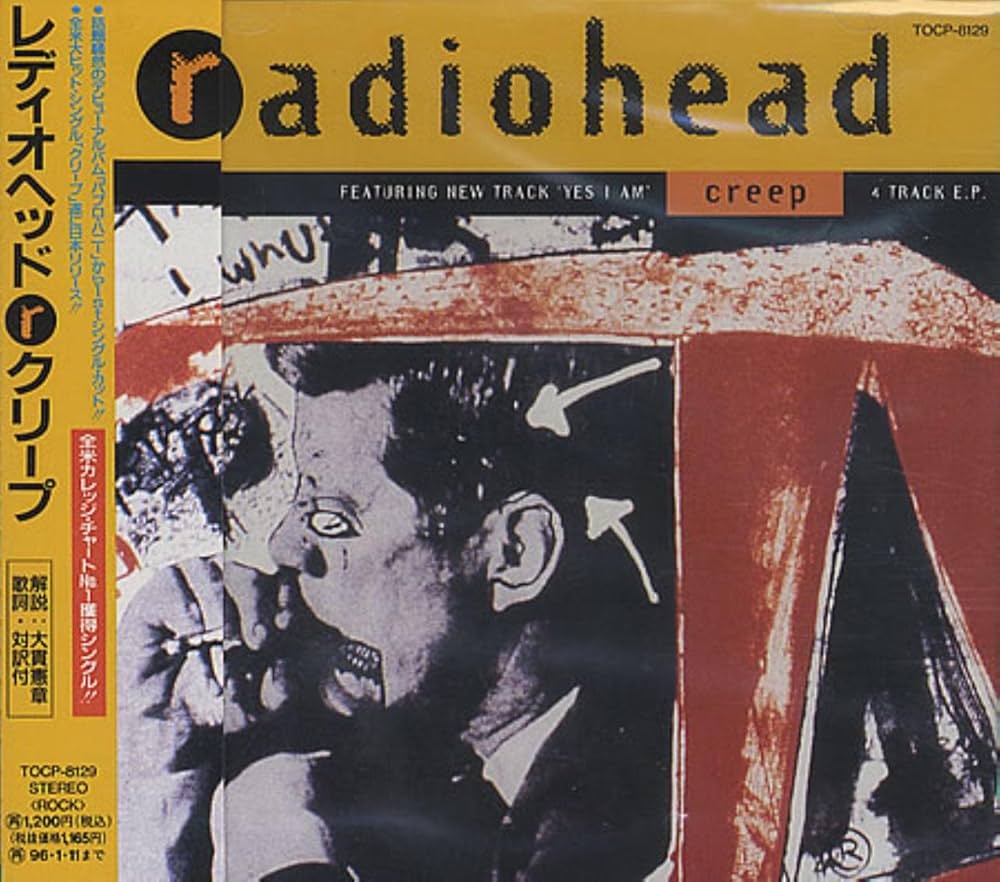
Album Image Cred: EMI And Radiohead
There are few songs that have lived as many lives as “Creep.”
Originally released by Radiohead in 1992 and basically shrugged off by the UK press, it only caught fire after getting unexpected radio play in the U.S.—and even that was a fluke.
Now it’s one of those rare tracks that feels baked into the culture. You don’t even need to be a Radiohead fan to know the chorus. You just hear “I’m a creep…” and your brain does the rest. That reach is exactly why Billie Eilish’s recent cover during her Hit Me Hard and Soft tour in Amsterdam hit the internet so fast. People didn’t need a press release—they just got it. She slowed it down, stripped it back, and let the song breathe in a way that reminded everyone: this thing still hits.
For me, though, it’s never really been about the chords or even the performance. I’ve always heard “Creep” like a poem first. Maybe it’s the English lit background talking, or maybe it’s because the lyrics are doing something quietly heavy: shame, longing, identity distortion—it’s all right there, without dressing it up.
So that’s what this piece is. A chance to break the song down from a more literary angle, using some lesser-talked-about poets and classic themes as jumping-off points. Not to over-academic it, but to see how the raw stuff in this song—displacement, desire, control—has shown up in literature again and again.
These are just my own takeaways, but it felt like a good excuse to stretch the comparisons a bit and find some deeper through-lines between modern songwriting and old, obsessive human stuff.
Creep — At A Glance
- The lyrics hit differently when you read them like a poem—shame, identity, and the pressure to shape yourself into someone “worth loving” are everywhere.
- It’s still relevant enough to stop an entire arena cold—Billie Eilish’s recent live cover in Amsterdam proves the emotional pull hasn’t worn off.
- Radiohead thought the song might’ve been a throwaway—but fans never did, and now it’s one of the most emotionally loaded singles in their catalog.
Creep Radiohead Explained
“When You Were Here Before, Couldn’t Look You in the Eye”
This line is where the song starts, and right away we know the speaker feels small. He’s in the same room as someone he cares about—but he can’t even look at them. That tells me he doesn’t think he’s good enough. He feels less-than, maybe even invisible.
Then he says, “You’re just like an angel, your skin makes me cry.” That’s a really strong thing to say. He’s not just saying she’s pretty—he’s saying her beauty hurts him. That’s because being close to something that feels perfect makes his own flaws feel even bigger.
Poet Anne Sexton says something very similar in her poem “For My Lover, Returning to His Wife.” She writes: “She is all there is… You give her all, she keeps all.” Sexton’s speaker knows she’s not the one being chosen. She sees the other woman as perfect, just like the speaker in “Creep” sees the girl in the song. The feeling is the same: “You are everything. I am nothing.”
“But I’m a Creep, I’m a Weirdo”
This chorus is the part most people remember. The speaker is calling himself names. Creep. Weirdo. These aren’t funny names—they’re heavy. This is how he really sees himself. And after saying it, he asks, “What the hell am I doin’ here?” He already believes he doesn’t belong.
The most painful part, to me, is when he says: “I don’t belong here.” He doesn’t just feel out of place. He believes he’s not even allowed in the room. That kind of thought can take over your whole life if you let it. And I think that’s what this song is showing us.
The poet Yannis Ritsos helps explain this in his short poem “The Meaning of Simplicity.” He writes: “You walk without noticing the color of the day or the names of streets.” That’s what happens when you feel like you don’t belong anywhere—you stop seeing the world around you. You go invisible, even to yourself. That’s the kind of lonely feeling the speaker in “Creep” is stuck in.
“I Don’t Care If It Hurts, I Wanna Have Control”
Now the speaker starts talking about what he wants. And what he wants, most of all, is to change. He says he wants control. He wants a perfect body. He wants a perfect soul. That tells me he doesn’t just feel left out—he thinks he has to be better to even deserve attention.
Wanting control is often a sign that someone feels powerless. That’s exactly what this speaker feels. He’s not trying to become his best self. He’s trying to become someone else. Someone who might be “special” enough.
This is where Elizabeth Jennings’ poem “Identity” really fits.
She writes: “My mind is not my own, I have betrayed it.” That line sounds like someone who’s trying to change themselves just to be accepted. That’s what the speaker in “Creep” is doing—he’s betraying himself, hoping it’ll make him worthy of being seen.
“I Want You to Notice When I’m Not Around”
Here, the speaker gets very honest. He’s not just talking about control or beauty now—he’s talking about being missed. He wants to matter. He wants someone to care when he’s gone. That’s not a small feeling. That’s the deep need to be known.
But instead of asking directly for love or care, he repeats what he said earlier: “You’re so fuckin’ special, I wish I was special.” The cycle starts again. He looks at the other person as perfect. He sees himself as less. And he doesn’t think anything can change that.
This is the same pattern we saw in Sexton’s poem.
Her speaker watches someone else get all the love and feels like she’s stuck outside, watching. Just like the speaker in “Creep,” she admires and aches at the same time. She says things like “You give her all.” That same giving and not getting—that same hurt—is what both of them are feeling.
“She’s Runnin’ Out the Door”
This is the part of the song where the other person leaves. We don’t know why. We just know she’s gone. The speaker says it over and over again: “She run, run, run, run.” That repetition shows the feeling is real. It’s not just that she’s moving. It’s that she’s moving away.
This moment confirms everything the speaker has believed up to now. She’s too special. He’s not enough. And now, she’s gone. There’s no fight. No stopping her. Just distance.
This kind of scene is quiet but painful. Yannis Ritsos captures this feeling well too. In his poem, everything is normal—but the speaker feels completely outside of it. In both cases, the person who’s leaving doesn’t even look back.
“Whatever Makes You Happy, Whatever You Want”
At the very end, the speaker gives up. He says: “Whatever makes you happy, whatever you want.” He’s not asking for anything anymore. He’s not trying to be seen. He’s just letting go. But not in a peaceful way. More like someone who feels like they’ve lost already.
Even now, though, the same line comes back: “You’re so fuckin’ special, I wish I was special.” And then again: “But I’m a creep. I’m a weirdo.” There’s no new answer. The song ends where it began.
Elizabeth Jennings’ line “I have betrayed it” fits here too. It’s like the speaker has given up even trying to be himself. He’s not fighting for love or for place. He’s just sinking deeper into the feeling that he’ll never be enough.
How I Connected All The Dots
What “Creep” does well is sit in that feeling where you’ve already disqualified yourself. You’re not even trying to be picked—you’ve already assumed you’re on the outside.
That’s why it still hits when Billie Eilish performs it with almost no setup. No drama. No vocal fireworks. She plays it like someone who knows what it’s like to feel invisible in a crowded room and doesn’t need to make a show of it. That’s the same energy Anne Sexton’s writing carries. In “For My Lover, Returning to His Wife,” she’s not making a case for herself—she’s laying out the reality of being second choice and still wanting to be seen. No overreach. Just plain honesty, which is probably what made “Creep” stand out in the first place.
The line “I want you to notice when I’m not around” always felt like the quiet core of the song to me. It’s not about unrequited love—it’s about feeling like a ghost. That’s the thread that runs through Yannis Ritsos’ “The Meaning of Simplicity,” too. His speakers are in the room, but their presence barely registers. Same deal here.
Billie catching a laugh in the crowd during the cover didn’t break the moment—it made it more real. She was in that same zone, aware of the crowd but not performing for them. It all loops back to this low-volume, high-pressure kind of alienation.
And then there’s this tension between wanting to disappear and still wanting to be chosen. That’s where Elizabeth Jennings’ “Identity” lines up.
There’s a quiet, exhausting hope in both the poem and the song that if you could just fix yourself—body, soul, whatever—maybe you’d stop feeling like the defective one. When Thom sings “I want a perfect body, I want a perfect soul,” it’s not about narcissism. It’s someone convinced that love, or even basic belonging, has to be earned through self-editing.
And that hasn’t aged out.
It still plays loud in 2025 stadiums and feels just as personal in headphones.

Will Vance is a professional music producer who has been involved in the industry for the better part of a decade and has been the managing editor at Magnetic Magazine since mid-2022. In that time period, he has published thousands of articles on music production, industry think pieces and educational articles about the music industry. Over the last decade as a professional music producer, Will Vance has also ran multiple successful and highly respected record labels in the industry, including Where The Heart Is Records as well as having launched a new label with a focus on community through Magnetic Magazine. When not running these labels or producing his own music, Vance is likely writing for other top industry sites like Waves or the Hyperbits Masterclass or working on his upcoming book on mindfulness in music production. On the rare chance he's not thinking about music production, he's probably running a game of Dungeons and Dragons with his friends which he has been the dungeon master for for many years.