Table of Contents
When it comes to outfitting a music studio, an air purifier probably isn’t the first thing that comes to mind. It’s not the most exciting piece of gear, but it’s one of the most important investments you can make to protect your equipment and maintain a clean workspace. Dust, dander, and other airborne particles can easily find their way into the internals of your gear, potentially causing long-term damage that’s costly to repair. That’s where a solid air purifier, like the Triple Exhalaron, comes in. It’s designed not just to clean the air, but to do so quietly and efficiently, blending seamlessly into your studio environment.
In this review, I’ll break down what makes the Triple Exhalaron a standout choice for music producers and why it’s worth considering as an essential part of your studio setup. From its nearly silent operation to its stylish design, this air purifier goes beyond just keeping your space dust-free—it ensures that your gear stays in top condition without disrupting the creative vibe of your studio.
Why Air Purifiers Are Essential In Music Studios
Air purifiers might not be the most glamorous studio essential, but they really are just that—essential. With so much dust, dander, and everyday particles floating around in the studio, they all eventually settle. And where do they settle? On your synths, your laptop, your piano—basically everywhere. Over time, if left untreated, this buildup can get into the internals of your hardware synths and seriously damage them, shortening the shelf life of some of the most important gear in your room. An air purifier pretty much solves that, at least if you get a good one. It keeps the dust and particles out of the air, so they’re not collecting on your synths or the critical parts of your studio.
Another key benefit is that it helps purify the air if you have a sick client or a collaborator with the sniffles. It might just prevent you from picking up whatever they’re sneezing out, which can be a lifesaver. But the real X factor is that air purifiers and dust cleaners keep the dust and dander out of the air, so it doesn’t settle on the moneymakers in your creative space.
They are absolutely essential, even if they aren’t the most glamorous.
Learn More About The Exhalaron Here
What Is The Exhalaron
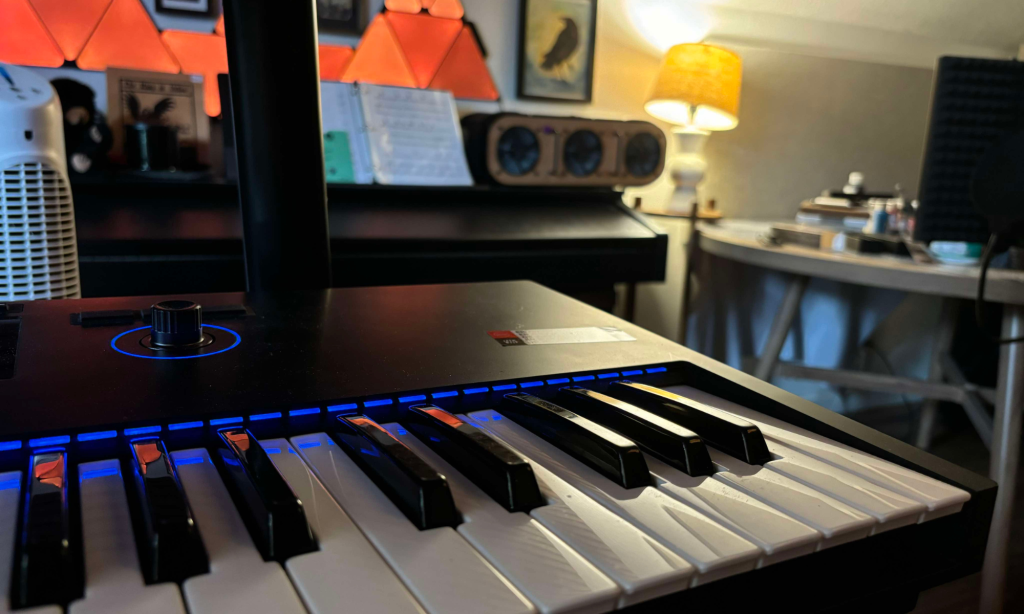
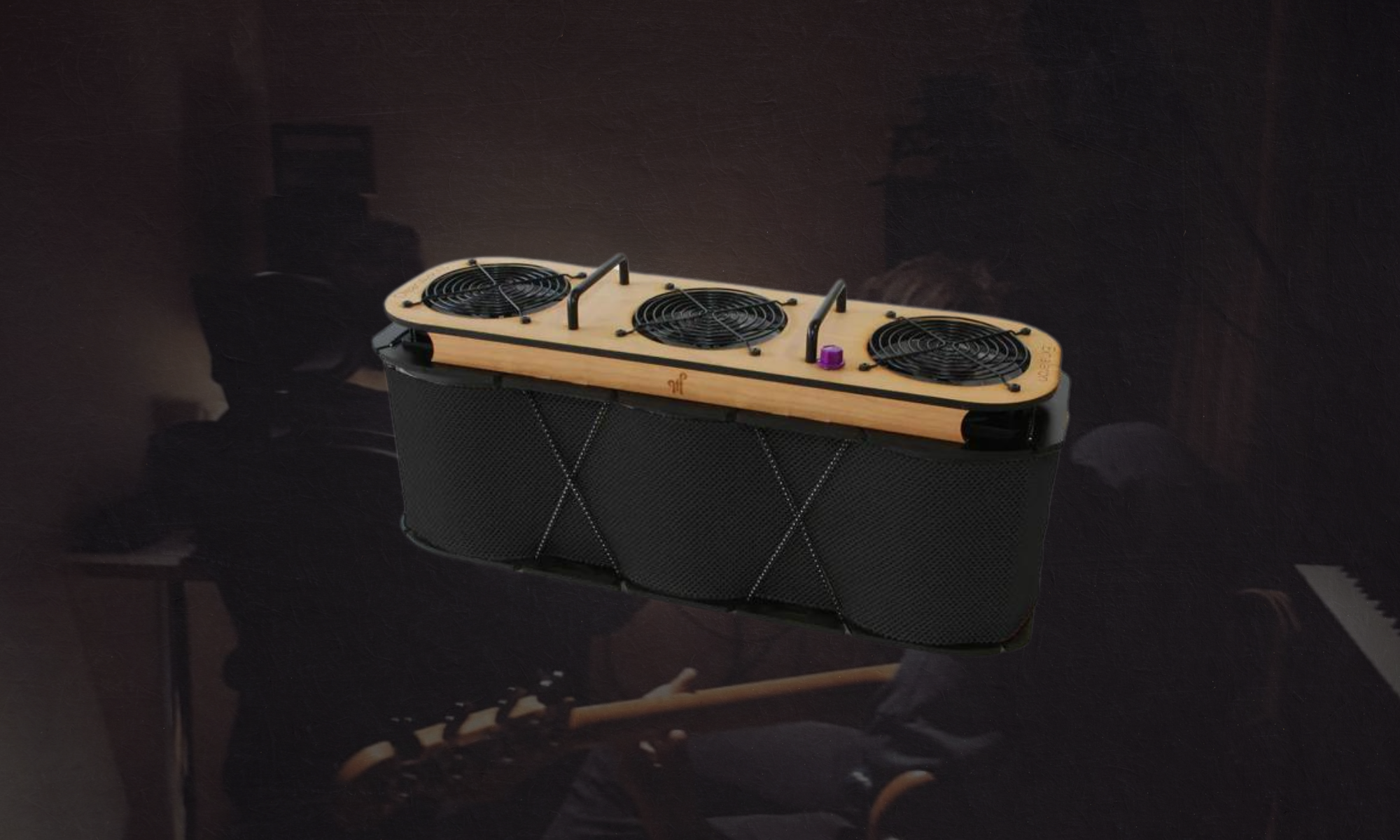
The Triple Exhalaron is a stylish and compact air purifier designed for medium-sized rooms, such as larger bedrooms, offices, and living areas. Priced at $349.00 USD, this model (Ultra Tri – UL507) features a black speaker-mesh shroud that is both washable and aesthetically pleasing. The unit can be placed flat as a centerpiece on conference tables or mounted on a wall using the included template and anchor screws. It provides CDC-recommended air cleaning coverage with 5 air changes per hour (ACH) and is powered via USB-C, making it portable and energy-efficient.
The Exhalaron Ultra Tri is equipped with three CoolerMaster Mobius 2400 rpm pressure fans and custom HEPA H10 cylindrical filters, delivering a clean air delivery rate (CADR) of 120+ cfm at a quiet 35 dB sound pressure level. This makes it suitable for placement on nightstands or meeting tables, where it can effectively capture and clean air without disturbing the environment. The purifier is FCC and UL507 certified for electrical safety in the US and Canada, and it is also CARB certified to not emit ozone, ensuring safe operation.
This air purifier includes a simple purple speed control knob for adjusting fan speed, making it easy to use without complicated settings. The Exhalaron is compatible with various USB-C power banks, offering up to 10 hours of operation on the go. The unit’s design is focused on quiet, efficient operation, providing continuous protection from dust, dander, smoke, and airborne viruses, making it an ideal choice for maintaining a clean and healthy indoor environment.
Triple Exhalaron Review – What I Loved
It’s Incredibly Quiet
In a conventional air purifier, really the only thing that matters is if it cleans the air well or not – there really isn’t many metrics outside of that to go off of. But in a music studio, another crucial factor is how loud it is because you don’t want your microphones and recording gear picking up the low thrum that these things often emit. The Exhalaron is by far the quietest air filter I’ve ever heard. I’ll include an audio example below so you can hear just how little of that automatic, ambient hum—common with fans and air filters—this produces.
That’s its best feature: I was blown away by how quiet this thing is. Sure, it makes a bit of noise when you crank up the power, but that’s only to the highest level this thing can do (which you can hear in the example below).
But for everyday use, it’s about as close to silent as you can get, which is a massive advantage.
It Works Insanely Well
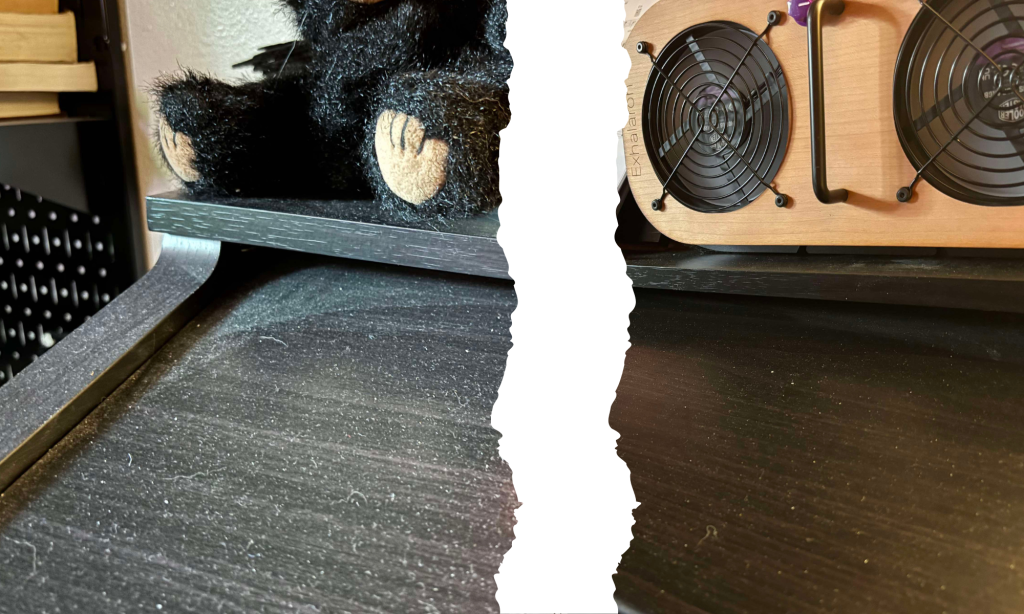
I’ve had my Exhalaron set up about seven or eight feet from my creative space, and it’s been running for the past six weeks or so. Before I got it, my studio would build up dust steadily. I usually had to clean it about weekly to keep dust and dander from collecting in the internals, jacks, patch bays, and more. But since having the Xhalaron off to the side—not even directly over my synths and keyboards—it has exceeded my expectations.
I set it up specifically for this test, knowing I’d be reviewing the product. I placed it near my black oak-encased digital piano, where dust and dander would be really obvious. Even after six weeks of running, there’s barely any visible dust collected. I did a quick clean before I installed it and left the corners of my piano untouched so I could see the difference in what would collect over a week versus what has accumulated in the six weeks since I installed the Exhalaron. As you can see from the clear iPhone picture, there’s been next to nothing in those six weeks compared to what was collected in just one week before it was installed.
In the section above, we’ve already discussed the tech specs and what Exhalaron collects exactly, but where the rubber meets the road is seeing the results for yourself. Check out the image to see what’s collected over six weeks is pretty impressive as I purposely didn’t clean the piano so that I could capture just how much dust collected over the last month and a half.
USB-Powered
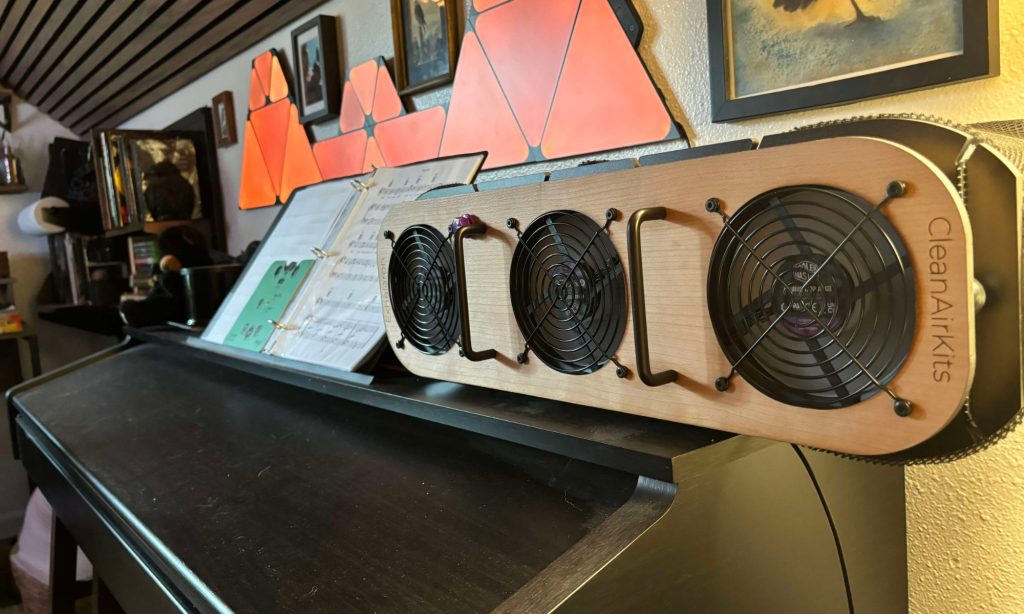
And it does all of the above with a very low power draw, running entirely off a USB-C plug.
This is great because you often need to be strategic with your power outlets in music studios and creative spaces—using power strip after power strip.
Powering it through USB-C is phenomenal, not only for keeping the power bill down since it runs fairly consistently to prevent dust buildup, but also from a power management perspective. It’s super easy to use and doesn’t take up valuable sockets in my studio, which are pretty limited.
Adjustable Fan Speeds

It offers a bit of customization in terms of how much power you want to give the fans, which is helpful for a few reasons. Larger creative spaces will need the fans running more aggressively to circulate the air effectively, while smaller bedroom studios might not need as much power to do the job.
Plus, there are extra benefits: the less power you use, the quieter it gets. So if you need the air filter running during vocal recording sessions, you can just dial down the power slightly—maybe set it to the 12 o’clock position instead of cranking it up to the 5 or 6 o’clock position, where it goes nearly silent.
But if you need to really clean the air overnight, crank it up to the 10 o’clock position, and it’ll work its magic. The level of customization and the ability to adjust the power for different needs is really top-notch.
It Looks Cooler That Its Alternatives
Music studios and creative spaces are all about the vibe, but most air purifiers really kill that vibe. They tend to look cold, overly techy, and sterile, which can be an eyesore when everything else in the space is perfectly curated by the person doing the creative work—whether that’s the music producer, musician, or engineer.
The Exhalaron, though, is actually much more aesthetically pleasing than most other options I’ve seen on the market. With its wood grain paneling and black mesh on top, it has a design that’s way more in tune with the studio environment. I wouldn’t go as far as to say it’s a set piece in the studio like some other essentials can be, but it definitely blends into the background in a much more fluid and less conspicuous way than those boring, icebox-looking, overly sterile, and uninspiring conventional air filters that flood the market.
What I Didn’t Dig
The Instruction Manual Was Super Lackluster
When unboxing this air purifier, I expected to see a conventional user manual, but instead, it came with just a piece of white paper with printed instructions on how to set it up. The manual felt far from professional. Granted, it’s not a game changer since I usually rely more on YouTube instructional videos, which this company has plenty of on their channel.
But still, unboxing it and finding only a single sheet of printer paper with instructions felt a bit silly.
Fortunately, the device is pretty much plug-and-play. You just plug it in, set the right speed, and let it do its thing. You won’t need to worry about it for a few months until it’s time to replace the air filter. That said, the so-called instruction manual left a lot to be desired.
No Onboard Timer
The Exhalaron air filter is at its best when you use a timer to operate it during specific windows. For me, that’s usually during the lunch hour and then overnight, which has been enough to keep my spaces dust-free, as shown in the images.
The timer is so essential to this device’s functionality that I’m honestly surprised it’s not built into the body and design. I’ve been using an old analog plug adapter to handle the timing, so it’s not complicated tech. It’s something I’d really love to see in the next iteration of the Exhalaron whenever the company decides to upgrade or refine this air purifier. A built-in timer would make it even better than it already is.
Filter Replacement Frequency
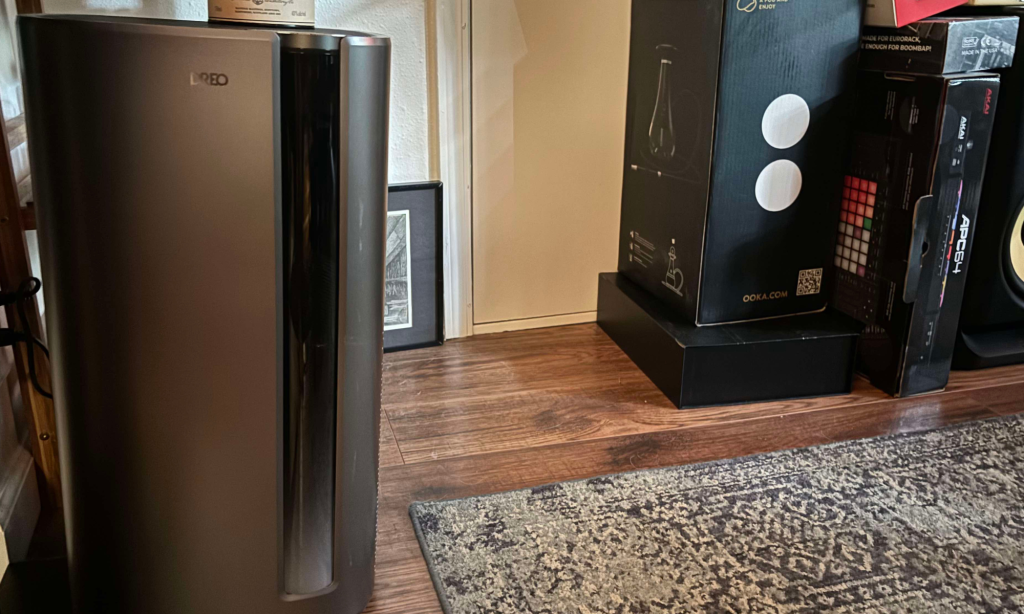
I wanted to save this hesitation for the very end because I hadn’t encountered it in the past six weeks to two months that I’ve been using this in my studio. However, after looking online and checking out the product’s landing pages, it says the air filter should be replaced every three to six months. Replacing the filter is easy, very user-friendly, and intuitive, but this is more frequent than most other air filters. For example, the DRIO air filter I’ve used for the past few years recommends swapping it out every eight months to a year.
So, needing to replace the Exhalaron filter more often could increase costs over the years.
That being said, this recommendation might apply more to situations where you’re running the device at full speed and full power constantly, 24/7. My strategy has been to use a timer so it’s only running for about a third of the day and night. Maybe this approach won’t be as taxing on the filters, and I might only need to replace them every eight months or so—like with the DREO. Only time will tell.
However, the recommendation to replace the filter every three months is something to keep in mind.
Is This Right For Your Studio?
I’ve mentioned it many times throughout this article, but an air purifier and filter is probably the most uninspiring thing you could get for your studio compared to synths, keyboards, acoustic treatment and more—yet it’s absolutely essential. If it’s not clear by now, I’m a massive fan of what this purifier does and the peace of mind it brings to my creative space. Not having to worry about dust, dander, and other particles getting into the nooks and crannies of the gear I’ve invested thousands of dollars into is invaluable.
The Exhalaron looks better than pretty much every other option on the market, and it’s more affordable in the long run. Even if you have to replace the filters more often than with some conventional air filters, it pays off in the long term. I highly recommend getting this one because most producers overlook air filters, and I want to highlight how important they really are.
I hope you at least consider the Exhalaron for your studio. It looks great, won’t break the bank, and will save you from the hassle of constantly cleaning your studio or dealing with damaged gear. This filter takes care of it all in one go, and the team behind it is fantastic as well. So, I highly recommend this company, this brand, and this air filter.

Will Vance is a professional music producer who has been involved in the industry for the better part of a decade and has been the managing editor at Magnetic Magazine since mid-2022. In that time period, he has published thousands of articles on music production, industry think pieces and educational articles about the music industry. Over the last decade as a professional music producer, Will Vance has also ran multiple successful and highly respected record labels in the industry, including Where The Heart Is Records as well as having launched a new label with a focus on community through Magnetic Magazine. When not running these labels or producing his own music, Vance is likely writing for other top industry sites like Waves or the Hyperbits Masterclass or working on his upcoming book on mindfulness in music production. On the rare chance he's not thinking about music production, he's probably running a game of Dungeons and Dragons with his friends which he has been the dungeon master for for many years.