Table of Contents
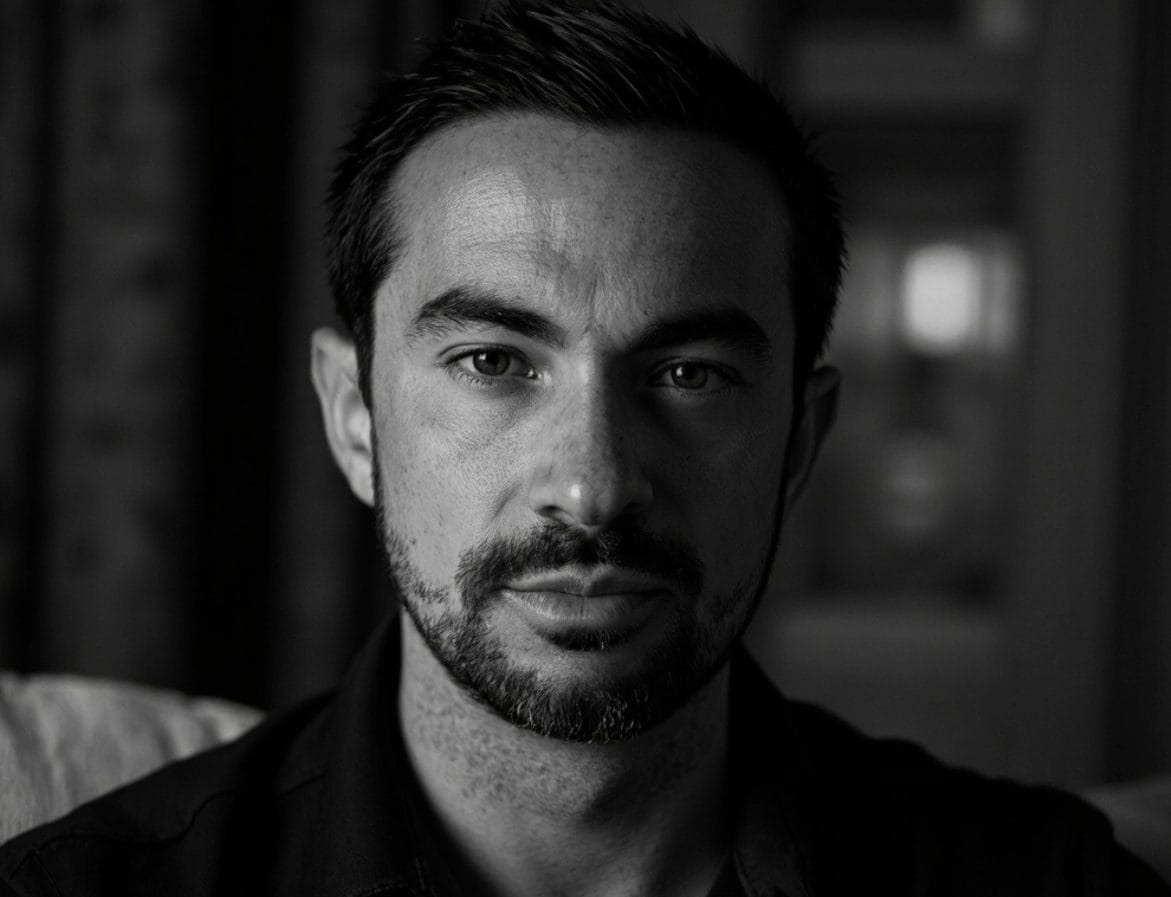
Image Courtesy Of Island Records
With his background in oncology nursing and his transition into music, Keshi has carved out a unique space in the music industry, blending R&B, hip hop, and lo-fi elements to create deeply personal and emotionally resonant tracks. His latest song, “Soft Spot,” continues this trend, showcasing his ability to fuse intimate storytelling with lush, minimalistic production.
Now, I know we often dive deep into songs that might seem straightforward on the surface. Still, there’s often much more simmering beneath, especially with artists like Keshi, who draw from a well of personal experiences and nuanced emotions. With my background in English Literature from the University of Oregon, I’ll see what I can do about dissecting the lyrics and music of “Soft Spot,” exploring the poetry and the symbolism intertwined throughout.
When you start unpacking the lyrics of “Soft Spot,” you’ll find a narrative of vulnerability and emotional conflict that resonates on a deep level. The song captures the tension between guarding oneself against emotional pain and the irresistible pull of affection. But, as with all well-crafted records these days, it requires a closer look to appreciate the layers of meaning at play fully, and that’s exactly what we’ll do here.
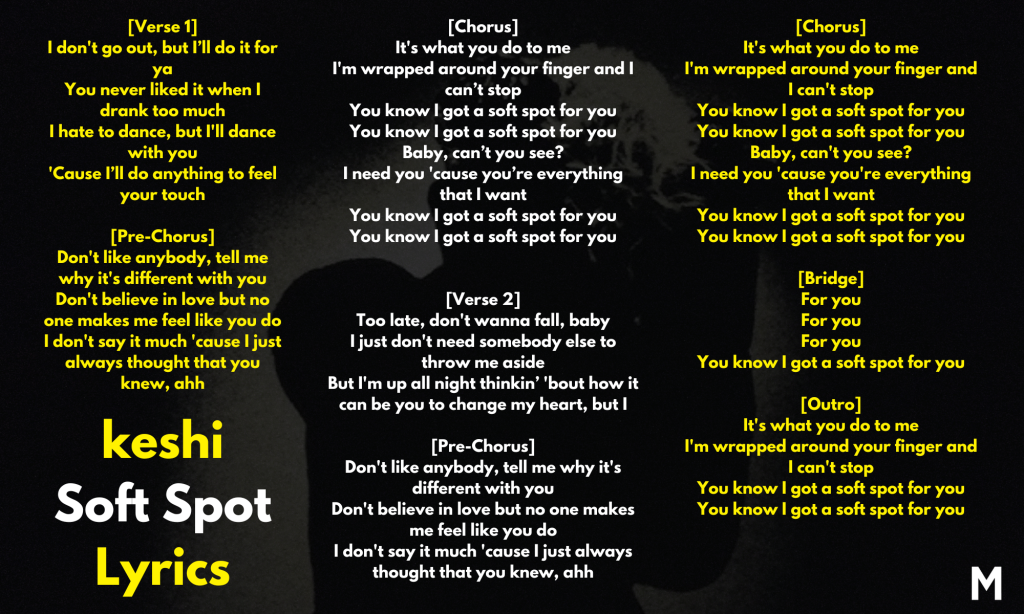
Keshi Soft Spot Lyrics
Keshi Soft Spot Meaning
“You know I got a soft spot for you”
The phrase “soft spot” is a key symbol in the song and appears multiple times.
I think this symbolizes the speaker’s vulnerability, something they aren’t accustomed to showing. A “soft spot” generally refers to a place where one is emotionally sensitive, suggesting that the speaker has a weakness regarding their partner. In my opinion, this repetition underscores the significance of this person in the speaker’s life—they’ve managed to pierce through the speaker’s emotional armor.
Conversly, it also could be the speaker reaffirming to themselves that they do, in fact, hold this vulnerable side for the object of their desire convincing themselves that they are, for lack of a word that’s not super nerdy, enthralled by the person they’re singing about.
“I’m wrapped around your finger and I can’t stop”
The line “I’m wrapped around your finger and I can’t stop” encapsulates the speaker’s sense of being caught in a web of affection and control. In my view, this imagery conveys both the allure and the danger of love—how it can simultaneously captivate and trap us. The speaker finds themselves doing things they normally wouldn’t, all in the name of maintaining this connection, which speaks volumes about the strength of their feelings.
However, this metaphor also hints at a deeper sense of helplessness, not too dissimilar from the main character in Keat’s poem La Belle Dame Sans Merci which you should read but I won’t subject you to too much cross comparisons (…well, at least right now).
The speaker is no longer in command of their own actions or emotions, underscoring the paradoxical nature of love—how it can be both empowering and disempowering at the same time. In my opinion, this reflects the internal conflict many people experience when they fall deeply in love; they are both drawn to and apprehensive about the intensity of their emotions.
Repetition plays a crucial role in emphasizing these complex emotions in both poetry and song lyrics.
When a word or phrase is repeated, it serves to reinforce the underlying feelings and ideas, making them more resonant and impactful. For example, in “Soft Spot,” the repetition of certain phrases—like “I’m wrapped around your finger”—not only highlights the speaker’s entrapment but also deepens our understanding of their emotional state.
I think it’s important to note how these repeated elements can transform a simple phrase into something much more significant, adding layers of meaning that might not be immediately apparent. Repetition, when used effectively, can turn a metaphor into a powerful expression of the speaker’s inner turmoil, making it clear just how deeply they are affected by their relationship.
“I hate to dance, but I’ll dance with you” / “You never liked it when I drank too much”
The line “I hate to dance, but I’ll dance with you” is more than just a casual mention of the speaker’s reluctance toward dancing. In my opinion, this line symbolizes the speaker’s willingness to push past their own discomfort for the sake of their partner. Dancing here represents a broader idea—stepping out of one’s comfort zone. The fact that the speaker dislikes dancing but is willing to do it anyway highlights the sacrifices and small compromises that often come with deep affection. It’s not just about the act of dancing; it’s about what that act represents—letting go of personal reservations to build a closer connection with someone else.
On the other hand, the line “You never liked it when I drank too much” subtly hints at past behaviors that the speaker is now reconsidering. In my view, this isn’t just a throwaway reference to drinking; it symbolizes a part of the speaker’s life or habits that may have once been a source of tension in the same way that Baudelaire said “You have to be always drunk…But on what? Wine, poetry or virtue, as you wish. But be drunk“. Perhaps the singer’s biggest flaw and vice is that he’s overly enthralled (sorry for that nerdy English-major word again) by his heart’s desire.
The acknowledgment of this behavior—particularly in the context of how it affects their partner—suggests a growing awareness and perhaps a desire to change but the struggle to put actions to words.
Together, these lines show how love can lead to self-reflection and change, not through overt demands, but through a subtle, almost unconscious shift in priorities. The speaker’s willingness to dance, despite their dislike, and their recognition of their partner’s feelings about their drinking, indicate a deeper emotional investment. In my opinion, these moments reveal how love can push us to grow and evolve in ways we might not expect, simply because we care about the other person’s happiness and well-being.
“Too late, don’t wanna fall, baby / I just don’t need somebody else to throw me aside”
This line encapsulates the speaker’s fear of getting hurt, symbolizing the internal conflict between their desire for love and their fear of emotional pain. The idea of “falling” symbolizes surrendering to love, but the speaker is hesitant, recognizing the risks involved.
I believe that this fear of being “thrown aside” reflects an experience of rejection or abandonment, which makes the speaker wary of fully committing to their feelings.
This inner turmoil is a common theme in love songs, but in “Soft Spot,” it is particularly poignant because it contrasts sharply with the speaker’s actions—they are already deeply invested, despite their reservations.
“Don’t like anybody, tell me why it’s different with you” / “But I’m up all night thinkin’ ’bout how it can be you to change my heart, but I…”
These lines introduce a series of rhetorical questions and unfinished thoughts that symbolize the speaker’s uncertainty and introspection. The questions reflect their disbelief at how someone has managed to break through their emotional barriers.
In my opinion, this symbolizes the unpredictable nature of love—it challenges preconceived notions and forces the speaker to confront feelings they might not fully understand. The unfinished thought (“but I…”) leaves the listener hanging, symbolizing the unresolved emotions and lingering doubts that the speaker is grappling with.
Central Motifs And Themes
In “Soft Spot,” Keshi uses symbolism to convey the complexities of love and vulnerability.
The recurring imagery of a “soft spot” and being “wrapped around your finger” speaks to the power dynamics and emotional exposure of falling in love. I think these symbols, combined with the speaker’s internal conflict and their transformative actions for their partner, create a rich tapestry of meaning beyond a simple love song.
In my opinion, Keshi is exploring how love can challenge our self-perceptions, push us to change, and make us more vulnerable than we ever thought possible. Through these symbols, the song offers a deep reflection on the nature of emotional attachment and the risks and rewards that come with it.

Will Vance is a professional music producer who has been involved in the industry for the better part of a decade and has been the managing editor at Magnetic Magazine since mid-2022. In that time period, he has published thousands of articles on music production, industry think pieces and educational articles about the music industry. Over the last decade as a professional music producer, Will Vance has also ran multiple successful and highly respected record labels in the industry, including Where The Heart Is Records as well as having launched a new label with a focus on community through Magnetic Magazine. When not running these labels or producing his own music, Vance is likely writing for other top industry sites like Waves or the Hyperbits Masterclass or working on his upcoming book on mindfulness in music production. On the rare chance he's not thinking about music production, he's probably running a game of Dungeons and Dragons with his friends which he has been the dungeon master for for many years.