Table of Contents
Image Credit: Zackery Michael 2022
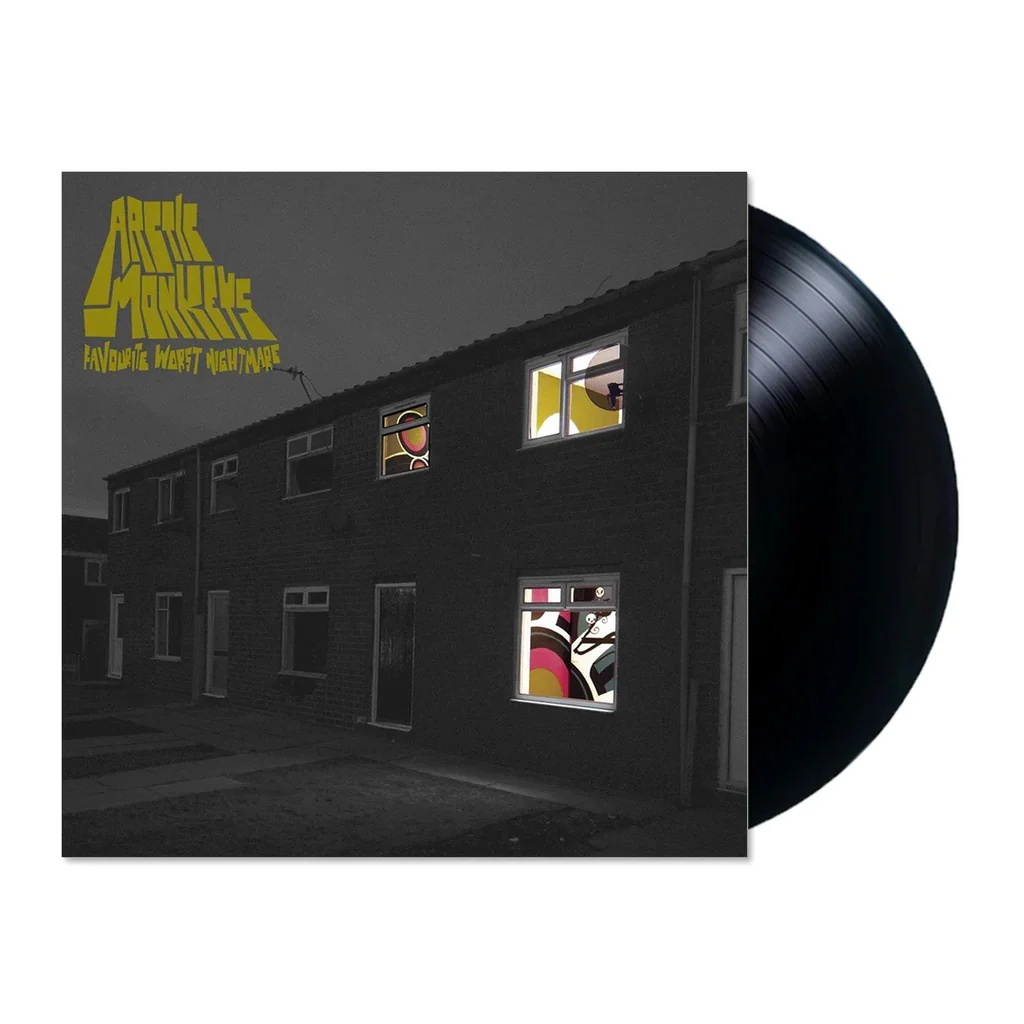
“Favourite Worst Nightmare” is Arctic Monkey’s second studio album, and it was released back on April 18, 2007, but the band had already been doing their thing for five years since their debut album dropped half a decade before that. They were making a massive impact on the Sheffield scene, which was going through significant changes in its own right. The city was shifting away from the steel industry and into a new era that would define its entire trajectory moving forward, and the Arctic Monkeys were there to ride that wave and be inspired, impacted, and influenced by all the changes at the time.
Artic Monkey’s “Favourite Worst Nightmare” dropped over 15 years ago; the game has changed heavily since then. Spotify and other streaming services favor the slow drip of singles, and artists aren’t prioritizing the dedicated all-in-one album drops like they were back in the day. But back then, sophomore album releases were a make-or-break moment for a band, none more so than the debut album release. Often, lightning could strike with a debut album, and a band would skyrocket into fame and fortune.
But often, these same bands fail to meet the same expectations with the sophomore album. This is far from the case with the Arctic Monkeys, whose sophomore album, Favorite Worst Nightmare, skyrocketed them to fame, fortune, infamy, and success that few see in the music industry.
Even though this album has been out for over a decade and a half, it’s still a popular topic of conversation across community forums and media outlets. People are still using it as a diving board to jump into broader AM discography, and even better, they are using “Favourite Worst Nightmare” as a gateway drug into the genre and time period as a whole.
So with all that in mind, let’s take a retrospective look at the album, all the magic that all had to strike simultaneously to make it such a hit record as it was, and then doing a track-by-track retrospective breakdown, hearing my thoughts, initial impressions, and overall opinions of every song on this amazing, if not perfect album.
Initial And Lasting Receptions
To say that this album came out swinging would be an understatement. It dropped on April 18, 2007, in Japan and a week later, on April 23, in the UK. The immediate commercial success was evident. It debuted at number one across various UK charts and sold over 227,000 copies in its first week in the UK alone.
Much of this relates to how it compares to their initial album, “Whatever People Say I Am, That’s What I’m Not.” Favorite Worst Nightmare is far more musically ambitious, with more nuanced songwriting, percussion, and overall maturity in the songs. This can be attributed mainly to Alex Turner’s ability to push the envelope. If this sophomore album had been more similar, it wouldn’t have had the same cultural relevance or initial success.
The evolution and progression in songwriting and musicality piqued the curiosity of listeners who had become fans after falling in love with the debut album and aged and matured from when they first heard the band. As the listeners matured, the band’s growth and ability to push musical boundaries became a significant part of the album’s allure and initial success.
Snag The Vinyl Here
Popular Opinions
Some of the biggest media outlets and music journalism platforms at the time helped fuel the album’s critical acclaim. Major platforms like NME, Pitchfork, Rolling Stone, and the Daily Express had only positive things to say.
Pitchfork mentioned a new emotional depth. Rolling Stone described the album as more ambitious and heavier than the band’s debut, and the Daily Express called it a “shockingly good release that just gets better, faster, and stronger with each listen.”
While coverage in esteemed media platforms wasn’t the sole reason for the album’s success, it helped build momentum and create a lasting legacy. Even today, it’s hard to search for the best albums of all time or genre-defining albums of the early 2000s without seeing “Favorite Worst Nightmare” included. This album influenced and guided the direction of countless indie rock bands, impacting the musical trajectory of similar bands and adjacent genres over the past two decades.
The Producers Behind The Music
I recently wrote an article that makes an argument about the need to redefine what a music producer is in 2024, because what a music producer today, by today’s standards, is doing is way different than what a music producer was doing even back in 2007 when “Favourite Worst Nightmare” dropped. Back then, music producers played a very significant, albeit more backseat, role in the album and creation process.
That being said, they still had a massive driving and creative force into the end product, and I don’t think this album would have been nearly as impactful and magical if it hadn’t been for the co-production work of both James Ford and Mike Crossey, who did co-produce this album. James Ford is a versatile musician who’s been in the electronic world for ages, even leading up to the release of this album, working as a part of the duo Simian Mobile Disco. He’s worked with groups like Florence and the Machine, Foals, and Depeche Mode.
I think it’s that decade-and-era-spanning career and influence that he brought to this album that added the same edginess that can be seen in Depeche Mode. The sentimentality of Florence and the Machine and his other work added a unique guiding hand to the end product that turned out to be this album.
There’s a lot of crossover between the two co-producers track records and work experiences. Mike Crossey, on the other hand, has worked with many bands across slightly tangential genres or varying sounds. Once you hear the list of names, including Foals, The 1975, Wolf Alice, and many more, you realize that there is a particular sonic niche under which all these artists fit, even if direct comparisons aren’t immediately obvious.
The magic happens when the unique perspectives of Crossey’s and James Ford’s work blend and mesh with the Arctic Monkeys’ artistic mastery. Their styles and extensive experience across different genres provided a rich, diverse backdrop that helped elevate “Favourite Worst Nightmare” to its celebrated status.
A Retroactive Review Of The Album
Brianstorm
When it comes to an album’s opening song, it’s really hard to do better than “Brianstorm.” The song starts off with a super powerful energy, and despite being one of the shorter songs on the album—at only two minutes and fifty seconds—it packs a lot of energy and a great narrative arc from start to finish. As a professional music producer and mix engineer myself, it’s hard not to comment on the amazing mix-down of the song.
I love the panning of the rhythm, the chugging rhythm guitars, and the bright snappiness of the shuffling hi-hats that really jump out of the speakers. I always tell any students that I’m teaching that mix-downs are all about contrast, and I think that in this mix, a lot of the energy and intensity really comes from the contrast. The warm and punchy snares and kicks versus the bright, skippy hi-hats almost feel like they’re jumping out of the speakers.
It creates a real rhythmic backbone, and then the rest of the music expands across the stereo field to create this three-dimensional listening experience that’s impossible not to get lost in, right from the theatrical first tone of the track.
Teddy Picker
Back in college, when I was working on my creative writing degree, I had a teacher who told us about the concept of Chekhov’s gun: if you’re going to have a gun in your play in Act 1, it has to go off in Act 3. Another way of viewing that idea is that if you have something in Act 1 of the play, you must use it in Act 3. This is a perfect example of that concept but in a sonic or musical form.
There is no wasted element in this song, and every single layer, detail, and instrumentation feels as if it’s there for a specific reason. Every layer gets the absolute maximum usage or mileage. This is where the magic of “Teddy Picker” comes in and why it’s so impactful in a live setting. I’ve seen many videos of this song going off live, and I’ve heard many stories from friends who have seen Arctic Monkeys play live.
No song in their entire catalog goes off on big systems better than “Teddy Picker.” This primarily comes down to the minimal instrumentation, which allows for the maximum impact from those instruments and the few choice elements included, making it so impactful and punchy.
D is for Dangerous
Working predominantly in the electronic and dance music world as a producer and artist, you often lose the whole group or band aspect of music creation. Sure, you have collaborations and stuff like that, but most of those are done remotely. The creative act of producing most club music I work in is pretty insular. It’s easy to forget how music, especially when done by experts in their craft, is greater than the sum of its parts.
“D Is for Dangerous” is a picture-perfect example of this. The minimal use of instrumentation allows for much more space in the mix for the band, vocal harmonies, and the band’s call and response between each other. This would be impossible to achieve with one person. The fact that all members of Arctic Monkeys chime in, contributing to the end result and working off each other’s harmonies, really is exponentially greater than the sum of each individual layer. It’s an impressive song that’s easy to get lost in.
And it’s the shortest track on the album! Damn impressive.
Balaclava
The magic of “Balaclava,” in my opinion, comes from simple loops stacking together to create complex interactions. The guitar, especially with a lead guitar playing, is layered over a swingy, syncopated, but consistent bass line. This bass groove is laid over a simple drum pattern featuring Matt Helders’ classic skippy hi-hats. This combination creates a simple but infectious foundation for the track, allowing the lyrics with a strange cadence to play and, interestingly, ride the beat.
The word choices and lyrical delivery are intentionally tight, with some lines being longer than others to ride the swingy foundation in complex ways. It’s a perfect example of simple layers working together to create complex interactions, resulting in a high-energy, dense song despite its simple instrumentation and composition.
The track maintains this exciting energy from start to finish, only letting up briefly in the middle, where the vocals lead.
Fluorescent Adolescent
Listening to an album like this from start to finish really makes you miss the golden days when artists prioritized releasing full albums over serving the algorithm with a consistent string of singles throughout the year.
What I enjoy about listening to an album and writing my comments about it is appreciating each song’s narrative arc and the album’s overall narrative arc. “Fluorescent Adolescent” is the perfect shift in energy, following the angsty, energy-packed tone of the first four tracks. It really starts to temper that energy, bringing in a much softer, more intimate tone that helps create a dynamic journey for the album.
It’s undoubtedly less aggressive, but the softer tones, mixed with the panning on the instruments and the vocal centered down the middle, create a gentle world to get lost in. This provides a stark yet welcome contrast to the more aggressive, distorted, and compressed instrument layers we’ve heard up to this point.
Only Ones Who Know
I tell my production students this all the time: listeners and audiences only have so much mental bandwidth to keep track of what is going on in a song. You can usually include more layers in the song if you have simpler sounds. Conversely, if you have fewer layers, you can maximize the included layers’ detail, movement, life, and expression. This song perfectly represents this concept. The song’s main elements are just the guitar and the vocal, allowing the listener to track each expression and detail in both layers without information overload.
Most of the heavy lifting here is done by the guitar, with its dusty, sonically dense 1950s-style reverb and tremolo effect, giving it a warbly and spacious sound. This adds a lot of movement and expression. If the same kind of guitar pedal board were used in other songs like “Brianstorm” or “Teddy Picker,” it would likely result in too much movement and make the track feel cluttered. However, with only two main layers in this song, you can get lost in each one. It’s a fantastic instrumentation and production decision to rely on just these two layers.
This approach not only drives home the emotional nature of the song but also continues the process of unwinding the energy established by the first four intense, angsty tracks. “Fluorescent Adolescent” began to foreshadow this unwinding, and this song solidifies it as a calm, intimate performance.
Do Me a Favour
I always think that a hallmark and sign of a perfectly executed song is when all components work together seamlessly. I’m not just talking about the music itself but also the sonic aesthetics, the arrangement, and the performances of each musician—all working in tandem to deliver the main ethos of the song. “Do Me a Favour” is a perfect example of this. It’s a well-executed breakup song, delivering everything you want from a dance-focused, energy-heavy track.
From the rolling toms at the beginning to the repetitious bass line that adds forward momentum to the groove, coupled with the slightly distorted, angsty vocals and the well-timed breakdowns that provide intimate pauses before driving back into the dance-focused hooks, all the individual layers work together to deliver the message.
This could be one of those songs that is very easy to overdo, overproduce, or overwrite. Sitting with the producers and the band in the studio, I can imagine constantly asking, “What does the song need? What does the song need at this moment? What does the production need here?” And only going as far as to include only the absolutely necessary elements and not an inch more.
This restraint marks a very seasoned, if not perfect, production.
This House Is a Circus
Reggae, dubstep, and other reggae-inspired genres have always fascinated me, mainly due to the offbeat or up swung chord plucks that create a swingy rhythm. This rhythm is simple and easy to track, allowing a lot of attention and bandwidth in the composition to go wild underneath. In this song, the guitar plucks on the upbeat create a rhythmic foundation, albeit a simple one, where the drums, bass, and vocals can aggressively work their magic. The vocals have a very distorted, Jack White’s Raconteurs-like delivery.
The cadence and melodies are reminiscent of their song “Salute Your Solution,” which I used to listen to all the time in my younger years. Connecting the dots and drawing similarities in this song is half the fun of listening to music of this quality, especially as it ages.
If You Were There, Beware
I totally get what people are saying when they applaud the complexity, maturity, and added nuance this album has over Arctic Monkeys’ debut album.
“And If You Were There, Beware” is a perfect shining example of this evolution, whether the varied rhythms move between 3/4 and 4/4 time signatures with a heavy swung syncopation or the lightly distorted, edgy tonality in the vocals. The minimalistic inspiration allows the time signatures to flow and the syncopations to change fluidly.
For all the reasons mentioned in other track reviews I chatted about above, this song exemplifies the maturity in songwriting and the overall instrumentation and performance that this album is often praised for.
The Bad Thing
I feel like I’ve listened to this album a hundred times or more in the over 15 years since it initially dropped. Because of that, it’s become such a part of my growing up that I often don’t look deeper into the lyrics of the Arctic Monkeys or other bands from my childhood. I can either sing them off the top of my head or just know the texture and soul of the record without actually knowing the words. In diving into some of the records I’ve discussed above and throughout this article, I’ve redicsovered a lot of nuance and layers in the lyrics.
It honestly gave me a slightly deeper appreciation for the band.
But that all goes out the window with this track. Not saying it’s bad or not up to the quality of the rest of the music on this album.
On the contrary, I think it is a continuation of the hit records that the album is chock-full of. Revisiting these lyrics, they are about as on-the-nose as you could imagine. The lyrics the “The Bad Thing,” coupled with the energetic and convincing delivery and performance of the instrumentation, are a perfect example of all the pieces working together to deliver the core idea of the song as effectively as possible. The fact that it’s one of the shortest songs on the album adds to the sense of energetic, convincing urgency that this song is aiming for in its lyrics and performance.
Old Yellow Bricks
Yellow Brick Road is a song that is obviously reaching the end of the album, and it’s just a continuation of everything else we’ve already discussed. If anything, it doesn’t stand out compared to the rest of them, in my opinion. If any, for any other reason, then there have just been so many other better songs that have led to this. If I did have to comment on it, I love the drums specifically. I know I’ve talked about the drums a lot throughout this in-depth review, and I am much more of a producer-minded artist and not a percussionist or drummer, so it’s bizarre for me to be making so many comments about the drums, even to myself.
But once again, the drums in this song stick out to me. The syncopation and delivery of the drums is minimal but complex through the minimalism and the length, especially of the snare. It’s not snappy, punchy, bright, and brittle like so many other snares have been throughout this album. It’s long and loose and takes up a lot of the mix, which I think adds to the song’s loose, lagging groove, which helps set a fantastic foundation for the rest of the instruments and vocals and stuff to build up around.
505
A few songs ago, I kind of talked about the narrative arc, not only of individual songs on an album, but the album overall from start to finish. And I think there’s a point of choice on putting the song 505 at the very end.
And I think it’s honestly likely one of the main defining points about why this album has been hailed as one of their more lasting, more mature, I guess you could say, works. It really brings home that point, ending on a more somber, more texturally and timbrally interesting sort of arrangement, with the affected guitar sounds and slower sort of pacing of the song.
I think it’s a fantastic ending note and really leaves a unique, if not starkly different taste in your mouth, or at least in your ears, as you walk away from this album with “505” as its endpoint. You don’t feel angsty or rushed or, you know, forced into anything like so much of the other angsty, distorted, edgy, sort of garage band live texture that many of the other records have. You walk away with a very soft, if not contemplative, sort of mentality, which is a fantastic way to bring this record home.

Will Vance is a professional music producer who has been involved in the industry for the better part of a decade and has been the managing editor at Magnetic Magazine since mid-2022. In that time period, he has published thousands of articles on music production, industry think pieces and educational articles about the music industry. Over the last decade as a professional music producer, Will Vance has also ran multiple successful and highly respected record labels in the industry, including Where The Heart Is Records as well as having launched a new label with a focus on community through Magnetic Magazine. When not running these labels or producing his own music, Vance is likely writing for other top industry sites like Waves or the Hyperbits Masterclass or working on his upcoming book on mindfulness in music production. On the rare chance he's not thinking about music production, he's probably running a game of Dungeons and Dragons with his friends which he has been the dungeon master for for many years.