Table of Contents
Music production is a dynamic and constantly evolving art form, and keeping your tracks fresh and exciting can be challenging. However, incorporating new techniques and ideas into your productions can help you stand out and take your music to the next level. This article will explore five professional tips that can help you add creativity, texture, and excitement to your music. Whether you are a seasoned producer or just starting, these suggestions will give you new tools to enhance your productions and take your music to new heights.
From incorporating new sounds and textures to experimenting with different production techniques, these tips will provide the inspiration and tools you need to take your music to the next level. Whether you are looking to produce more engaging and exciting music or add a new level of creativity to your tracks, these suggestions are a great place to start. So, let’s dive in and discover ways to make your music more enjoyable.
Automate Everything
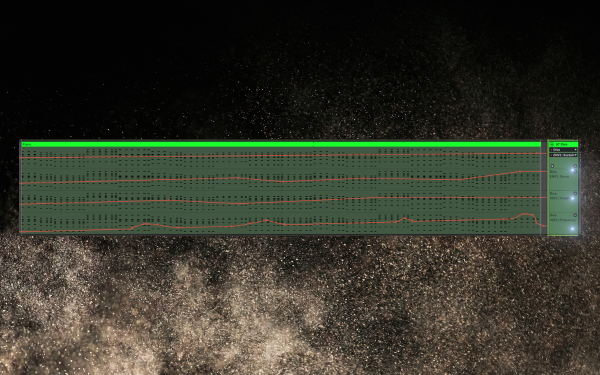
One of the biggest things that separates a professional track from an amateur is the absence of “Loopiness.” While I know most forms of dance music are formed simply by stacking various loops on each other to create energy and momentum, songs produced by the artists we look up never seem that simple.
Apart from the writing of the music itself, automation is the best way to prevent your music from sounding too repetitive and to help blur the lines between bars, loops, and sections. DAWs allow us to have dozens of parameters moving simultaneously in our soft synths, and we are no longer confined to the number of knobs and dials we can turn with just our two hands at once. It would be best if you had opportunities left, right, and center whenever you don’t have multiple movements, or points happening at once.
When automating synths, parameters like ADSR Envelopes, envelope amounts, filter cutoffs, and dry/wet effects are the first things I reach for on each layer. Start small with all these and slowly build them up as the track evolves to create more tension and energy. Throwing in a couple of extra flourishes where you crank the amounts up to the max over a one-bar turnaround can help draw your listener’s attention to the layer momentarily!
Hear This In Action
In my single “At Least We’re Safe,” this is heard across multiple layers throughout the song.
The first and most apparent is the lead, which slowly filters in throughout the song’s initial section, automating both the filters and the delay amount to have it slowly and blissfully wash into the foreground. At the climax, the filter envelope is opened up so that the finale is as massive and impactful as possible!
Also, hear how the piano layers change throughout the song. Different piano layers with other attacks and textures are interchanged throughout the song, giving the impression that more emotions are poured into the keys as the track develops. The piano hits are bright and upfront in the mix during the breakdown, where the arrangement is most sparse. But when the lead comes back at the climax, the piano notes are made softer by simultaneously automating the MIDI notes’ velocity and filter.
Extend Your Chord Progressions
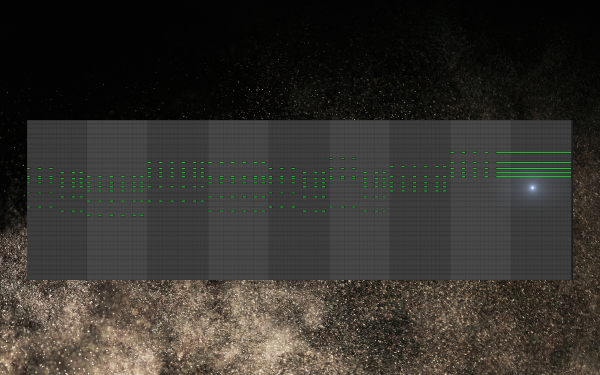
After you’ve created your track’s core loop, the arrangement phase is about finding clever ways to reuse and repurpose that initial 16—or 32-bar loop until it stays interesting throughout the song. While a basic chord progression can get pretty repetitive quickly, I use a few simple tricks on almost every one of my tracks to help chord progressions stay interesting (even if the audience isn’t sure why they stay intrigued).
The first and most basic way is to duplicate the chord progression, doubling its length. Then, remove the final chord and extend the chord before it. This creates a sense of held and suspended tension on the loop’s second iteration, which serves two purposes. It makes the second iteration of the loop slightly different from the first, thus retaining interest, and frees up space in the arrangement for melodic or percussive fills to spice up the end of the now-longer loop! It’s a win/win.
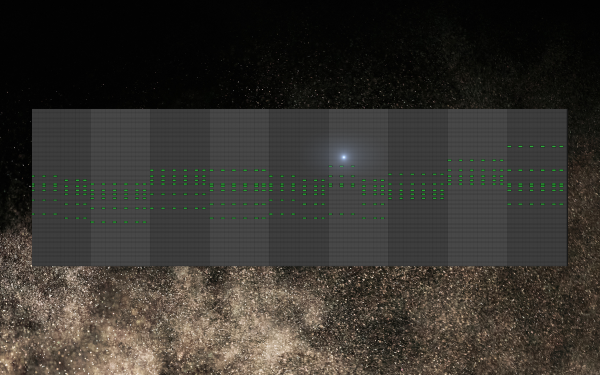
The second and far more sneaky way is to duplicate the core loop as we did before. Now on the second iteration of the progression, change just a few of the voicings of the chords so that, while they play the same chord in theory, the voicings are slightly different enough to elicit a different sentiment and feeling. This is a great way to get more mileage from your chords and extend their life.
Hear This In Action
You can hear a combination of the two notes above in my single “Algebra of Contentedness.”
In the section leading up to the breakdown, there is a triumphant change that feels like a chord change in the bass line. But in reality, it is just the bass line playing a different root note of the chord, which elicits a different, more triumphant emotional response in the section leading up to the breakdown. This subtle change shifts the focus from the monotonous feeling of the groovier section that proceeded enough to help keep the entirety of the track fresh and exciting.
Next, in the breaking, mere moments before the kick drum comes back in, I hold the second-to-last chord for twice its length instead of letting the chord progression resolve. This creates a moment of that held tension I had described earlier, hoping to force the audience to hold their breath in expectation before the final drop comes in with heightened impact.
Use What You Have (…Don’t Add More Unless You Need To)
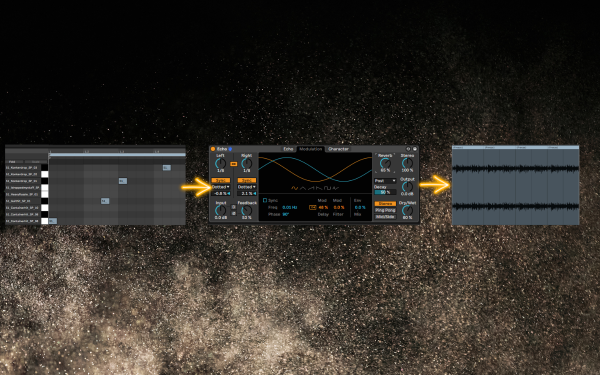
It can be tempting to add more layers, effects, sweeps, and soundbeds to your track to achieve the same texture and detail that your favorite artists manage with ease in their productions. But despite widespread assumption, this couldn’t be further from the best possible move. Instead, look for ways to reuse and repurpose elements you already have in your track for atmospheres, risers, and ear candies.
A few years ago, another professional producer colleague told me a piece of wisdom that changed my perspective on this entirely. So let me share that with you here. She said the brain could only really focus on 4-5 elements in the track overall, and anything else you add on top of those core elements begins to chip away at the continuity and cohesiveness of the track. A couple extra tonal sweeps and risers won’t be enough to tank the track, but adding more than is necessary and the culmination of it all will seriously damage the end result.
Imagine going to see a standard 4-piece rock band at a local venue, and for each song, they had a different person come on stage to play an entirely new crash cymbal or incidental effect. That seems pretty strange. Well, the same concept applies to music production.
Just because you CAN add anything and everything you want doesn’t always mean you should.
Hear This In Action
Notice in my remix song that I released last year how a tone of texture and ambiance in the sparse sections of the arrangement still feel complete and detailed? We didn’t have to overthink this one. We used a tasteful amount of delay and reverb on a couple of the percussions to help fill that space with elements already inherent to the track.
An Afterlife-like synth also comes in, and that further helps fill in that tonal space with its reverb and secondary layer, which is quieter and with a far longer release time. It’s subtle, but we all needed to fill out that little extra detail that made the track sound excellent.
Get More Mileage From Your Melodies
It can be easy to assume that a melody should almost be constantly playing, as most MIDI packs that you might download or songs you hear have their melodies playing a constant string of notes with little to no dead space in between. And while those melodies indeed work, a different approach can be used to help get more mileage out of your notes and occupy more real estate in the song before they overstay their welcome.
Break your melodies into shorter riffs and leave a few bars in between each of the riffs! If the dead space between the interpretations feels a little too stale or quiet, add interest with delays and reverb to fill the space with things already in the song (as described in the point above). This is a little tricky to explain by writing, and an example will speak volumes.
Hear This In Action
Listen to my track ‘Desperate Only’ released a few years ago. Do you notice how the lead could be more constant? Its true power comes as much from the silence between the riffs as it does from the melodies themselves!
And that silence builds anticipation for what’s to come and takes up more time in the song! This means that you can play multiple cycles of your loop without it
Simulate Double Tracking
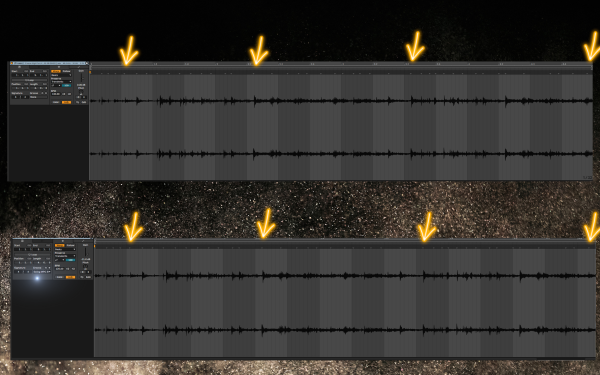
Using loops and instrumental samples is a blessing and a curse. And with how common it is to rely on loops and samples from Loopcloud or Splice these days, I would be doing you a disservice, by not sharing one of my favorite tips that have changed the game lately. Because the problem with loops is that they are incredibly one-dimensional; what you see is what you get.
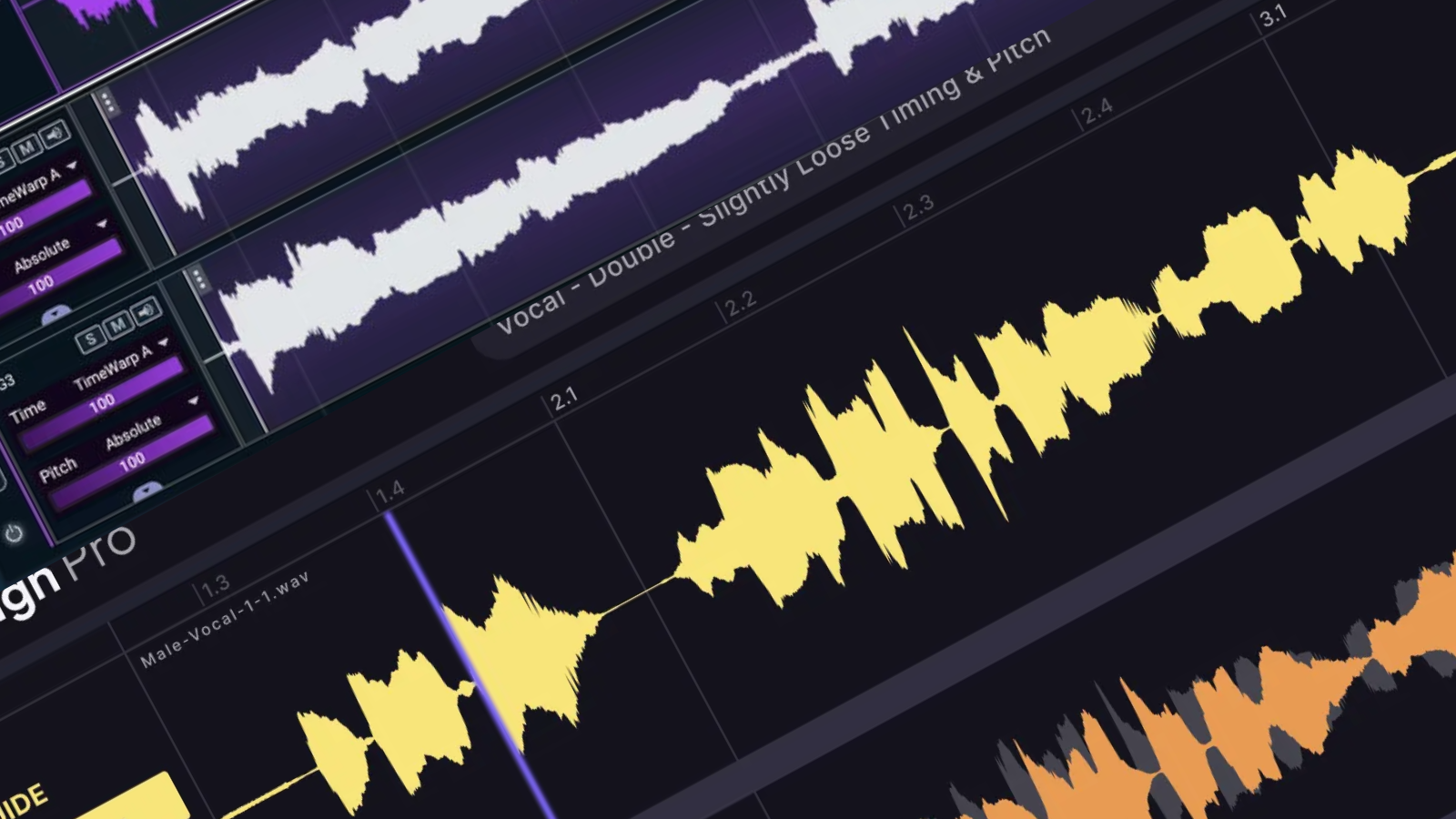
But the loops often lack a specific textural density and width that would be easy to introduce through layering if we had control of the MIDI and the VSTs playing the loop. But by mimicking the concept of double-tracking on samples and loops, you can introduce all of these qualities with just a few keystrokes and turn a basic sample into one that’s wider and more nuanced.
Here’s how it’s done…
The first step is to take your audio loop and duplicate it onto a new channel so that you have two identical loops playing at the very same time.
The second step is to pan one hard left and the other hard right. You should turn the volumes of both channels down a bit, as stacking the samples on top of each other will likely increase the overall gain of the culminated signal.
Finally, find a subtle groove template to put one of your audio loops. Groove templates introduce minor timing and velocity adjustments to MIDI and audio loops and are a great way to replicate the effect of an instrumentalist playing the same riff imperfectly. The differences between the hard-panned channels will create more perceived width and allow you to get all of the benefits of double-tracking in a traditional studio.
Unfortunately, I don’t have an audio example for this one, but trying it out on a sample or loop of yours takes only a few moments, and the results are undeniable!
Conclusion
In conclusion, the professional tips outlined in this article have the potential to significantly enhance your music productions and bring you closer to achieving your musical goals. By incorporating these techniques and ideas into your work, you can create tracks that are not only engaging and creative but also more likely to attract the attention of listeners and music industry professionals.
In the ever-changing landscape of music, it’s important to constantly strive for improvement and innovation. By utilizing these tips, you can differentiate your music from the rest and make it more appealing to a wider audience. This can result in increased streams and a higher likelihood of attracting the attention of record labels, promoters, and other industry players. So, take these suggestions to heart and apply them to your music production process. Your dedication and hard work will pay off in the form of a more robust and dynamic musical portfolio. Keep pushing the limits of your creativity, and never stop striving for excellence in your craft. The future is bright for those who are dedicated to their passion for music.

Will Vance is a professional music producer who has been involved in the industry for the better part of a decade and has been the managing editor at Magnetic Magazine since mid-2022. In that time period, he has published thousands of articles on music production, industry think pieces and educational articles about the music industry. Over the last decade as a professional music producer, Will Vance has also ran multiple successful and highly respected record labels in the industry, including Where The Heart Is Records as well as having launched a new label with a focus on community through Magnetic Magazine. When not running these labels or producing his own music, Vance is likely writing for other top industry sites like Waves or the Hyperbits Masterclass or working on his upcoming book on mindfulness in music production. On the rare chance he's not thinking about music production, he's probably running a game of Dungeons and Dragons with his friends which he has been the dungeon master for for many years.