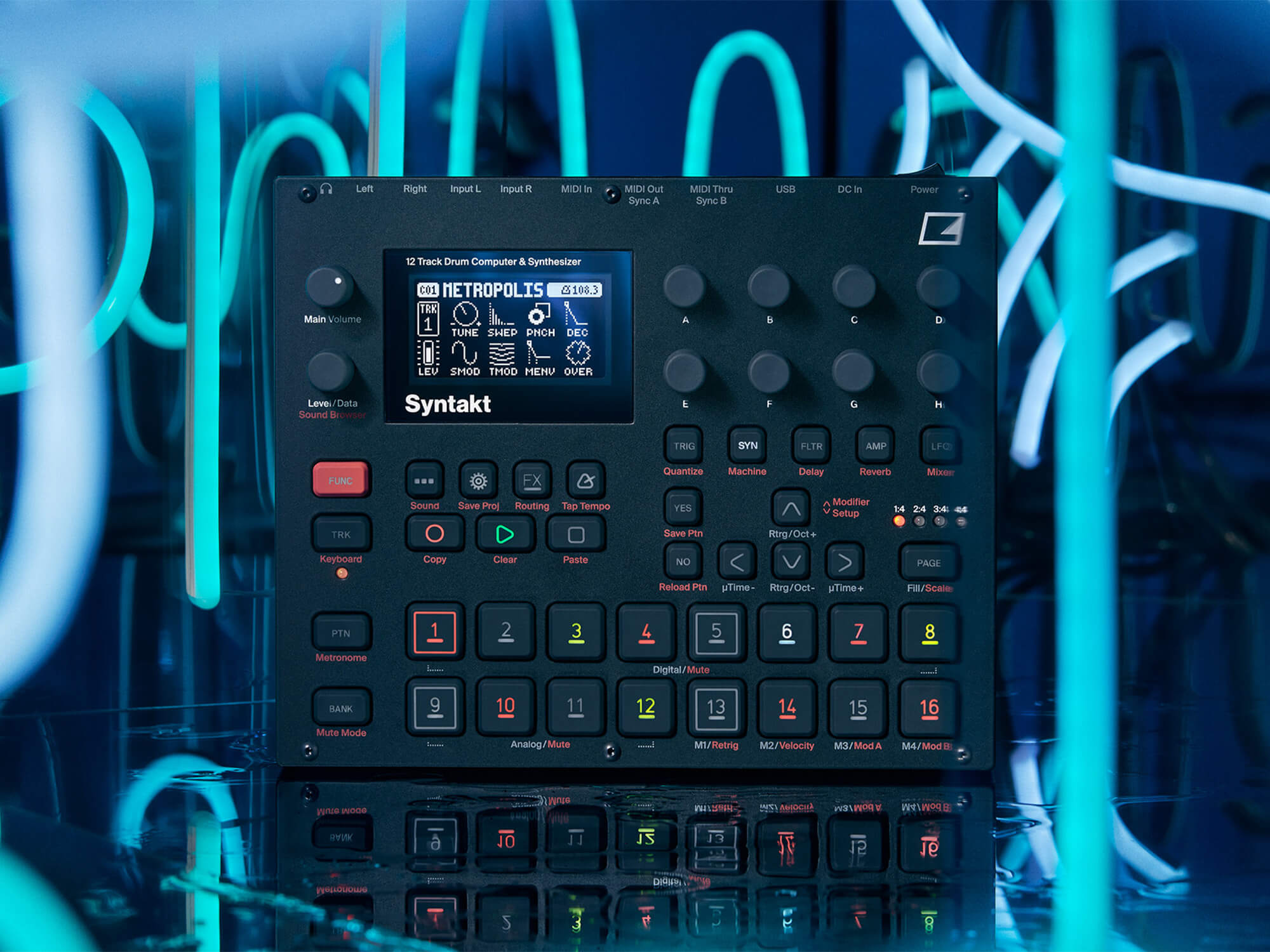
Music producers love their gear, and there always seems to be another way to get kicks, claps, hats, stabs, basslines, and weird percussive ideas recorded into Ableton. I had reviewed plenty of hardware before the original version of this article ran, but the Elektron world still felt like something I understood from the outside more than from the desk.
That changed after spending real time with the Elektron Syntakt. The cult following made a lot more sense once the machine was in my studio. Between the sound engines, sequencer behavior, performance options, and the way small patterns can turn into full arrangements, it quickly earned a place in my setup for one specific reason: it makes electronic music feel physical again.
Quick answer: The Elektron Syntakt is still worth buying in 2026 if you want a 12-track hybrid drum computer and synth with Elektron sequencing, analog and digital machines, FX sequencing, MIDI tracks, Overbridge, and new OS 1.40 sample playback. Skip it if sampling, battery power, pads, or a full DAW-style workstation matter more.
What Is The 2026 Verdict On The Elektron Syntakt?
The Elektron Syntakt is still worth buying in 2026, especially now that OS 1.40 has made it a more flexible machine than it was at launch.
When I first reviewed it in 2022, the main takeaway was that Syntakt made me understand the Elektron obsession. That is still true. This box has a way of making a small idea feel playable fast. A one-bar drum pattern can become a shifting groove. A simple bassline can gain life from parameter locks. A basic percussion track can turn into a whole rhythmic identity once the FX track starts doing its thing.
The current buying note is that Syntakt now sits in a very different Elektron lineup than it did when it launched. Digitakt II handles stereo sampling. Digitone II handles deeper FM and polyphonic digital synthesis. Analog Rytm MKII gives you analog drums, sampling, pads, and individual outputs for far more money. Syntakt sits between those worlds as a hybrid drum synth, groovebox, and performance sequencer.
My 2026 verdict is simple: buy Syntakt if you want an Elektron box that makes drums, basses, synth lines, metallic hits, weird percussion, and live pattern variation from one focused surface. Buy Digitakt II if samples are the center. Buy Digitone II if synthesis matters more. Buy Analog Rytm MKII if you want the premium analog drum flagship.
What Is The Elektron Syntakt?
Syntakt has been out for a while now, but there is a reason why this 12-track drum computer is still being hailed as one of the best studio devices out there. For those familiar with the Elektron production ecosystem in every Elektron device, the Syntakt is a blend of some of the more popular features of their other drum computers like Digitone, Analog Rytm, and Model Cycles. For those who are not so familiar with the Elektron ecosystem, let’s start simply by saying these portable groove boxes make producing tracks on the go easy and inspiring.
Like many other of the Elektron decides, the Syntakt has a deep and intuitive sequence that is as creative as it is functional. Being able to jump between the sequencer and the keyboard allows you to input simple riffs into the sequencer as fast as you can switch between different track layers.
All in all, the ease of use and the deep functionality of this groovebox mean that whipping up ideas and modulating every time detail has never been easier. As such, it opens up many creative doors to be used in your workflow however you see fit.
Learn More About This Drum Computer While Supporting Our Team Of Writers Through Our Partnership With Sweetwater Here
My Favorite Features Of The Syntakt
Having had the luxury of playing around with the Syntakt sent to me over the last month, I understand why many in the production community love Syntakt and the Elektron ecosystem. But out of the many different bells and whistles that make this device unique, these three stood out the most and are the leading reasons why it made it to the list of the greatest grooveboxes of the year this year!
The Sounds
The Syntakt has a ton of unique onboard sounds on its core drive that all sound as powerful, punchy, and characteristically dense as you need them to be. This is good because this device isn’t a sample, which I will get to here in a second, so the sounds that come on board have to be good. (and they are).
Not only are the sounds precisely what you need them to be, but the modulation functionality allows you to quickly and easily shape and tone the sounds until they fit into the mix, which is damn cool.
The drums are certainly better than the instrument, but that’s exactly what I need from this in my workflow. After getting familiar with the sounds of this thing, I cannot see myself returning to drum racks and the Push 2, as Elektron has become essential to my workflow in as little as three or four weeks.
Its Community
I didn’t know this going into this review, but Elektron has a bit of a cult following with gear nuts and producers. As such, they have some of the most active forums and discussion boards for every single Elektron device made that rival the original production forums of the early 2010s.
Any question you have, any idea that crosses your mind, and any issue you need to troubleshoot can be answered on the Elektron-centric forums within an hour.
And because the ecosystem that all Elektrons share is so malleable, every producer has found exciting ways to use their devices that you may never have thought of. They are happy to share the hidden secrets and workflow hacks they stumble on with the entire community. Being part of the conversation and interacting with the posts on the highly-active forums you find is a surefire way to discover unthought-of secrets from your device almost weekly.
Its Sequencer
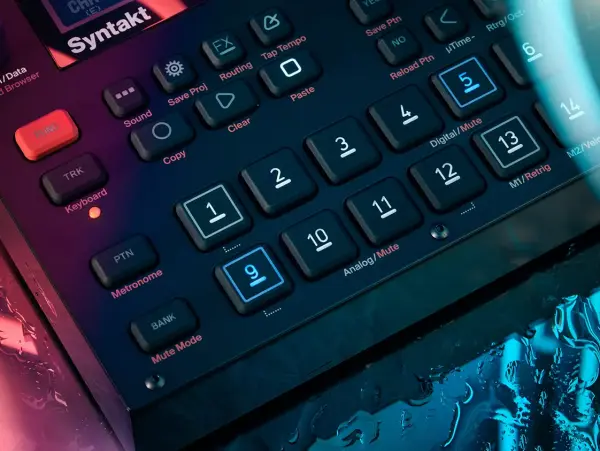
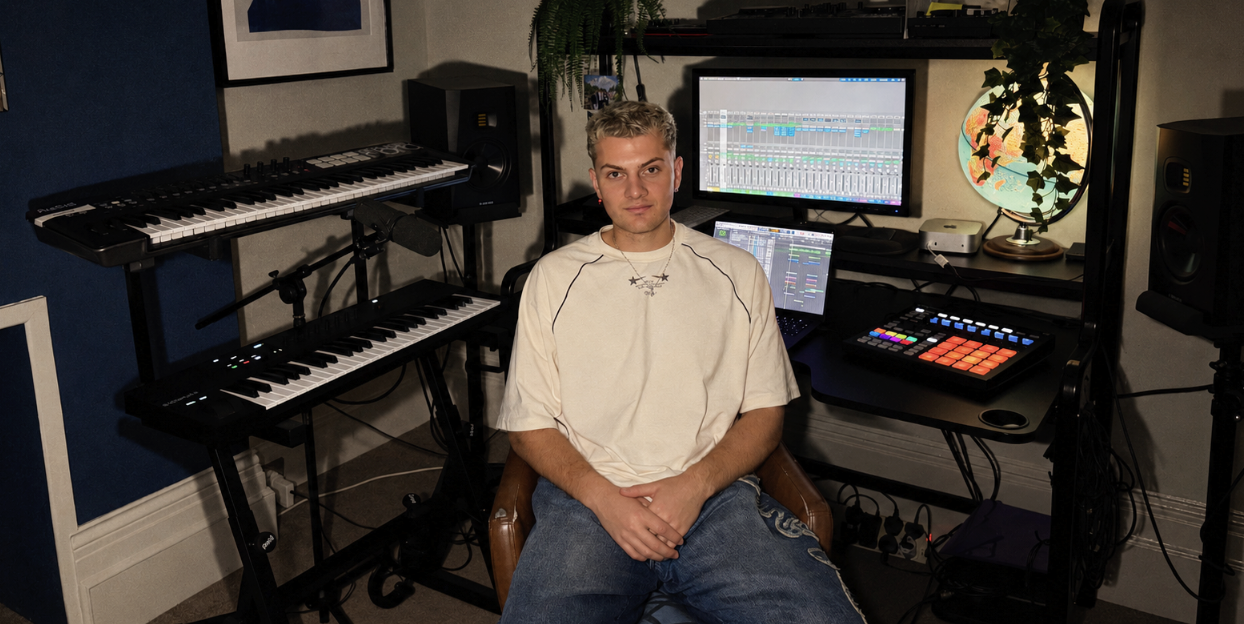
Where the Syntakt shines is in its drums – both the sequencer and the sounds mentioned above. The way I found this thing slotting into my workflow would be to write out the more musical parts in their entirety in Ableton and then start composing the backbone of my rhythm on the Syntakt. This way, I can build my beats around the natural rhythms of the music, and the malleability of the sounds and rhythms in the Syntakt make this more nuanced workflow a damn breeze.
You would think the sequencer would be a bit clunky, as there aren’t many buttons to access on this smaller device. Still, every square inch is used to its full potential, and you really can compose almost anything you want using only the 12 channels provided.
And with features like channel swing, global swing, Trig gates, and micro timing adjustments all accessible within just a click or two, if you can think it, you can program it quickly on this thing.
Awe-inspiring stuff.
What I Wasn’t Crazy About…
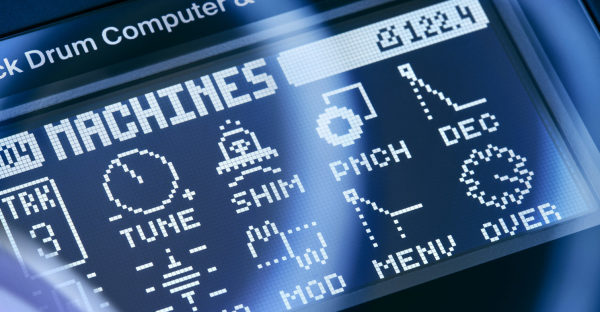
The Syntakt, like all of Elektron’s products, is a unique device. As such, I had a few gripes with it that I would have liked to have seen included. Let me break down what they are.
Its Instruments
I cannot state how much I loved the drums on this thing, but a large selling point of this device is ALL of its instruments (almost all of which I found to be rather sub-par).
Now, I will say first and foremost that all of the instruments included in the Syntakt have a specific sonic palette that makes them unique in their own right. I think that sonic palette isn’t for me. Watching a few other creators on YouTube create loops and songs during their reviews made this incredibly obvious to me when compared to my own productions which I’ve shared below.
All the instruments have a classic synth vibe and seem ideal for making bass lines, leads, and pads that would have fit right at home in the earliest days of house and techno. But to me, modern music production has such a different vibe to it that when creating the soft meldoic house and techno that is my niche as a producer, these instruments felt like they would come out of the left field if I included them.
I’ve linked some of the other YouTube videos below so you can see what other creators did compared to a couple of my releases below. Again, this is more stylistic and personal taste than anything else.
Its Learning Curve
This is a minor gripe but one that should be mentioned.
I say slight because the Elektron is seriously intimidating to look at when you first take it out of the box, and it can take a few sessions to get familiar with it truly. I had to experiment with it in bed while my wife slept next to me (she wore earplugs to tune out the delightfully tactile clicking of the buttons and pads) for the better part of a week and a half before I felt like the Syntakt and I understood each other.
But the second they have that breakthrough and feel like you “get it,” the workflow speed increases exponentially. Better yet, you will soon find that all Elektrons share a similar ecosystem, where learning one device means that you’ve essentially learned them all and instantly feel at home using a Digitakt as you do your Syntakt.
It’s Not A Sampler
Going into this review, which I did more or less blindly, I assumed this would be a sampler. It looks like it would be one, and the nearly $1k price tag would make you think that it does “all the things.” But I was a bit discouraged to discover that it is not a sampler, despite feeling like all it would take would be a simpler firmware update to turn it into one.
And while I was a bit bummed at first, I soon found that this was a secret advantage to this thing.
Soon after toying with this thing; shaping sounds, menu diving through modulations, and more, I soon loved how it forced you to work with what you have instead of scrolling through the thousands of kick samples I have on my HD and the infinite number of other drum samples I could download on Loopcloud. I think this is lowkey why I quickly found this to be one of my favorite new devices for the studio, as it allows you to dive into the actual creation of the music itself instantly and bypasses all the tedious sample finding, audio routing, and more.
How Much Does The Elektron Syntakt Cost In 2026?
The Elektron Syntakt is currently listed at $1,099 at Sweetwater. Sale pricing can drop below that, and used pricing depends heavily on condition, firmware, accessories, and seller reputation.
| Product | Current Price | Current Status | Best Fit |
|---|---|---|---|
| Elektron Syntakt | $1,099 | Current | Hybrid drum synth, sequencing, performance, and pattern writing |
| Elektron Digitakt II | $1,099 | Current | Stereo sampling, drum sequencing, and sample-based production |
| Elektron Digitone II | $1,099 | Current | FM, digital synthesis, melodic sequencing, and polyphonic parts |
| Elektron Analog Rytm MKII | $2,199 | Current | Premium analog drums, sampling, pads, and performance macros |
| Roland TR-8S | $899.99 | Current | TR drum sounds, samples, live performance, and classic drum-machine layout |
| Roland TR-1000 | Premium tier | Current | High-end Roland rhythm machine with analog, digital, and sampling |
| Erica Synths Perkons HD-01 | $2,209 | Current | Big live drum-synth performance and aggressive hands-on control |
| Arturia DrumBrute Impact | Around $299 | Current | Affordable analog drums and simple hands-on sequencing |
| Akai MPC One G2 | $799 | Current | Standalone sampling, arrangement, touchscreen, and broader DAW-like production |
Should You Buy The Elektron Syntakt In 2026?
Yes, you should buy the Elektron Syntakt in 2026 if you want a compact hybrid drum computer and synth that turns small patterns into full electronic ideas.
The original review’s main point still holds. Syntakt made me understand why people care so much about Elektron hardware. It is not because the box does everything. It is because it does a specific kind of electronic music writing extremely well.
In 2026, the recommendation is even clearer. Syntakt is for producers who want synthesized drums, basses, tonal hits, FX sequencing, MIDI tracks, short sample playback, and the Elektron sequencer in one compact unit. It is not for buyers who mainly want a sampler, a DAW replacement, a pad machine, or a battery-powered sketchpad.
If you can get one at a good price, Syntakt still feels like one of Elektron’s best middle-ground machines. It is focused enough to learn, wide enough to keep surprising you, and physical enough to pull ideas out of the screen.
Get the Elektron Syntakt here.

Will Vance is a professional music producer who has been involved in the industry for the better part of a decade and has been the managing editor at Magnetic Magazine since mid-2022. In that time period, he has published thousands of articles on music production, industry think pieces and educational articles about the music industry. Over the last decade as a professional music producer, Will Vance has also ran multiple successful and highly respected record labels in the industry, including Where The Heart Is Records as well as having launched a new label with a focus on community through Magnetic Magazine. When not running these labels or producing his own music, Vance is likely writing for other top industry sites like Waves or the Hyperbits Masterclass or working on his upcoming book on mindfulness in music production. On the rare chance he's not thinking about music production, he's probably running a game of Dungeons and Dragons with his friends which he has been the dungeon master for for many years.