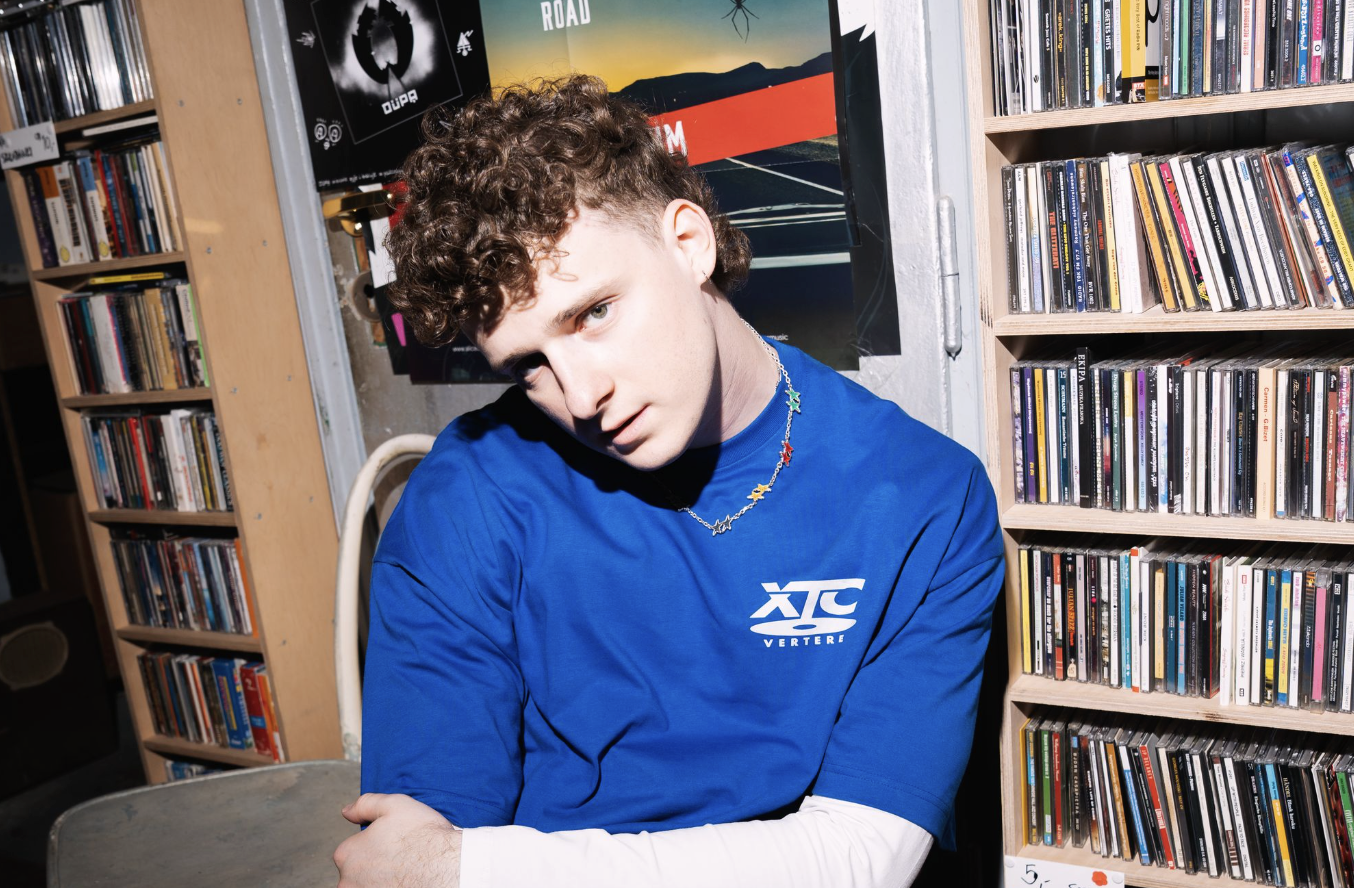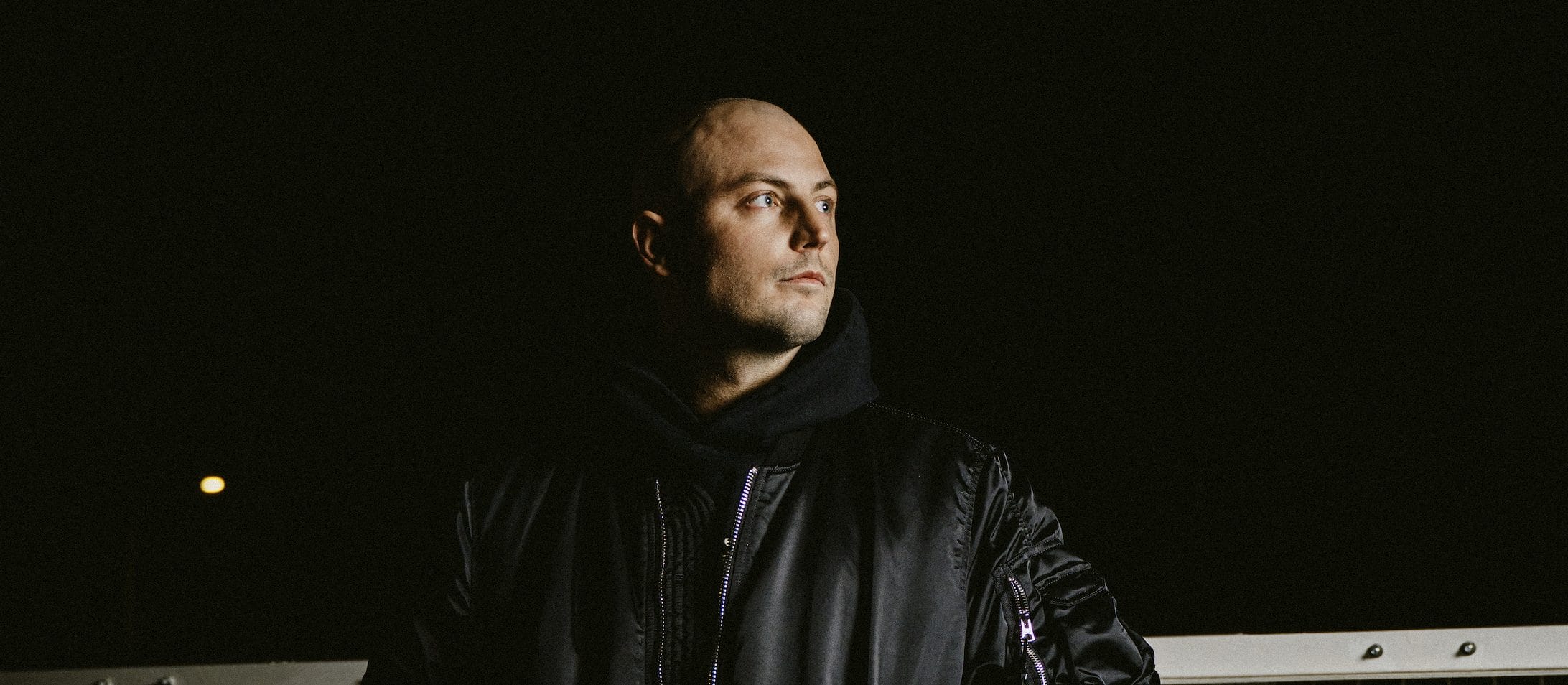
Joseph Capriati’s Metamorfosi Records brings in Italian DJ and producer Pheelo for his label debut, which dropped on February 27, 2026 with the four-track ‘All Night’ EP. Coming up through Italy’s underground party circuit, Pheelo’s studio work caught Capriati’s attention, and this release makes the case fast with stripped-back rhythm writing, tight low-end control, and a focus on tension that stays functional for late hours.
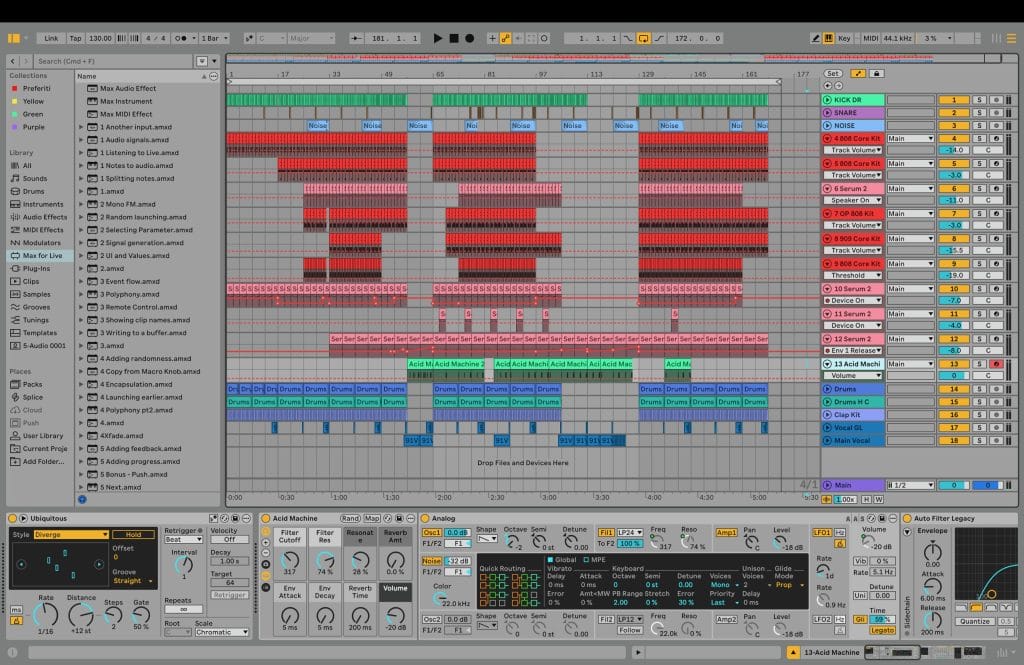
Across the EP, Pheelo keeps the framework lean and lets detail carry the weight. The title cut “All Night” leans into pressure and warped texture over a tight rhythm bed, while “Cause I’m Ice” pivots into sharp rap vocal placement over a warm minimal bassline. “Feel The Bazz” brings hook-driven vocal usage with raw drive and space management, and “Going Acid” closes with glitched elements and a syncopated low-end buzz that moves in and out of focus.
In the breakdown below, Pheelo explains how he built the central mid-bass in Serum 2, then shaped its punch and perceived energy with a customized OTT-style Multiband Dynamics setup, controlled harmonic density using Ableton Saturator, and finalized balance and loudness control with Waves L3 while protecting transient movement.
Serum 2
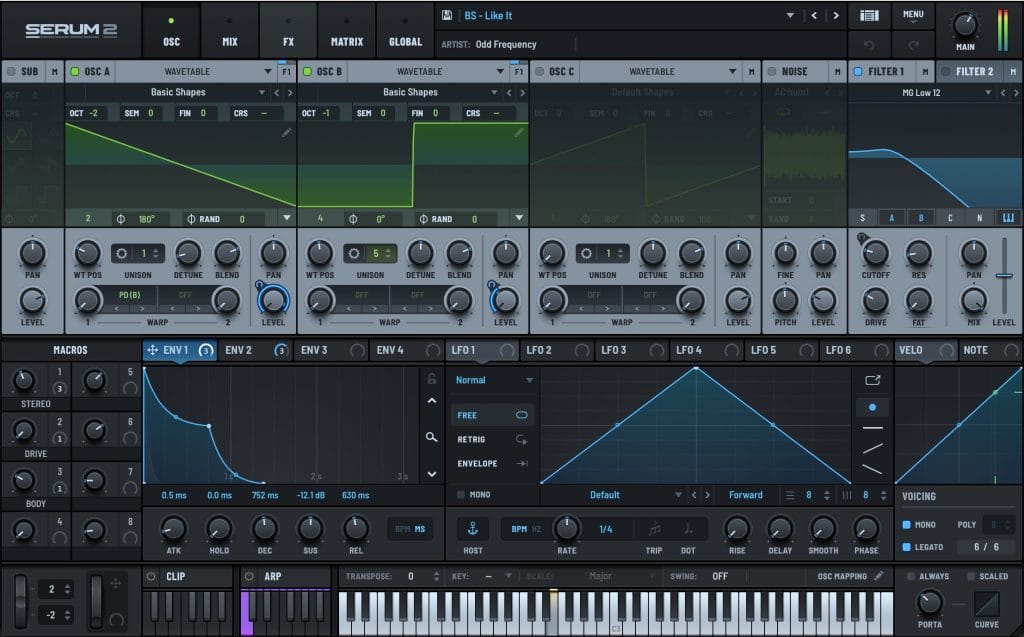
Serum 2 is a next-generation wavetable synthesizer that gives you extreme precision over tone shaping while still feeling fast and intuitive. The oscillator section is incredibly clean, and the modulation system makes it easy to create movement without overcomplicating the patch. What really stands out is how tight and controlled the low-end can be, which is crucial in club-focused genres. It’s a synth that can sound polished and aggressive at the same time, perfect for modern minimal productions.
For All Night, I started from the preset “BS Like It” and used it as the foundation for the main mid-bass line. From there, I shaped the sound by opening and closing the filter to create a rhythmic pulse that gives the groove its identity. The movement comes from subtle automation on the cutoff, making the bass feel alive and slightly aggressive without becoming too busy. I kept the line minimal — one to two notes — so the focus stays on groove and tension rather than melody. The result is an electronic, dark, and minimal mid-bass that defines the core theme of the record.
In Minimal / Deep Tech, less is always more. Focus on basslines built around one or two notes and let modulation create movement instead of adding extra layers. Use filter automation to make the groove breathe and feel dynamic, especially when working with electro-inspired textures. Contrast is key: tight 808-style drums, a solid sub (Serum or Prophet-style), and a controlled but aggressive mid-bass can create that dark, hypnotic energy that works on the dancefloor.
Multiband Dynamics
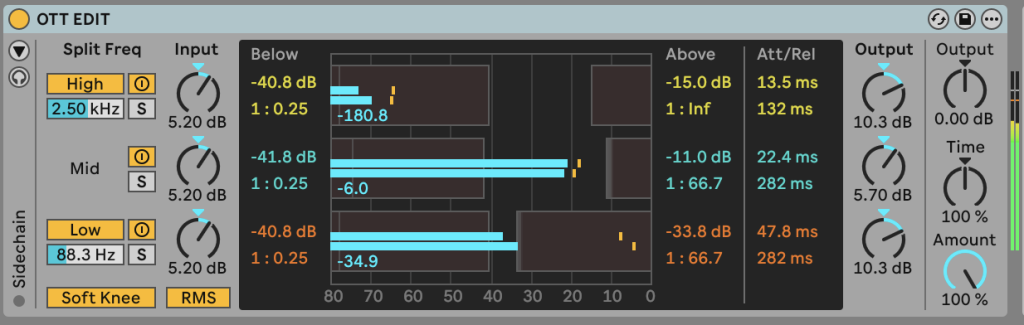
Multiband Dynamics in Ableton Live is a powerful dynamics processor that splits the signal into three frequency bands and applies independent compression and expansion to each one. The famous OTT preset (Over The Top) is known for its aggressive upward and downward compression, which enhances detail, brightness, and perceived loudness. It can completely reshape the character of a sound by pulling out hidden harmonics and tightening the low-end. While many producers use it heavily, it’s also incredibly effective when dialed in with subtle adjustments.
On All Night, I used a customized version of the OTT preset on the main mid-bass synth to push it forward in the mix without adding distortion. I adjusted the depth and threshold settings to increase dynamics while keeping the sound controlled and clean. The goal wasn’t to squash the signal, but to externalize the energy of the synth and make it feel more alive and present. It’s one of those tools that can transform a flat sound into something punchy and dynamic if used with intention.
In Minimal / Deep Tech, dynamics are everything — especially when the arrangement is stripped back. Use OTT not as a “make it loud” button, but as a detail enhancer to bring movement to minimal elements. Try lowering the amount and blending it in parallel to maintain groove and depth. When used carefully, it can make a simple one-note bassline feel textured and powerful without overcrowding the mix.
Saturator
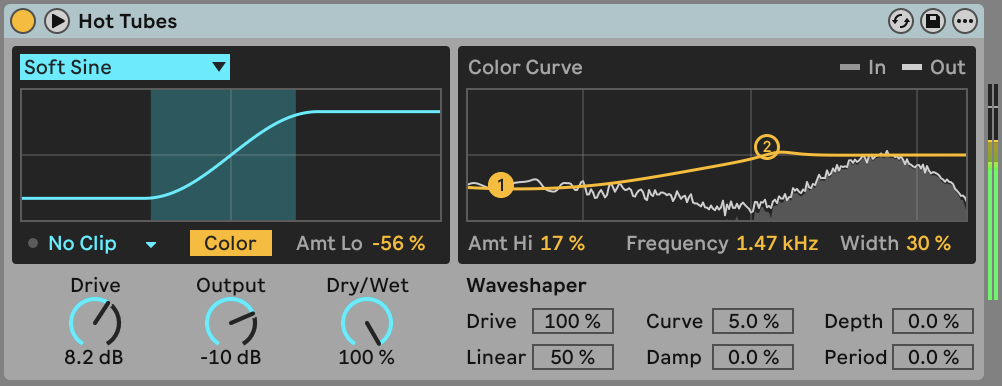
Saturator is Ableton Live’s built-in waveshaping and distortion device designed to add harmonic content, warmth, and character to any sound. It can operate subtly, enhancing upper harmonics and perceived loudness, or aggressively, transforming a clean signal into something gritty and raw. With different curve types and soft clipping options, it allows precise control over how the signal is driven. It’s a simple tool on the surface, but extremely powerful in shaping tone and density.
On All Night, I used Saturator mainly on the bass elements to add harmonic richness and help them translate better on smaller systems. I applied moderate drive with soft clipping enabled, keeping the output level controlled to avoid unwanted distortion. The idea wasn’t to make the sound aggressive, but to make it fuller and more present in the mix. In a minimal arrangement, even subtle saturation can make a single-note bassline feel more powerful and alive.
In Minimal / Deep Tech, saturation is more about texture than distortion. Use it to enhance low-end harmonics so your bass feels solid even at lower volumes. Try applying it in parallel to maintain punch while adding density. Small amounts can dramatically increase perceived energy without compromising the groove — and groove is everything in this genre.
L3 Multimaximizer
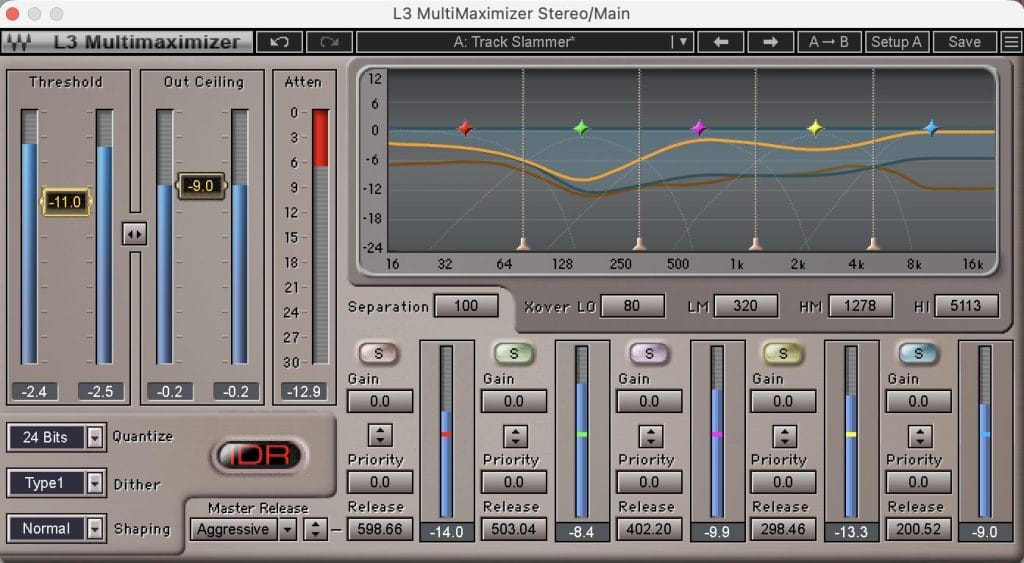
Waves L3 Multimaximizer is a multiband limiter and loudness maximizer designed to control peaks while preserving clarity and punch. Unlike a standard brickwall limiter, it distributes gain reduction across multiple frequency bands, allowing for more transparent loudness enhancement. It’s particularly effective when you want to increase perceived energy without completely flattening the mix. The automatic release control and priority settings make it very musical if used with moderation.
On All Night, I used L3 to add subtle color and dynamic control to key elements of the track. Rather than crushing the master, I applied it gently to enhance presence and tighten the overall balance. The goal was to give certain elements more density and perceived energy while keeping the groove intact. By carefully controlling the threshold and avoiding excessive gain reduction, the track maintains punch and movement instead of sounding over-limited.
In Minimal / Deep Tech, loudness should never kill groove. Use multiband limiting to control energy in specific frequency areas rather than flattening the entire mix. Keep gain reduction minimal and always A/B at matched levels. The dancefloor responds to dynamics — not just volume — so preserve transients and let the groove breathe.
Quick Fire Tips For Making Music
Tip #1:
The groove is more important than the sound design. If the drums don’t make you move before the drop, the drop won’t save you. In Minimal / Deep Tech, the swing between kick, 808 elements, and bassline is what creates hypnosis — not how many layers you stack.
Tip #2:
Automate something every 4 or 8 bars. Movement equals energy, and energy keeps listeners locked in even when the arrangement is stripped back. Filter cutoff, resonance, reverb sends, subtle saturation — small changes make a minimal track feel alive and evolving.
Tip #3:
Reference tracks at low volume. If your mix still hits quietly, it’ll destroy on a big system. Also check your bassline in mono — if it grooves and feels solid without stereo width tricks, you know it will work in the club.

Will Vance is a professional music producer who has been involved in the industry for the better part of a decade and has been the managing editor at Magnetic Magazine since mid-2022. In that time period, he has published thousands of articles on music production, industry think pieces and educational articles about the music industry. Over the last decade as a professional music producer, Will Vance has also ran multiple successful and highly respected record labels in the industry, including Where The Heart Is Records as well as having launched a new label with a focus on community through Magnetic Magazine. When not running these labels or producing his own music, Vance is likely writing for other top industry sites like Waves or the Hyperbits Masterclass or working on his upcoming book on mindfulness in music production. On the rare chance he's not thinking about music production, he's probably running a game of Dungeons and Dragons with his friends which he has been the dungeon master for for many years.