oeksound is celebrating the 10-year anniversary of Soothe, with the company framing it as a tool that moved from a grassroots release into regular use across professional sessions.
The core idea was simple and practical: automate the time-consuming, syllable-by-syllable EQ cleanup that engineers were already doing on vocals and other close-miked sources, then do it in a way that stayed controlled and repeatable across changing performances.
The follow-up release, Soothe2, extended that role in 2020 and became a common part of workflows for engineers working across different genres and recording environments.
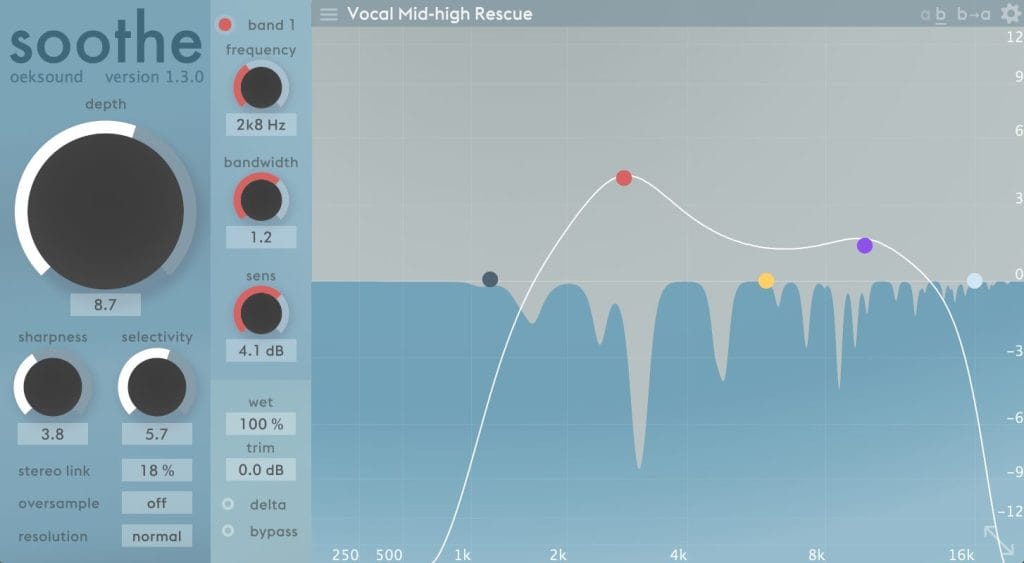
How Soothe got here, and why it stuck
Soothe was developed by Finnish engineer and programmer Olli Keskinen, who approached the problem from a working engineer’s point of view.
Engineers often end up chasing narrow resonances that change from note to note and from word to word, and doing that with static EQ can take a long time and still miss moving targets. Soothe’s pitch was that it could respond dynamically to those problems, reducing sharp frequency build-ups while keeping surrounding tone intact, which made it easier to keep a vocal or instrument sitting in place without constant manual moves.
The press release points to early traction on Gearspace, then a bigger wave of adoption after producer Greg Wells endorsed it publicly. That kind of signal matters in a professional community that relies on shared workflow knowledge, because engineers tend to commit to tools that save time while staying predictable under pressure.
By the time Soothe2 landed in 2020, it was positioned as an established option for engineers dealing with modern recording realities, including inconsistent rooms and fast-turnaround projects.
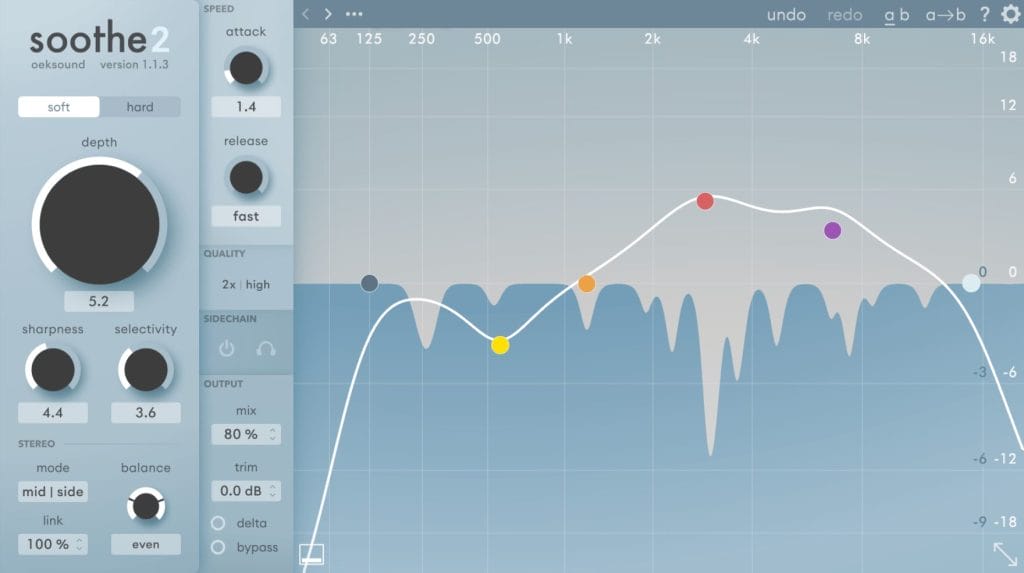
What it does in a modern chain
In plain terms, Soothe sits in the lane occupied by dynamic EQ and de-essing, but it focuses on resonance suppression that adapts to the source in real time.
The practical advantage is speed: instead of hunting and cutting a long list of narrow bands, you can target the areas that commonly get sharp in vocals, guitars, strings, or cymbals, then adjust intensity to fit the context. In the release text, engineers describe it as a first-pass tool that can reduce harsh moments quickly, so later decisions like compression, saturation, or additive EQ happen with fewer problems being pushed forward.
oeksound frames the last decade as proof that utility wins, and I get that angle from a production standpoint. When a plug-in consistently reduces time spent on corrective work, engineers adopt it, they share settings, and it becomes part of standard session templates. That through-line is really what this anniversary story is about: a specific problem, a focused solution, and a decade of steady integration into real working chains.

Will Vance is a professional music producer who has been involved in the industry for the better part of a decade and has been the managing editor at Magnetic Magazine since mid-2022. In that time period, he has published thousands of articles on music production, industry think pieces and educational articles about the music industry. Over the last decade as a professional music producer, Will Vance has also ran multiple successful and highly respected record labels in the industry, including Where The Heart Is Records as well as having launched a new label with a focus on community through Magnetic Magazine. When not running these labels or producing his own music, Vance is likely writing for other top industry sites like Waves or the Hyperbits Masterclass or working on his upcoming book on mindfulness in music production. On the rare chance he's not thinking about music production, he's probably running a game of Dungeons and Dragons with his friends which he has been the dungeon master for for many years.






![How It Was Made: JOKESONYOU & DJ IP – OTTF [Teletech]](https://magneticmag.com/wp-content/uploads/2026/08/artwork-ottf-1024x1024.jpeg)