Table of Contents
If you are searching for the best portable studio monitors for music producers in 2026, you are probably trying to balance sound accuracy, portability, connectivity, and price without sacrificing mix translation. The rise of compact studio monitors has completely changed how producers build mobile rigs, dorm room setups, travel studios, and flexible home production spaces.
Portable studio monitors today offer USB-C connectivity, Bluetooth options, onboard DSP, and surprisingly usable low-end response in cabinets that fit in a backpack. For producers working in apartments, shared homes, hotel rooms, or hybrid studio environments, small powered studio monitors have become essential tools rather than secondary references.
The best compact studio monitors now deliver real nearfield accuracy with bi-amped designs, room correction features, and enough SPL for serious production work. Whether you are producing electronic music, mixing podcasts, editing video, or building a laptop-based setup, choosing the right portable studio monitor in 2026 comes down to workflow compatibility as much as sound quality. In this guide, I break down the top portable studio monitors I have personally reviewed and tested, focusing on connectivity, real-world usability, and performance outside a perfectly treated room.
If your goal is to build a reliable, travel-friendly production setup without compromising clarity, this list will help you choose the right system for your workflow.
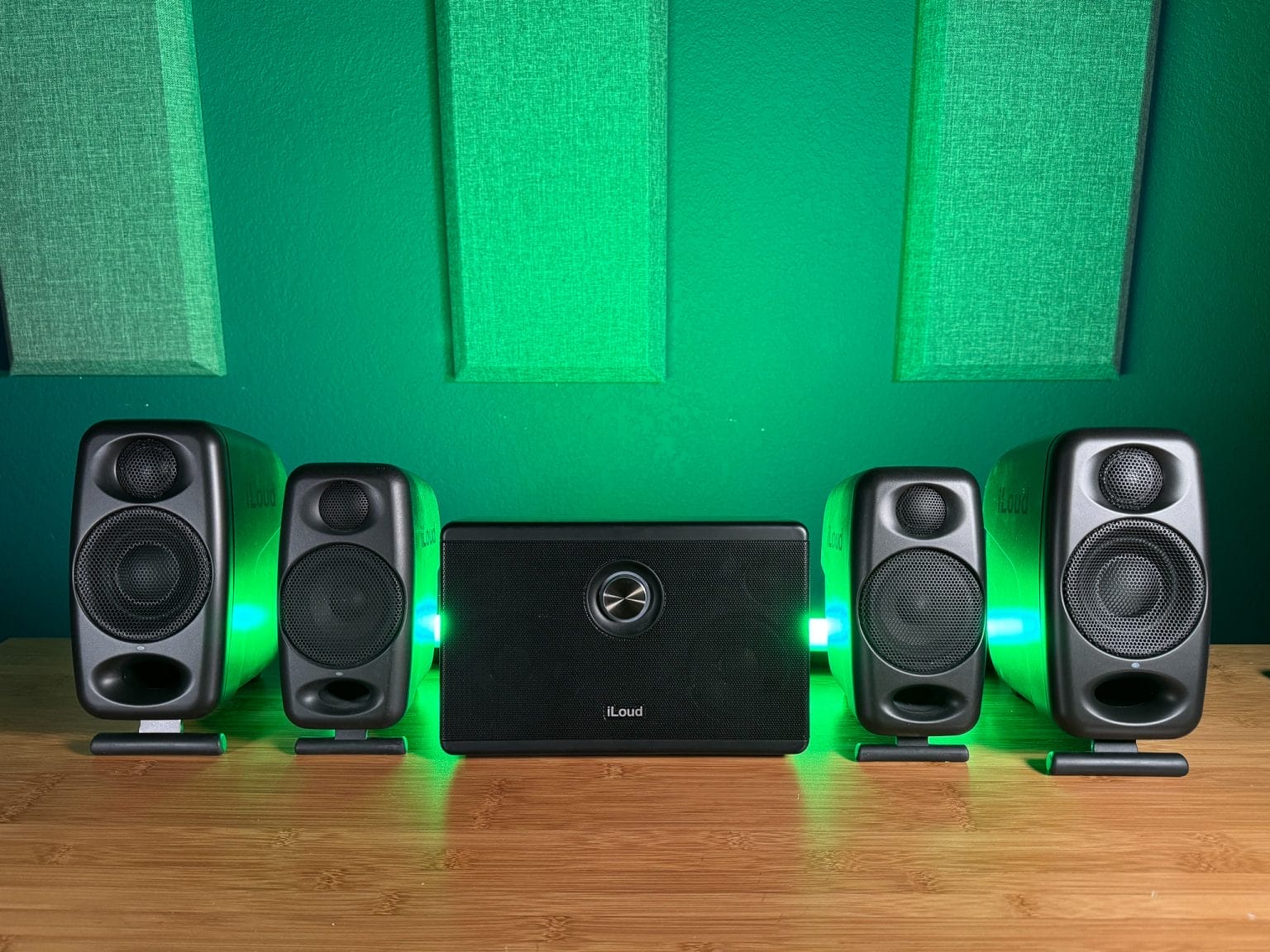
The IK Multimedia iLoud Micro Monitors
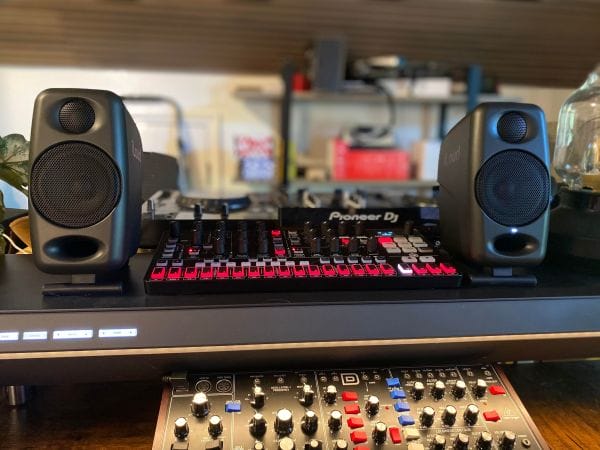
The IK Multimedia iLoud Micro Monitors usually land in the mid-$300 range for the pair, and after spending real time mixing on them in small, imperfect rooms, I felt they justified that price without question.
I ran reference tracks through them, A/B’d against my main studio with a sub, and while you feel the 55Hz limit, there’s still enough low-end information to make confident mix decisions in tight spaces. Connectivity is flexible: Bluetooth for casual playback and RCA plus 1/8-inch TRS for plugging directly into a laptop or interface, although I used wired connections for production to avoid Bluetooth latency.
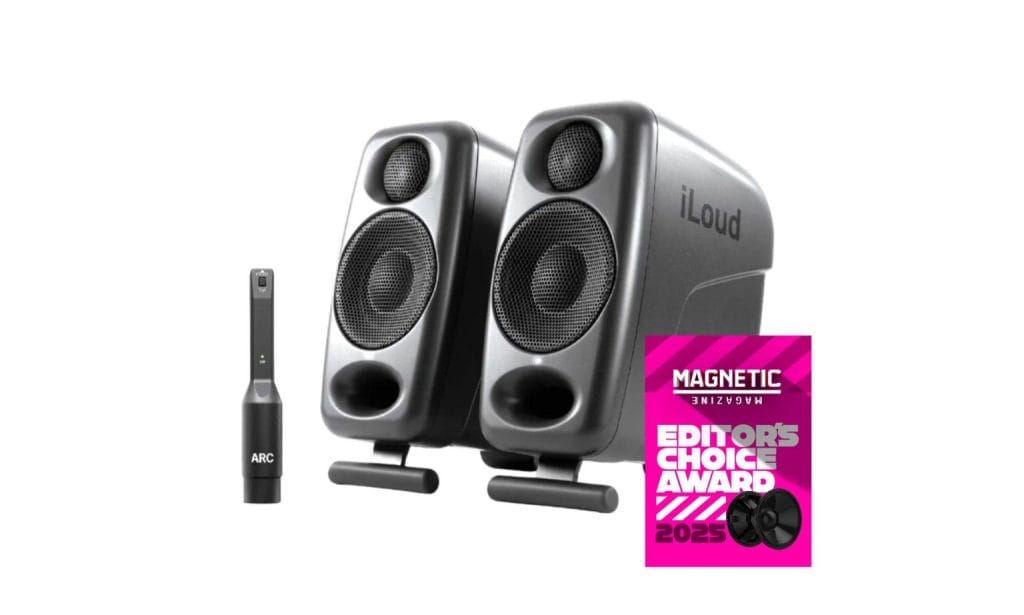
What surprised me most was how much output and clarity they delivered from such a compact cabinet, especially considering they’re light enough to throw in a backpack for travel sessions. The onboard EQ switches and angled isolation bases helped me dial them in quickly in less-than-ideal environments, which is the reality for touring artists, students, or anyone building a mobile rig.
If you’re producing outside a traditional studio and still want monitors that let you work seriously, these feel like a practical, road-tested solution rather than a compromise.
Learn More About These Monitors While Supporting Our Team Of Writers Through Our Affiliate Partnership With Sweetwater Here
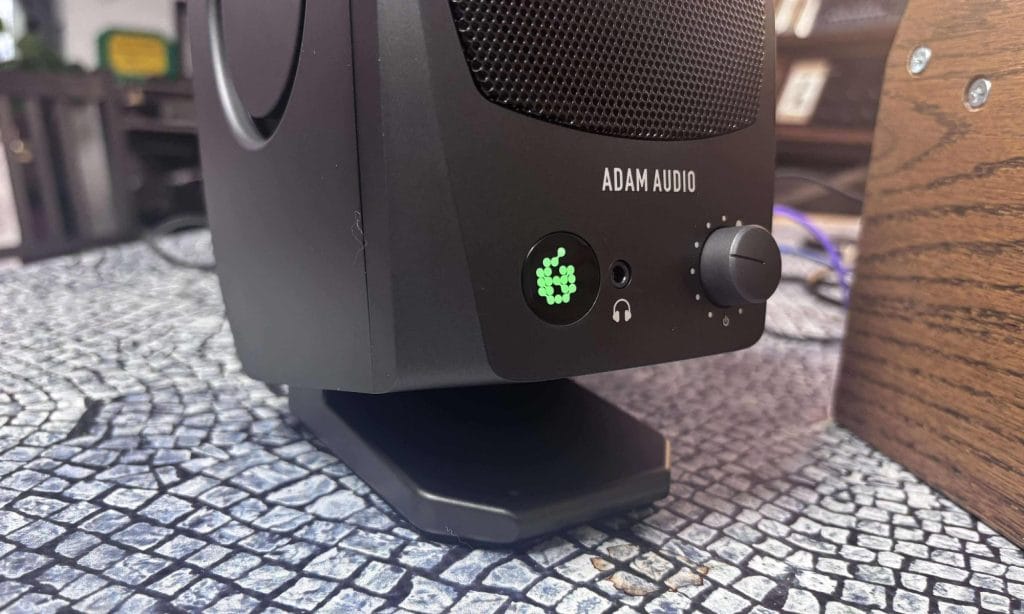
ADAM Audio D3V
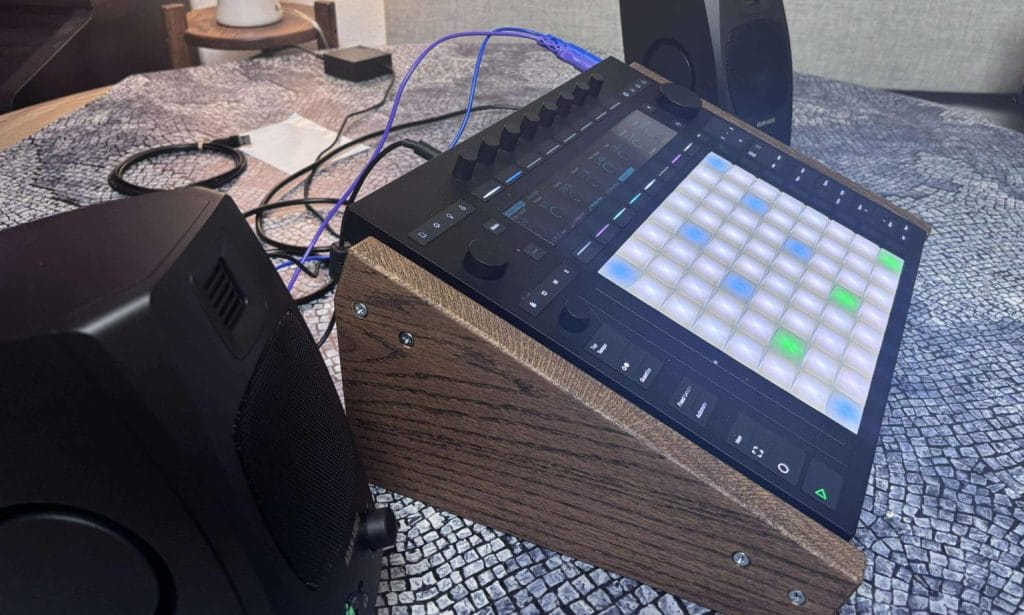
The ADAM Audio D3V monitors come in under $300 for the pair, and for that price, they deliver well above what most desktop systems in this range offer.
I’ve been using them as my portable alternative to my main studio monitors, especially when working off my Push 3 in different corners of the room, and the combination of the 3.5 inch woofer, dual passive radiators, and D-ART ribbon tweeter gives me enough clarity and balance to make real production decisions without feeling boxed in by their size.
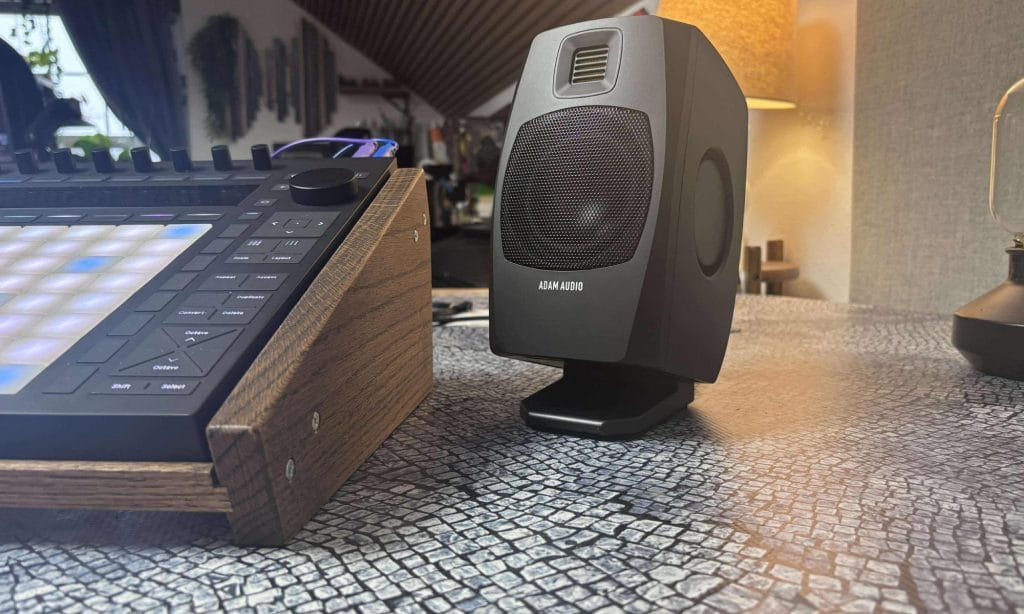
Connectivity is one of the biggest wins here: you get TRS analog inputs plus USB-C digital audio, which lets you run them directly from a laptop or tablet without an interface, and the front headphone jack makes quick reference checks easy.
The built-in DSP switches for placement and room conditions are simple yet effective, which matters whether you’re working at a desk, against a wall, or in a less-treated space. They are not going to replace a larger system for heavy low-end work, but as a compact, travel-friendly, plug-and-play solution that still carries ADAM’s ribbon clarity, these absolutely deserve a spot on a 2026 portable monitor list.
KRK GoAux 4
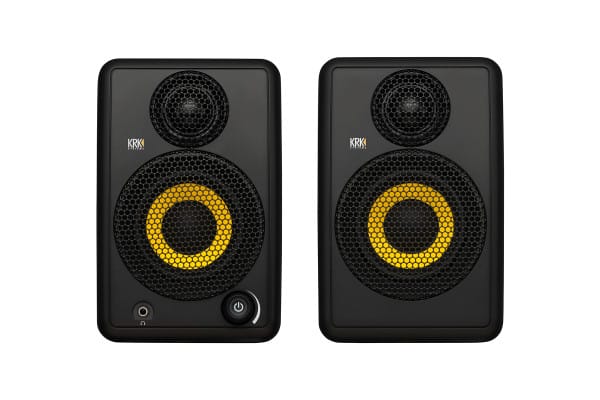
The KRK GoAux 4 usually sits in the low to mid $400 range, and after living with them through a chaotic month of packing up my studio and moving cities, I can say the price felt justified for what they solved in real-world use.
I was literally mixing a release with my acoustic treatment torn down and deadlines closing in, and the built-in Auto ARC room correction with the included calibration mic gave me a level of predictability I would not have had otherwise, which let me finish and deliver that track on time. Connectivity is broad, with dual RCA, 1/8-inch TRS, two 1/4-inch TRS inputs, USB, Bluetooth, and a headphone output, so they slot easily into a laptop-based rig or a full interface setup without adapters or guesswork.
At 100 watts total power and a frequency range reaching down to 55Hz, they move enough air to make real mix decisions in small, temporary rooms while still packing into a single included carry bag with stands and cables.
I would not recommend them as your only stationary studio monitors if you never plan to move them, but if your life or career requires mobility, these felt like a purpose-built system that kept my workflow intact when everything else around me was in boxes.
Learn More About These Monitors While Helping Support Our Small Team Of Writers Through Our Partnership With Sweetwater Here
AiAiAi Unit-4 Wireless monitors
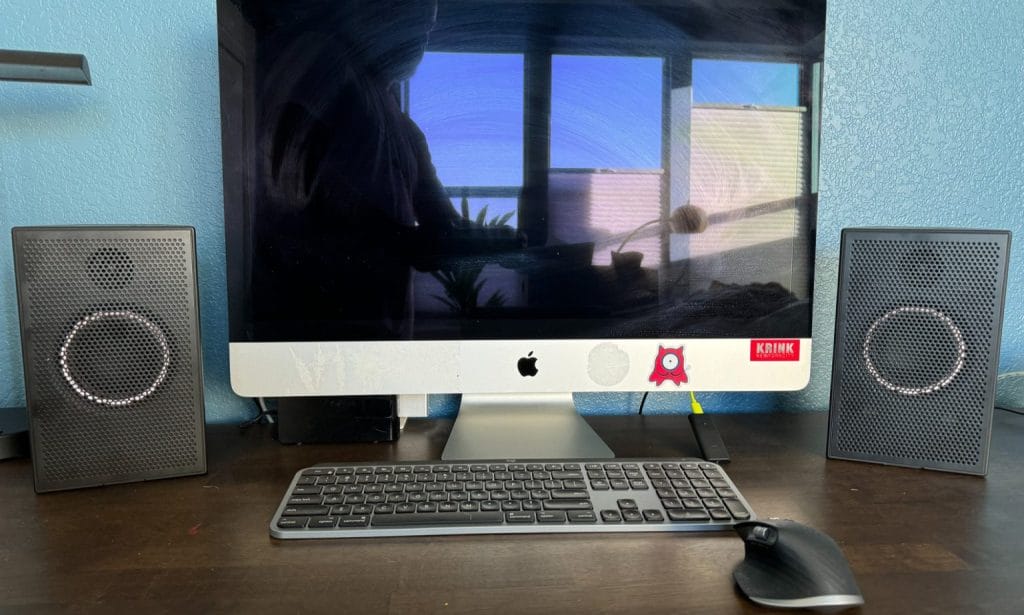
The AiAiAi Unit-4 Wireless monitors sit in the premium portable category, typically around the high $700 range for a pair with the W+ transmitter included, and after testing them in cabins, hotels, outdoor setups, and at a desk, I understand exactly where that money goes.
What separates these immediately is the proprietary W+ low-latency connection at around 16 ms, which I found genuinely usable for production sessions in Logic when I wanted freedom from cables, while Bluetooth handled casual DJ sets, vinyl playback, and streaming without friction.
Each speaker delivers 100 watts of power, runs up to roughly 18–20 hours on battery, and connects through Bluetooth 5.2, 1/4 inch TRS, RCA, XLR, and 3.5 mm, so they slot into a laptop-only setup, a DJ controller, or a more traditional studio chain without forcing you into one workflow. I appreciated being able to flip from making beats outdoors to running a small gathering in Bluetooth mode, then back to focused production with the transmitter, all on the same pair.
They are not designed to fill large venues, and W+ mode does trade some output for low latency, but for producers who move between environments and want reliable monitoring without dragging power strips and speaker cables everywhere, these feel purpose-built for that lifestyle.
Genelec 8010A
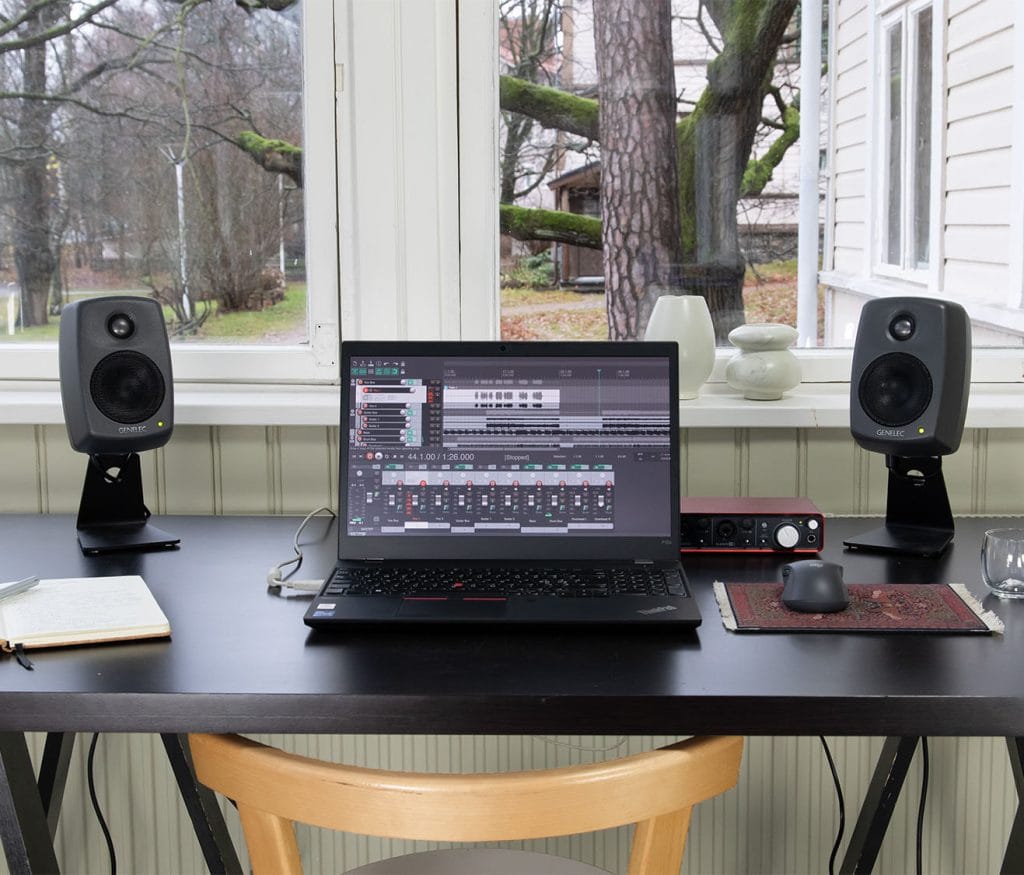
The Genelec 8010A pair comes in around $790, which clearly places it in the premium compact monitor category, but after spending time with small-format speakers over the years, I understand why producers still reach for Genelec at this size.
You’re getting 50 watts of bi-amped power per speaker, with a 3-inch woofer and 3/4-inch tweeter housed in a solid aluminum enclosure. Even with a frequency response that starts around 74Hz, the low end stays controlled and usable for editing, vocal work, and tight mix decisions in small rooms.
Connectivity is straightforward and studio-ready, so they integrate cleanly into any interface-based setup. Their compact footprint makes them ideal for desktop rigs, mobile editing suites, or travel setups built around a laptop. I would personally pair them with a sub like the 7040A if I were mixing bass-heavy genres, but as a precision nearfield solution for producers who value translation and build quality over sheer size, these absolutely earn their spot on a 2026 portable monitor list.

Will Vance is a professional music producer who has been involved in the industry for the better part of a decade and has been the managing editor at Magnetic Magazine since mid-2022. In that time period, he has published thousands of articles on music production, industry think pieces and educational articles about the music industry. Over the last decade as a professional music producer, Will Vance has also ran multiple successful and highly respected record labels in the industry, including Where The Heart Is Records as well as having launched a new label with a focus on community through Magnetic Magazine. When not running these labels or producing his own music, Vance is likely writing for other top industry sites like Waves or the Hyperbits Masterclass or working on his upcoming book on mindfulness in music production. On the rare chance he's not thinking about music production, he's probably running a game of Dungeons and Dragons with his friends which he has been the dungeon master for for many years.