







Table of Contents
If you’re planning a release in 2026 and get your music heard, the truth is that music promotion matters more than ever, and the tools you choose shape everything from your growth to your overall visibility as an artist.
I’ve spent the past year testing a lot of the major promo services across Spotify playlists, ads, music blogs, radio, and PR, and the difference between the right platform and the wrong one can determine whether your track gains traction or disappears. Online music promotion services have evolved fast, especially with Spotify music promotion, playlisting, targeted ads, and independent music PR teams building real momentum for emerging artists in the music industry.
The landscape feels crowded, but there are clear standouts that actually move the needle and help you reach new listeners without wasting your budget. This guide highlights the best music promotion services for independent artists in 2026, based on the tools that created real, repeatable results in my own release cycles. Think of it as a shortcut through the chaos of Spotify playlist pitching, Meta ads, PR campaigns and algorithm-friendly strategies that actually build long-term growth.
My goal is to help you pick the services that genuinely amplify your releases and give you a cleaner path toward sustainable discovery. If you’re ready to plan smarter, promote music smarter and give your tracks the best possible shot in the current streaming ecosystem, these are independent music promotion platforms worth your attention.
One Submit
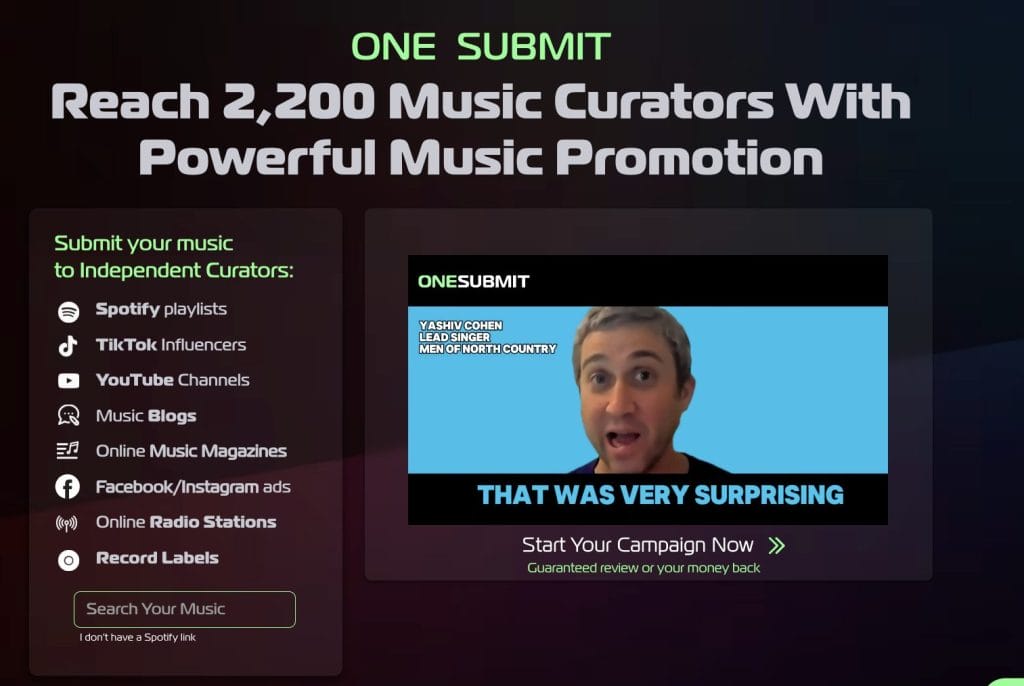
One Submit became one of those music promotion companies I kept coming back to because of how easy it made the early traction stage feel (which is honestly one of the most complex parts of the whole hustle artists have to deal with these days).
When a release hits Spotify playlists, blogs, radios, and YouTube channels at the same time, you start seeing momentum pile up in a way that feels natural and doesn’t just pump up vanity metrics on a single platform. I’ve had tracks enter a campaign and then quietly build little pockets of listeners that stuck around through later releases, which is all I really want out of a promo tool in 2026.
What I like most is how hands-off the setup feels. You drop the track in, choose your lanes, and the engine does the heavy lifting. Whenever I’m in the middle of a release cycle and juggling artwork, masters, scheduling, and whatever is happening in life, having a tool that simplifies that stage is massive.
One Submit is one of those music promotion sites that helps releases land in the right places without forcing a redesign of your entire workflow, and that alone makes it one of my first suggestions for artists looking for consistent growth this year. Notably, mention their Spotify promotion service which has big Spotify playlist curators database, and their TikTok music promotion plan, which can place your song with a TikToker who has between 500,000 and 5 million followers.
Syncop8te
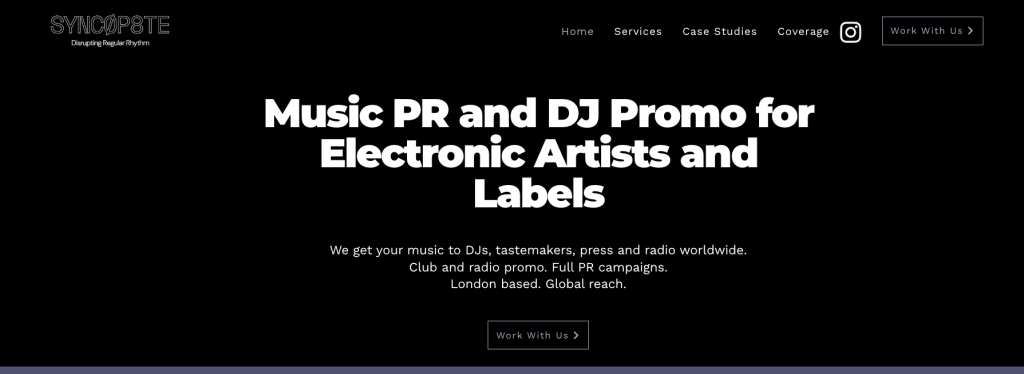
Syncop8te has a way of making a release feel bigger than you expected.
They build campaigns around structure, timing and storytelling, and that clarity is worth every penny during a busy release window. When I worked with them, the communication felt tight, the messaging felt intentional and the deliverables arrived in a rhythm that lowered the stress of the entire cycle.
Their club and radio promotion is where things get really interesting. Hearing a track land in DJ crates and radio rotations creates a depth of visibility that pure playlisting can’t make, and it’s something that actually holds weight in an industry where most vanity metrics are fairly easy to inflate. Syncop8te helped my releases enter spaces that the algorithm usually needs months to warm up to, and those touches carried over into future drops. For dance-leaning artists in 2026 and music producers, this is one of the boutique teams truly promoting artists and moving the needle.
ReverbNation
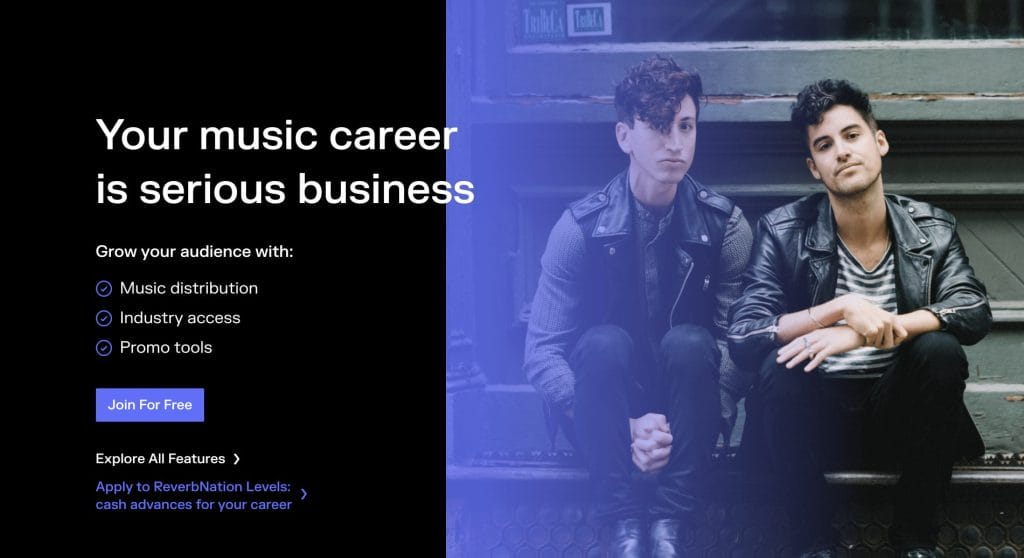
ReverbNation feels like one of those indie music platforms that quietly becomes your all-in-one home base once you actually try it. The premium membership gives you email lists, analytics, distribution to music streaming services and a website builder in one spot, which means you save a ton of time hopping between platforms. When I started turning my releases into multi-month arcs instead of one-off drops, this workflow helped my brain stay organized.
The EPK tools and website builder are some of the most underrated features here. I’ve used them to pitch shows, send press materials and keep everything branded without overthinking it.
And the Gig Finder/opportunity system encourages you to think beyond streaming. Once you start using ReverbNation as a real part of your release ecosystem, it reshapes how you plan, build and communicate your music career.
Meta Ads to Your Own Playlist
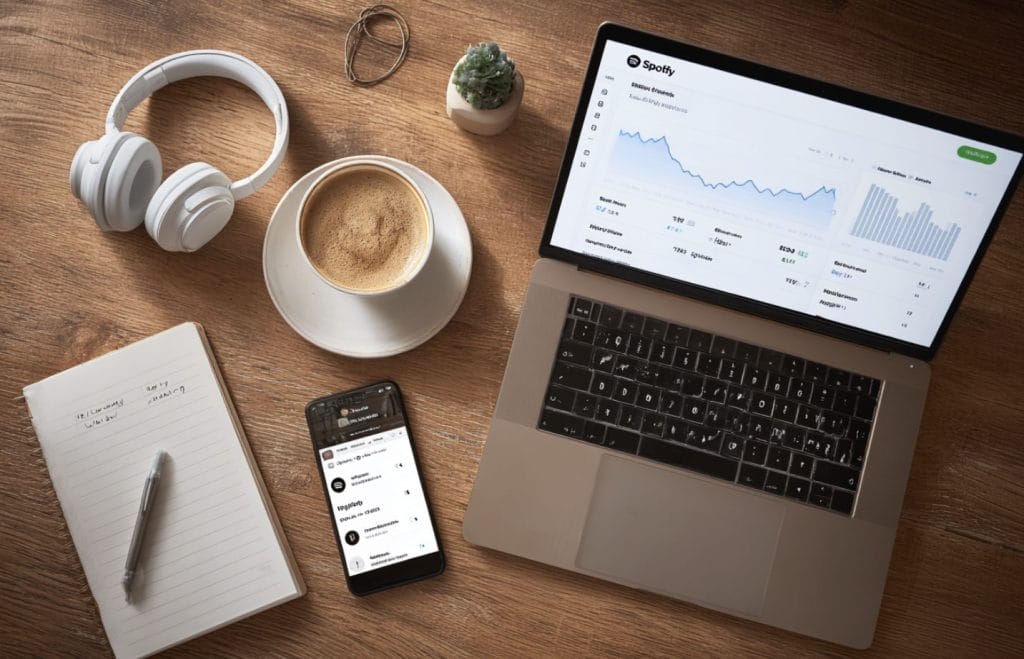
Running targeted ad campaigns to your own playlist or promoting your music changed the way I think about long-term artist growth.
A playlist becomes a piece of real estate you actually own inside Spotify’s world, and once people follow it, your future releases walk into a warmer environment. The algorithm responds to that consistent activity, and you’re not stuck rebuilding momentum from zero every time you drop something new.
Curating the playlist myself also opened up opportunities on platforms that recognize playlist curators. That created leverage I never had before. When your playlist builds steady traffic, you gain access to rooms you typically can’t enter as a cold-pitching artist. And honestly, it feels good having something that keeps growing even when life gets busy. For me, this has become a long-term move, not a sprint, and it’s one of the most powerful music marketing strategies I recommend to artists in 2026.
This is the strategy we’ve been using to grow our own playlist, linked below, which has opened up other opportunities that act as force multipliers when combined with almost every other option on this list (as I kind of mentioned above). From world music to chill music, dance or hip hop, Meta ads works with different music genres while it allows to promote your playlist to the right audience.
Dispersion PR

Dispersion PR brings a level of polish and industry reach that you feel the moment a campaign starts moving. They’ve worked with major labels, iconic clubs, and respected media across the electronic scene, and that network gives your release a level of credibility that’s hard to find elsewhere.
When I’ve worked with them, the rollout felt structured, intentional, and rooted in authentic relationships, which is an absolute game-changer in an age where the industry feels a bit inaccessible just cause of the amount of noise things like AI music and social media digital marketing slop can add to it all.

Their selective approach also sets the tone. They work with projects they truly believe in, and that creates a sense of alignment that fuels the rest of the campaign. Press, radio, DJ promo, web features — everything comes together in a unified way. For artists who want to take their release cycle to the next level, Dispersion is one of the best paths forward in 2026.
Playlist Push

Playlist Push has consistently delivered some of the most reliable playlist placements I’ve seen. When a song lands here, it usually lands in the right context — the kind of Spotify playlist promotion that attract actual listeners who stay engaged. Those steady climbs show up in your monthly listener patterns, and the long-tail effect is real if your track fits the lane well.
What I appreciate most is how the reports teach you things you can’t get anywhere else.
Seeing how curators responded, how listeners behaved and how long a placement held helps you shape future releases. I’ve used these insights to tweak arrangements, refine artwork and narrow my target music genres. If you approach it as both promo and research, Playlist Push becomes one of the most practical tools on this list.
Matt Caldwell PR
Matt Caldwell PR operates more like a small creative agency than a traditional PR shop, and that’s why I ended up valuing them.
They bring insight from management, booking and press, and that wider view helped me think about my releases as part of a longer arc instead of single-track bursts. When you’re juggling a growing catalog, that shift in thinking gives you a lot more breathing room.
I felt the difference in how they approached story development. Instead of over-polishing the narrative, they help articulate what the music already communicates and build your career in a far more holistic way than just pumping the stream count on an EP, then moving on. That subtle shift makes releases feel more authentic and more intentional because working with a team that listens closely and doesn’t try to box your sound into something trend-chasing creates a level of trust that carries far beyond one campaign.
SubmitHub

SubmitHub has been one of the most hands-on training grounds for my pitching instincts. Every submission forces you to think carefully about who the track is for, and the feedback loop becomes addictive in the best way. When you start taking those small notes and applying them to your next mix or arrangement, you start noticing improvements across the board.
The platform also helps me test tracks before launching larger campaigns. If a song consistently resonates with a specific curator type, that becomes a signal for my next steps. Even the rejections help clarify direction. I’ve learned a lot about my own genre lanes simply by watching what works here, and that kind of clarity ends up saving money and time in the long run. Submithub fits perfectly with indie artists in terms of budget, it allow YouTube music promotion, music submissions to Apple music playlists, record labels, targeted music blogs and other promotional tools.
Groover

Groover can be a go-to move for creating quick early-stage momentum for your music releases, but, in my opinion, is best optimized for newer artists who are still establishing themselves. I use it right after a release goes live because the rapid curator responses give the track immediate activity. Those early spikes help shape the algorithm’s understanding of where the song belongs, and that foundation pays off during the next few weeks of streaming.
I like how global the curator music scene feels. You end up landing small and mid-tier placements across different regions, and those micro-clusters of listeners strengthen the song’s recommendation profile. Groover is the spark at the beginning of the release, and when paired with a broader campaign, it makes everything else feel smoother and more predictable.
All this being said, Groover has gotten some flak for low-quality feedback submissions and song rejections that just don’t make sense, so I encourage you to dabble with this one a bit and see if your music is a good fit for the curators who curate your sound. Genres like melodic house and techno will likely have more luck than if you’re making erotic beats and trying to land them on erotica playlists like this guy in this Reddit thread.
We’ve been a curator on Groover for months, though, and have always gone above and beyond to answer in-depth and detailed feedback notes, so I’m sure it’s a case-by-case basis.
SoundCampaign

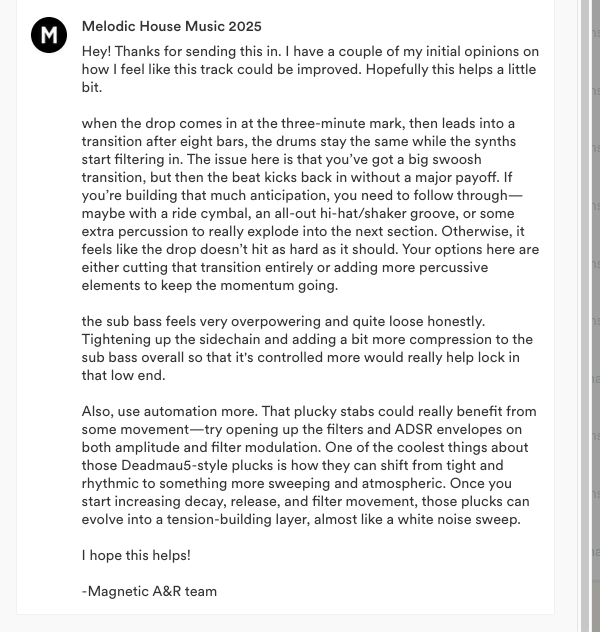
SoundCampaign has become a solid mid-budget tool for running clean, organized playlist promotion campaigns. I like using it when I want to test a track or label release on Magnetic Magazine Recordings before committing to bigger moves because the setup is simple and the timeline is clear. You pick your genre lanes, set your reach, and watch the campaign unfold in a straightforward, two-week cycle.
The guarantee that your track will be reviewed takes some of the pressure off. I treat it as a low-risk, predictable part of my rollout that gives me actionable data for the next release. It fits nicely between smaller early-momentum platforms and the higher-end PR options, and the structure makes it easy to slot into a multi-single release strategy.

Will Vance is a professional music producer who has been involved in the industry for the better part of a decade and has been the managing editor at Magnetic Magazine since mid-2022. In that time period, he has published thousands of articles on music production, industry think pieces and educational articles about the music industry. Over the last decade as a professional music producer, Will Vance has also ran multiple successful and highly respected record labels in the industry, including Where The Heart Is Records as well as having launched a new label with a focus on community through Magnetic Magazine. When not running these labels or producing his own music, Vance is likely writing for other top industry sites like Waves or the Hyperbits Masterclass or working on his upcoming book on mindfulness in music production. On the rare chance he's not thinking about music production, he's probably running a game of Dungeons and Dragons with his friends which he has been the dungeon master for for many years.