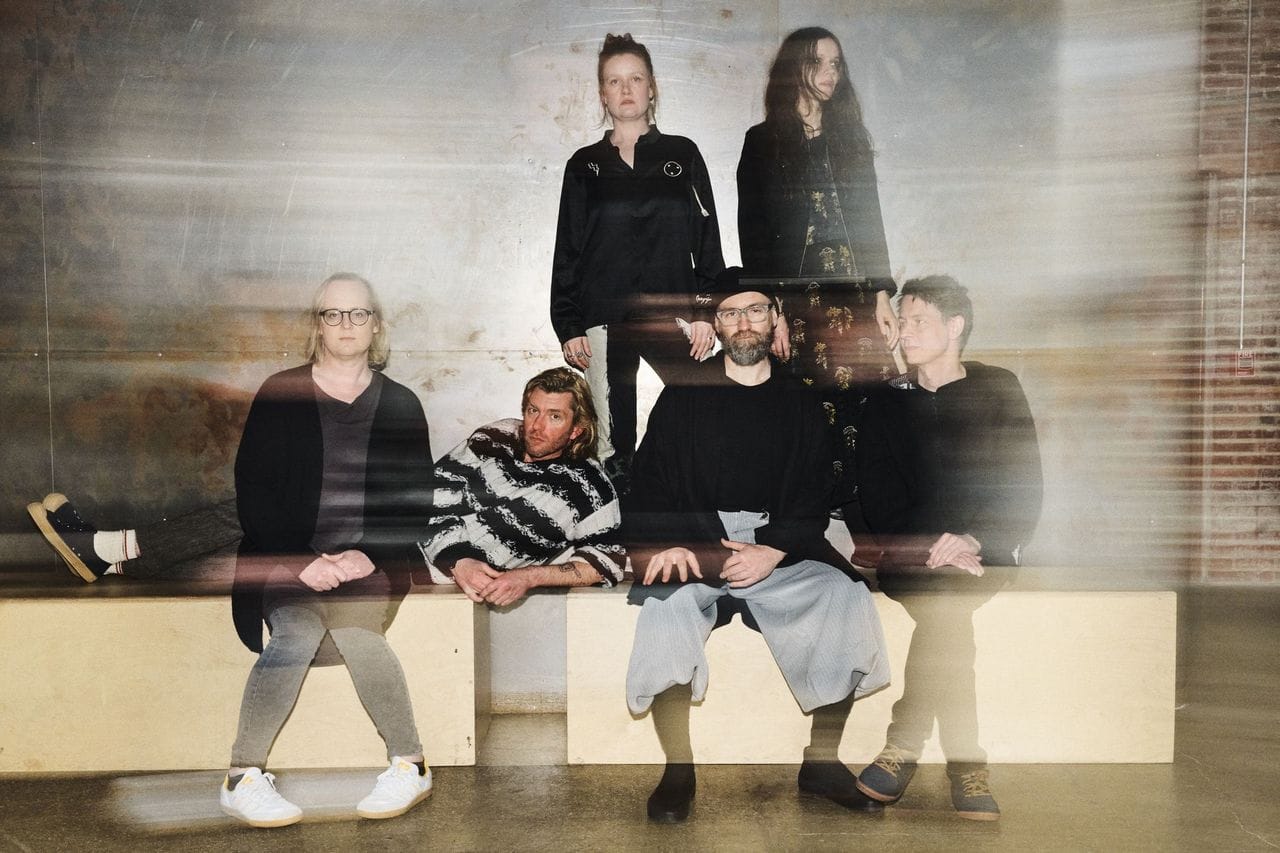
In the early 2000s, múm quietly came on the scene with their own sound, an amalgamation of all things shoegazer and the unique Icelandic sound. I hate to make comparisons, but there is a definitive vibe that comes from this island nation that is unmistakable, a bit ethereal, dreamy, melancholy, cinematic, and optimistic thrown into a blender. After a quiet period this amazing band is on tour and back with a stunner of album that picks up where they left off. I caught up with the band for an interview, got my hands on the vinyl and here is the interview and album review.
It’s been over a decade since Smilewound. What did that time away from releasing a full album teach you about yourselves as artists?
múm – This might seem like a paradox, but I think that if these twelve years between albums taught us anything in particular it would be: a) Patience is the key, there is no way to rush this and b) An album like this won’t materialize unless you actually make it happen. That means not just starting the process, but more importantly finishing it. But I guess we knew these things before anyway.
The album title, History of Silence, is beautiful and intriguing. What does “silence” mean to you in the context of this record?
múm – One of the very best things about making music is being able explore themes without having to without having to articulate them in language. Having said that, silence is something that has always interested us as an idea and as an actual thing (or absence of). But in the context of this album, I really just enjoy having it something I can realize later. That’s how most of the múm album titles are anyway, it’s more fun when they are enigmatic in nature.
You’ve described the album as being stitched together from recordings across multiple countries and seasons. How did these different environments shape the sound?
múm – This stitching process might be one way to look at it, but it we started the album wanting to do exactly the opposite of that. We booked a studio for two weeks in southern Italy, in the middle of nowhere, so that we could be completely focused on recording the album as a band and in that time. And the album not only feels like that was the whole process, but there is also no way we could have made exactly this album without doing that. After that session we just had to do what the music asked of us and since we live and work in difference places and have limited time to get together, we worked with what we had.
“Only Songbirds Have a Sweet Tooth” is described as the most lighthearted track on the album—was it intentionally placed to create a contrast within the record’s mood?
múm – No, not really; it just happened that way. We are much more focused on letting any good idea that comes up for a song blossom, and are less focused on what kind of mood fits the album. I am actually quite surprised now, listening to the whole album, how quiet and tranquil it feels.
You open that track with the sound of a camera flash—what inspired you to turn that moment of light into music?
múm – Well… we were recording out our friends studio on the outskirts of Reykjavík and they just have endless amounts of beautiful old instruments and vintage recording equipment and naturally I took my camera with me to these sessions. Maybe it was because of the acoustic of the studio, but as I was photographing we noticed the how long the sound would linger after the flash had gone. So of course we recorded it and since at that moment we were actually trying see if this old drum machine (Korg rhythm 55) might be a good fit for the beat in Only Songbirds, we just stuck the flashing sound in the beginning. Perfect. (Not sure if anything from the drum machine ended up on the track though). We are always open to playing around and exploring with anything around us.
The album plays with the idea of time not moving in a straight line. How do you “compose” time in a piece of music?
múm – During the composition process, you’re rarely experiencing the piece from beginning to end in any linear sense. Most of the time you’re zoomed in, working on a few seconds of sound, or even just a single texture or transition. Whether it’s writing, recording, producing or mixing, you’re often spending hours on something incredibly minor that no one else might even notice. So time in music doesn’t really move forward while you’re making it. You’re jumping around constantly, folding things back on themselves, erasing, reshaping. What we call composition is really just sculpting fragments until they somehow feel like they belong together in time. In the end, we present it as a straight line, but it’s really more of an illusion we construct throughout.
When recording in so many different places—Italy, Iceland, Berlin, New York—how do you maintain a cohesive sonic identity?
múm – I guess cohesion comes from listening deeply and shaping over time and not necessarily from uniformity in gear or space. Sound identity isn’t tied to the room, it’s built in the choices we make in editing and arranging. And I think cohesion is usually something that reveals itself after the fact, you don’t always know it’s happening while you’re making it. But in the end it probably just comes from the fact that we have played together for so long, even our chaos has a shared language and our fragmented process ends with a completed jigsaw puzzle.
You’ve mentioned the concept of distance as a long-running theme for múm. How has that idea evolved from your early albums to History of Silence?
múm – In the beginning, distance was practical; we needed space to work, so we would physically remove ourselves from distractions. To some degree, that is exactly what we were doing by going to record in Italy, the vineyards were the new lighthouse… not in a poetic or symbolic sense, but just practically. And in a similarly practical manner, the distance between us, living in different cities and moving around, dictates our process.
The vinyl format is having a moment again. What excites you about hearing History of Silence on vinyl versus streaming?
múm – I think it functions well as a whole, so listening from beginning to end is what this album is meant for. The physical object also gives us a better chance to stamp our identity on it, and I think that gives it another layer.
Any special plans for the vinyl edition—artwork, packaging, or pressing—that fans should look out for?
múm – This is the first time we have managed to make a single LP album, which has been a dream for a while. The first album was a double LP, the next on a double 10”, followed by a three-sided LP with an etching on the fourth side. The last album was a 12”+ 7” release. This time we made it happen, so quite happy with that. There is a limited version on clear vinyl, and there is a lovely cassette as well.
Your upcoming North American tour covers a lot of ground. How do you adapt múm’s layered, intricate sound for the stage?
múm – Well, it’s not as long as some of the NA tours we used to do when we were starting out. I remember doing a few 6 week tours around the US and Canada, and in those days, we didn’t get many days off.
Playing live comes very naturally to us; we don’t really approach it as trying to translate the songs from the albums note by note, so it just follows the qualities that each musician on the stage will offer, if that makes sense.
After such a long break between albums, do you see múm continuing at a slower, more contemplative pace, or has this process reignited the desire to create more frequently?
múm – The thing is… even though there was a break between albums, we were creating constantly the whole time. We did so many different projects, recordings, tours, shows and scores. Our longest running thing was the live score we did for the German silent classic Menschen am Sonntag that we toured extensively, playing a lot of film festivals. We recorded a few of the Berlin shows and released a few tracks from the score. In 2015 we did a large large orchestral piece called Drowning with our friend, pianist Hauschka which we played with the MDR Leipzig Symphony Orchestra. It was the first orchestral performance (and probably the only) to be streamed live by Boiler Room. A year later we worked on a show with the Kronos Quartet. And so on. I understand that people feel like we just went into hiding, but in reality we were just doing more obscure projects that we enjoy.
If History of Silence were turned into a scent, what would it smell like?
múm – For me, I hope it would smell like the vineyards in Puglia, where we started recording.
If múm could score the soundtrack for any non-existent film, what would the plot be and what genre of music would dominate the score?
múm – We love horror, also because they often carry the most expressive scores. We would love to do something like Krzysztof Komeda’s Rosemary’s Baby. Wouldn’t that be haunting and perfect?
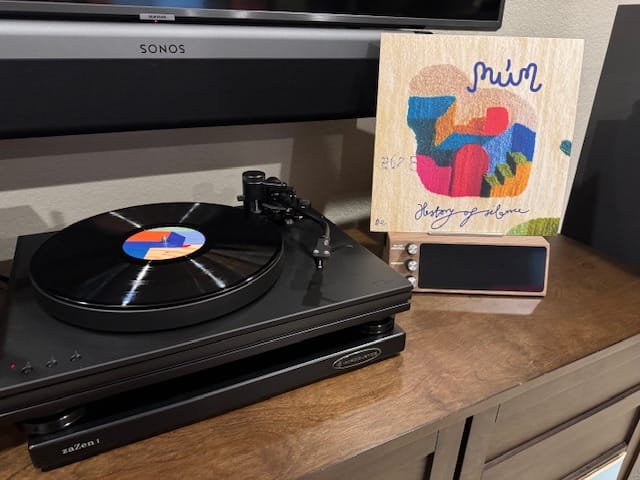
Album Review – múm – History of Silence
Spinning History of Silence on vinyl is already part of the listening ritual here, paired with a Negroni and the lights down low. I got ahold of the LP of wax via Morr Music, and the vinyl is available in both clear and black pressings, with a printed inner sleeve. I got the standard black edition.
Sonically, the vinyl pressing does justice to the soft dynamics and space that múm is playing with here. On a proper HiFi system with a good cartridge, this album really shines with every little detail punching through. My system (details below) brings out the micro-details — the timber of a piano key, the gentle hiss at the edge of a synth pad, the faint crackle in the high end. These aren’t flaws; they’re part of the album’s sonic character.
If you’ve followed múm over the years, History of Silence feels like a return to an interior world, not a revival of past glories. It’s contemplative, sparse, and emotional — it all works and leaves you feeling like you listened to an album with intention.
múm’s History of Silence is not a triumphant return so much as a mature reflection. It’s subtle, and feels like what I wanted from them at this stage in their career and I’ve found myself going back to it much more than their other albums. On vinyl, it’s not just an album you play — it’s a space you enter, and some tracks are almost meditative.
If you come into this expecting textures, introspection, emotional fissures, more than big statements — it’s a bullseye. If you demand bold choruses or immediate hooks, this will test your listening muscles.
In a world increasingly loud, overly engineered bullshit, History of Silence whispers elegantly.
The HiFi System – Music Hall Stealth Turntable, Ortofon 2M Blue and 2M Black cartridges, and Ortofon Headshell, NAD 3050 Integrated Amp, KEF R7 Meta Speakers, and a power cleaner to keep the signal clean.

David Ireland is a professional strategist, creative, and marketer. He began his career in 1995 as creator and publisher of BPM Magazine. In August 2000, BPM Magazine merged with djmixed.com LLC, an online media company based in Los Angeles, which later evolved into the Overamerica Media Group [OMG] in 2003. In 2009, Ireland left Overamerica Media Group to serve as the VP of Marketing at Diesel. In 2011, he returned to his roots in media and cofounded the online electronic music publication Magnetic Magazine and created The Magnetic Agency Group. In June 2018, Ireland joined Winter Music Conference (now owned by Ultra Music Festival) as the Director to lead the reboot for 2019 and usher in a new era for the iconic brand. He served as Chief Marketing Officer at Victrola for three years, guiding product innovation and brand growth. He currently serves on the advisory board of Audiopool, a new music tech startup focused on AI-generated music licensing and artist revenue models.