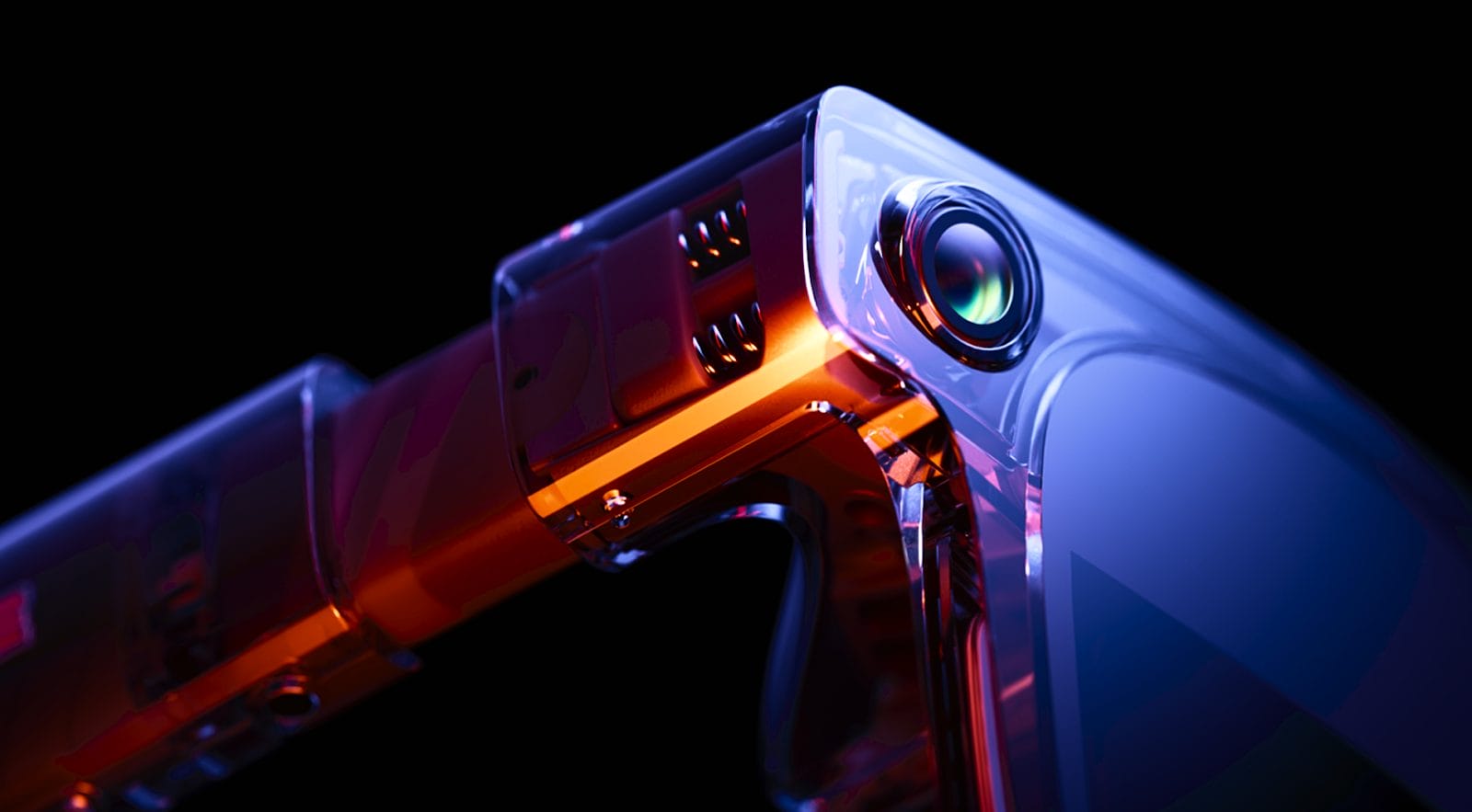
VITURE has announced retail availability of the Luma Ultra, a new pair of XR glasses designed for prosumers and enterprise users who work across multiple screens. The system uses SONY micro OLED displays, a three-camera array for full six-degree tracking, and hand gesture control. For producers and teams that split time between DAWs, spreadsheets, and collaboration tools, Luma Ultra functions as a portable multi-monitor setup that fits in a small case.
The glasses project a 152 inch virtual screen with high brightness and detail. Electrochromic dimming reduces eye strain in bright environments. HARMAN-tuned speakers are built in. The frame is lightweight for extended sessions. VITURE lists broad device support, including Windows and Mac for six-degree tracking with the Pro Neckband, direct connections with Android and iOS, and passthrough for gaming devices and handhelds. The price is $599 and units are now shipping.
Hardware and Tracking For Real Work

Luma Ultra combines SONY’s latest micro OLED panel with an RGB camera and dual depth sensors. The trio enables room-scale awareness and hand tracking for pointer control, click actions, and basic UI navigation without a mouse. The 152 inch canvas is large enough to stage a DAW mixer beside an edit window, stack reference meters, or pin a notes panel. Producers who currently depend on dual displays can mirror that layout in the glasses and keep the same view when moving between rooms or traveling.
The three-camera system supports six-degree motion. Head pose anchors windows in space so a mixer or piano roll stays fixed where you left it. Gesture control handles simple commands like confirm, dismiss, and scrub. Electrochromic dimming adjusts tint on demand so the image remains readable outdoors or near windows. The audio system is tuned for speech clarity, which helps in calls and remote reviews. Weight distribution and nose pad geometry aim for all-day wear without hotspots.
VITURE lists partnerships with NVIDIA, Stanford University, and Bertelsmann tied to enterprise pilots and research. The company also disclosed two additional Series B rounds totaling $100 million, bringing recent funding well into nine figures to support retail rollout, business deployments, and the XR software stack.
How Studio Creatives Can Use It
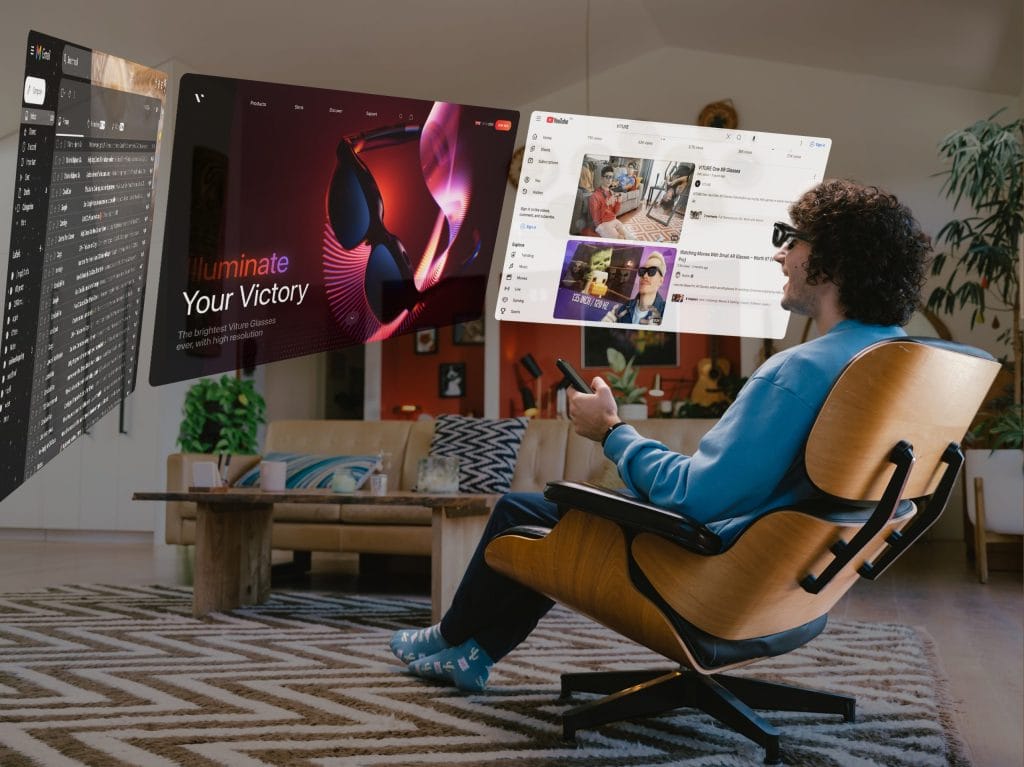
Luma Ultra targets producers and editors who need desktop-class screen space in places where a second monitor is not practical. A typical use case is arranging while traveling: pin the arrange view large, float a compact mixer to the side, and keep a notes doc above the center line. During vocal or instrument comping, you can place the comp lane close and park a tuner or spectrum tool off to the right. For mix checks, open reference material in a second window and keep LUFS and true peak meters visible without hiding plugins.
Teams can run review sessions with shared spatial screens. A producer can walk a collaborator through arrangement changes while each person views the same pinned layout. For education or onboarding, a mentor can demonstrate routing or MIDI mapping while students follow the same anchored panels.
Outside the studio, Luma Ultra serves as a focus tool in tight environments. Accounting tasks, show advancing, and asset management benefit from the large canvas when a laptop alone feels cramped. The glasses also help during field recording prep, where checklists, channel sheets, and routing notes can stay in view hands-free.
Cross-platform support is a core part of the pitch. Six-degree tracking and gestures are available on Windows and Mac with the Pro Neckband. Direct connections with Android and iOS cover media playback and basic productivity. Gaming support through handhelds and consoles is present for downtime. For users who only need a wearable display without spatial tracking, VITURE also offers the Luma Pro at $499.
The headline here is simple: large, clear screens that travel. For producers and artists who spend long hours on arrangements, stems, and mix notes, Luma Ultra provides a way to expand workspace anywhere and return to the studio with progress already made.

Will Vance is a professional music producer who has been involved in the industry for the better part of a decade and has been the managing editor at Magnetic Magazine since mid-2022. In that time period, he has published thousands of articles on music production, industry think pieces and educational articles about the music industry. Over the last decade as a professional music producer, Will Vance has also ran multiple successful and highly respected record labels in the industry, including Where The Heart Is Records as well as having launched a new label with a focus on community through Magnetic Magazine. When not running these labels or producing his own music, Vance is likely writing for other top industry sites like Waves or the Hyperbits Masterclass or working on his upcoming book on mindfulness in music production. On the rare chance he's not thinking about music production, he's probably running a game of Dungeons and Dragons with his friends which he has been the dungeon master for for many years.