Evolution is a key part of being a musician. You can’t just get complacent with the way your music sounds, because eventually it’ll run dry. The world is changing rapidly, the music industry is changing rapidly, and artists have to keep changing rapidly to keep up with it. It’s a key part of ensuing you can have a long, fruitful career.
But, changing styles on a dime isn’t the way to do it. Fans of yours will get totally lost if you’re making ambient one day and neurofunk the next. It’s crucial that you keep certain aspects of your style intact as you evolve. It’s a lot tricker than it sounds, for sure.
And, yet, The Heroic Enthusiasts have done it perfectly.
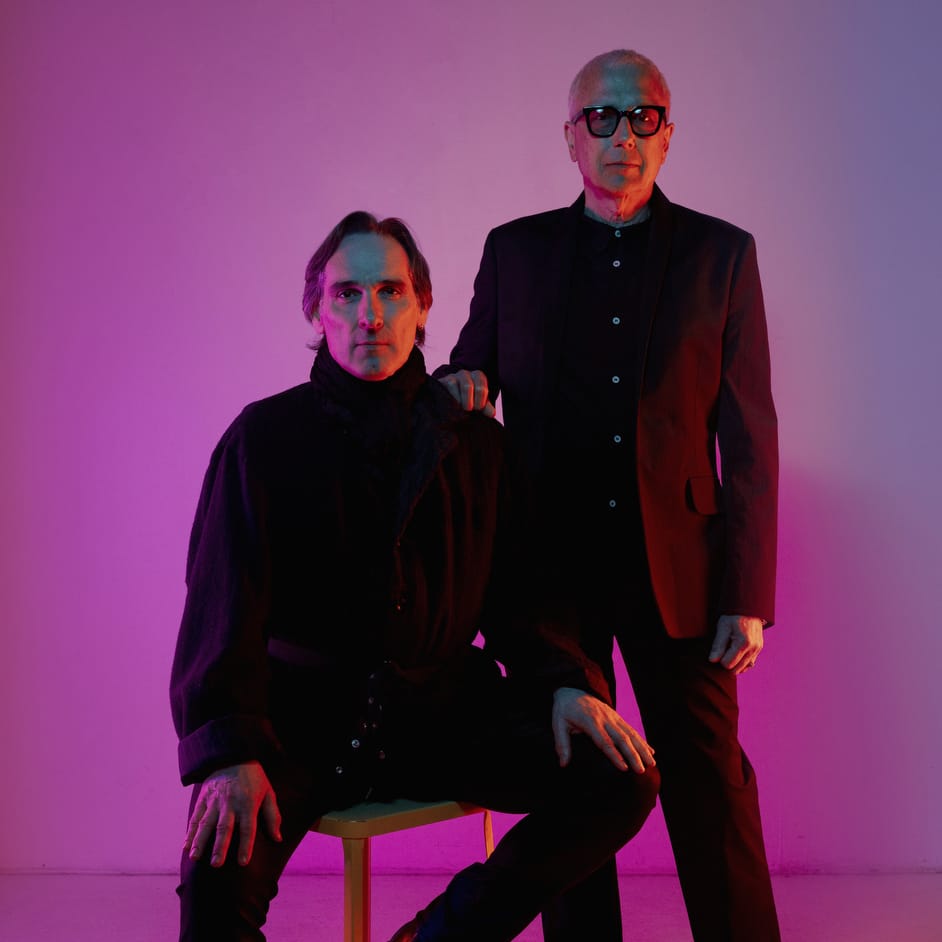
Before forming the duo, vocalist James Tabbi and guitarist Thomas Ferrara enjoyed illustrious careers in their own rights. Tabbi was a founding member of Eleven Pond, while Ferarra helped start Bullseye. The two bonded over a love of New Wave and began The Heroic Enthusiasts, and the rest was history.
Their newest album, “Illuminate,” is out now. It’s a striking package that blends the pop styles that defined the late 20th century with modern production, Tabbi’s powerful vocals, and Ferrara’s expert guitarwork. Stephen Hague serves as a co-producer on the album; you may know him from his work with legendary 20th century pop acts like New Order, Pet Shop Boys, and Depeche Mode. His touch brings a retro-yet-modern feel to this album, while Tabbi and Ferrara’s influence shines through.
The Heroic Enthusiasts as a project marks a stark departure from the previous styles of Tabbi and Ferrara, and yet, this new sound is unmistakably them. They’re an act that has truly evolved into the future while not forgetting their roots as musicians. It’s clear that this evolution has brought them major successes in the past few years: they’ve received several placements on Apple Music’s editorial playlists, received hundreds of thousands of streams across the project, and have amassed a passionate fanbase.
We wanted to find out how they were able to evolve their sound without forgetting where they came from; so, we sat down with them to find out. Take a listen to “Illuminate,” and read on for some expert advice about evolution, authenticity, and how to keep your edge.
What’s something that’s stayed in your work from day one — and why does it still matter?
“Emotion,” says Tabbi. “Thoughtful, heartfelt emotion. We pour our hearts into all the music we compose and the lyrics we write. We hope that those sensibilities resonate with listeners in a deep and meaningful way. Even when our songs are light and good-natured, they are full of emotion.”
How do you keep growing without throwing out the parts of your sound that still feel right?
“Artistic growth is about one’s state of mind and attitude towards life,” says Tabbi. “We don’t age into stagnation. We don’t age into formula. We age into a deeper understanding of who we are as humans, which should grant us the freedom to experiment and expand what could be our unique sound.”
What helps you tell the difference between growth and drift?
“For us, the difference between growth and drift comes down to intention and its connection to that ‘thoughtful, heartfelt emotion’ we always strive for,” says Ferrara.
Tabbi adds, “Growth comes when we consciously push ourselves to explore new sonic territories or lyrical themes, but always with the intent of expressing that core emotion in a richer, perhaps more nuanced, or even more powerful way. We drift, and boy, do we sometimes drift when we change without that anchor – maybe trying something just because it’s trendy, or because we feel it might generate more streams, rather than because it genuinely serves the emotional heart of our music.”
Ferrara expands, “If a new direction deepens the emotional connection, for us and hopefully for the listener, that’s growth. If it feels like it dilutes it or moves away from that honesty, that’s when we’d worry about drifting.”
Have you ever looked back at an old project and found something worth building on now?
“A key aspect of our process,” Ferrara explains, “is revisiting song seeds and concepts that we might have set aside previously, evaluating their relevance to our current projects. At times, these ideas prove to be valuable for development. Other times, they return to the shelf.”
How do you reconnect with your original influences without getting stuck in the past?
“For me (Tabbi), I am very comfortable going back and listening deeply to many of my original influences, be it ‘The Lamb Lies Down on Broadway’ by Genesis or ‘Porcupine’ by Echo and the Bunnymen. And I am also ensuring that I immerse myself in the latest work produced today by a diverse range of artists.”
He adds, “I’ve been listening to new music from Kim Gordon and John Grant, to André 3000 and Max Richter lately. I’ve also been combing through Bandcamp and Soundcloud to see what the next generation of musicians and composers are creating.”
Ferrara shared that “by living in the now, in the moment, and appreciating our collective collaborative processes, I can safely listen to my original influences and bring fresh perspectives forward.”
What have you outgrown creatively, and how did you know it was time to move on?
Ferrara considers “formulaic structure. I knew it was time when I’d be thinking ‘What? Another verse?’ and then holding my breath to hear something that surprises me.”
“Jangly acoustic rhythm guitar,” Tabbi states. “We recognized it was time to ‘move on’ when we understood we were merely occupying space without purpose. Today, when we incorporate acoustic guitar, it’s a deliberate choice that enhances the emotional landscape of the song.”
What advice would you give someone who wants to evolve but doesn’t want to lose their edge?
“That’s a vital question for any artist wanting to evolve while keeping their edge,” answers Ferrara. “Know your ‘edge’—it’s rooted in your unique perspective and authentic expression. Evolution should sharpen that essence, not just change surface elements. Your genuine voice is your edge.”
Tabbi suggests, “To evolve, ask yourself, ‘Does this change serve the song? Deepen emotional impact? Or is it just a trend?’ An edge is maintained through deliberate choices that enhance your identity, not random mutations.”
“Keep listening and learning, as James does with classic influences and new artists,” adds Ferrara. “Absorb those influences and filter them through your artistic lens. Don’t just emulate; integrate. Your edge comes from that unique synthesis.”
“Evolving while keeping your edge may mean letting go of things that no longer serve, like beloved lyrics that don’t fit the song. An edge can dull with clutter. Revising and refining ensure every element has a role, allowing impactful parts of your sound to shine,” replies Tabbi.
Ferrara concludes, “Your edge can transform as you grow. It’s about ensuring your current sound remains potent, distinctive, and true to who you are now.”
Stream “Illuminate” here.

Ben Lepper is a music producer and journalist from Boston, Massachusetts.







![How It Was Made: Lang Father i(Junkyard Dog) [Welofi]](https://magneticmag.com/wp-content/uploads/2026/10/Press-Pic_2-1024x576.jpg)