Table of Contents
Images C/O Warner Records
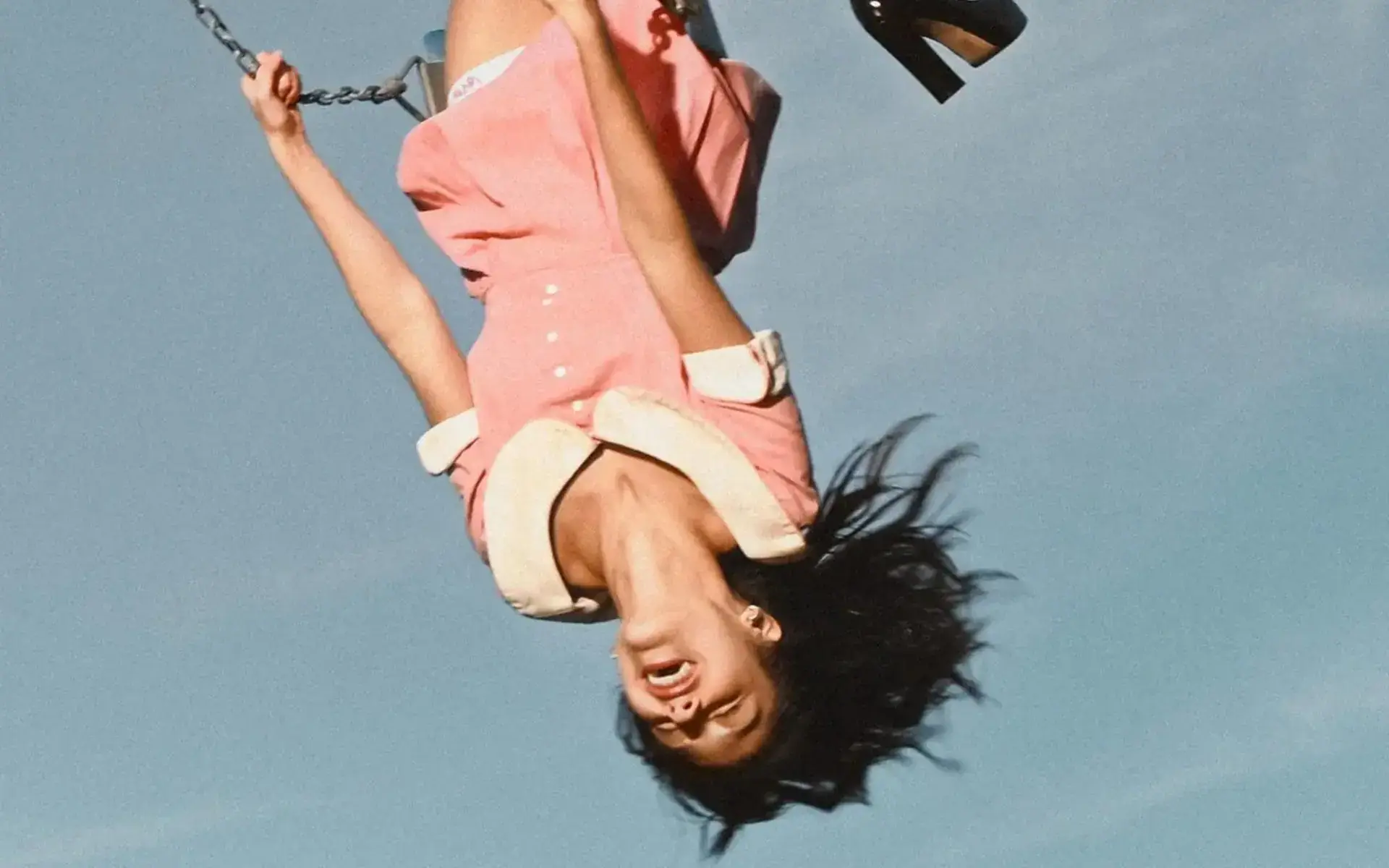
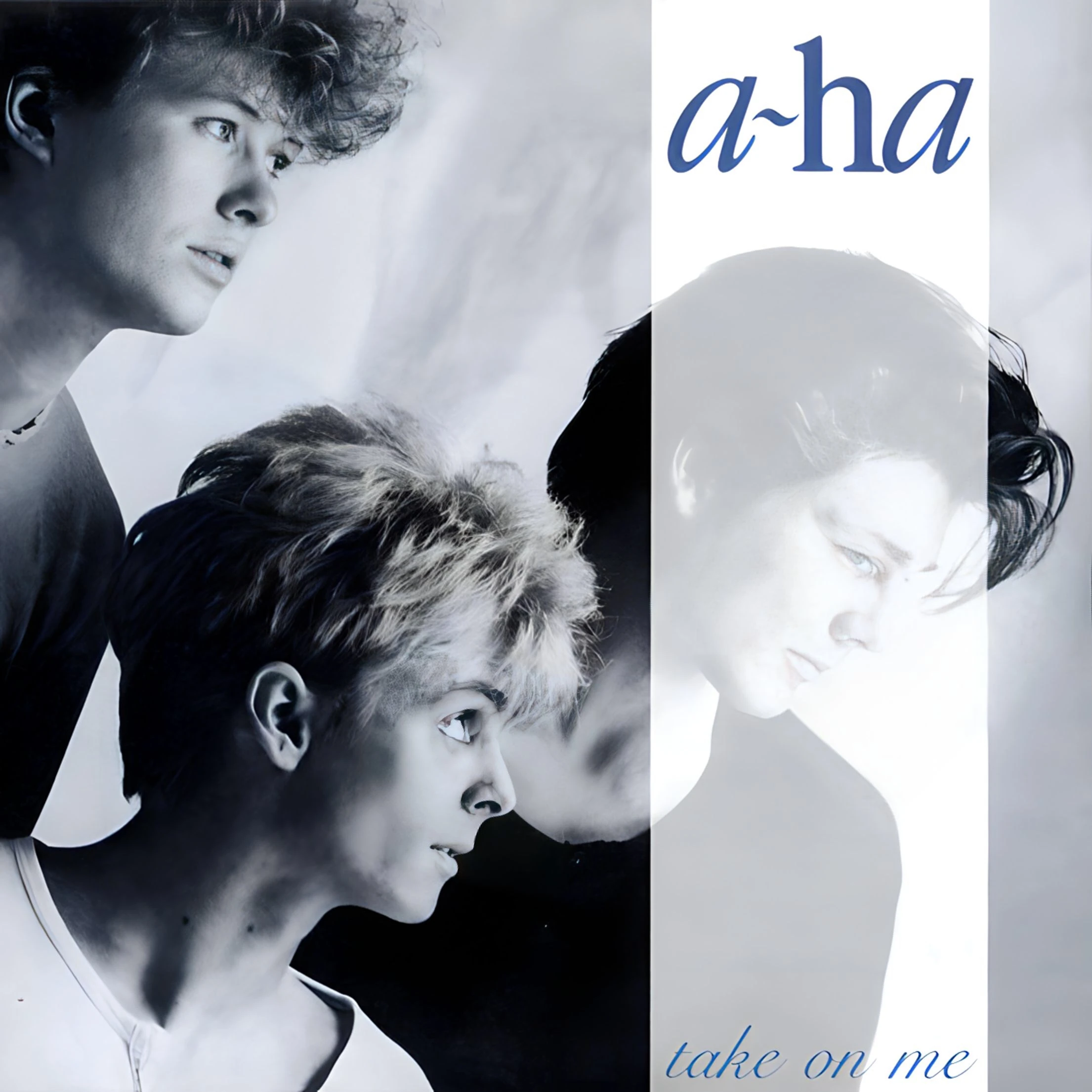
“Take On Me” from A-ha’s debut album Hunting High and Low (1985), didn’t come easy—it went through several versions and even flopped twice before finding success. It was the third release, paired with its groundbreaking pencil-sketch animation video, that made it a hit. This backstory reflects the song’s own themes: persistence, fleeting connections, and the courage to take a chance even when success seems uncertain.
Using my background in English literature and creative writing, I want to unpack these lyrics from a more poetic angle. Just as the song evolved over time, the lyrics explore themes that poets like Yeats, Frost, and Tennyson have addressed—ideas about impermanence, emotional vulnerability, and the tension between caution and risk. These are just my interpretations, but I think they show how the song asks us to embrace life’s uncertainties before moments slip away.
What I find compelling is that the song mirrors the band’s challenges. A-ha’s willingness to push forward—rewriting, re-recording, and reimagining—echoes the song’s message: it’s no better to play it safe than to take a risk. Just like Yeats reflects on lost moments in “When You Are Old,” “Take On Me” reminds us that love and connection are worth pursuing, even when they feel fleeting.
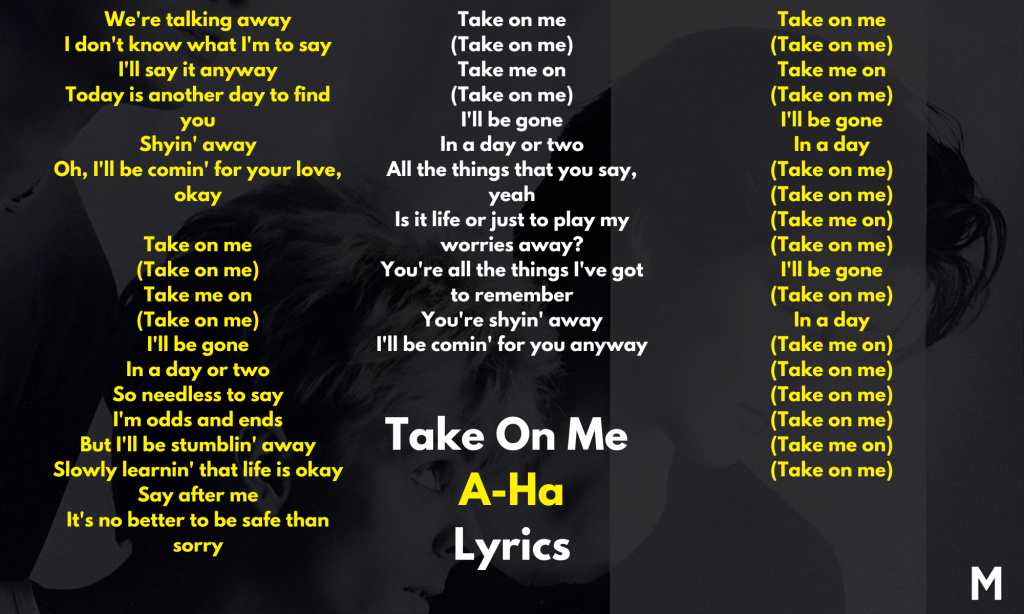
A-Ha Take On Me Lyrics
A-Ha Take On Me Meaning
1. Ephemeral Nature of Love and Relationships
From the very beginning of “Take On Me,” we get the sense that the relationship the speaker is talking about might not last. When they say, “I’ll be gone in a day or two,” it feels like a reminder that love and connection are often temporary. This line creates a sense of urgency—like they know they have only a small window of time, and if they don’t act now, it’ll be too late.
This idea of love slipping away over time reminds me of W.B. Yeats’s poem “When You Are Old.”
In that poem, Yeats writes, “How many loved your moments of glad grace, / And loved your beauty with love false or true.” Just like in “Take On Me,” there’s an understanding that love is fleeting and tied to moments that don’t last forever. Both the song and the poem seem to say: What happens if you let those moments pass? What will you regret later? In both cases, the message is clear—don’t wait too long to act, or the chance might slip through your fingers.
2. Uncertainty and Vulnerability
One of the things I love about this song is how honest it is about uncertainty. Look at the first verse: “I don’t know what I’m to say / I’ll say it anyway.” To me, this shows that even though the speaker isn’t sure what to say or how to express their feelings, they know it’s better to try than to stay silent. There’s a vulnerability here—they’re willing to fumble through their words, hoping it’ll lead to something meaningful.
This reminds me a lot of Robert Frost’s “The Road Not Taken,” where the speaker says, “I doubted if I should ever come back.” Both the song and the poem explore how uncertainty can paralyze us—but they also remind us that life keeps moving, and we have to make a choice, even if we aren’t sure of the outcome. In “Take On Me,” the speaker doesn’t wait to figure everything out perfectly. They choose to speak, to try. That’s what vulnerability looks like—acting even when you feel unsure.
3. Tension Between Caution and Adventure
One of the most important lines in the song is: “It’s no better to be safe than sorry.”
This really captures the tension between staying in your comfort zone and taking risks—whether in love or in life. It’s a hard truth, but avoiding risk can sometimes hold us back from experiencing the best things life has to offer. I see this line as saying: You might get hurt if you take a chance, but playing it safe can leave you with even bigger regrets.
Robert Frost wrestles with a similar idea in “The Road Not Taken.” His speaker reflects on choosing a path, saying, “I took the one less traveled by, / And that has made all the difference.” Both the song and the poem suggest that choosing the uncertain path—whether in love, adventure, or life—might not guarantee success, but it’s necessary to grow and experience meaning.
To me, the message here is that waiting for certainty isn’t the answer. You have to jump in, even when things are unclear. The lyric “It’s no better to be safe than sorry” feels like a nudge—saying, If you want a life that matters, you have to take risks.
4. Self-Discovery and Imperfection
I think one of the most relatable moments in the song comes when the speaker admits, “I’m odds and ends, but I’ll be stumbling away.” This line says a lot in just a few words. It’s like they’re saying, I’m not perfect, I don’t have everything figured out—but I’m trying. That’s the heart of growth, in my opinion—learning as you go and accepting that life will always be a little messy.
This reminds me of Alfred, Lord Tennyson’s poem “Break, Break, Break.” Tennyson reflects on the passage of time, saying, “But O for the touch of a vanished hand, / And the sound of a voice that is still.” Both the song and the poem explore how life keeps moving forward, even when we feel like we’re stumbling. The difference is that in “Take On Me,” the speaker shows acceptance—“Slowly learning that life is okay.” That’s a powerful realization: life doesn’t have to be perfect to be meaningful.
I believe the message here is that stumbling isn’t failing—it’s part of the process. The song seems to say, It’s okay to not have everything figured out. Just keep moving.
5. Repetition and Emotional Persistence
One thing worth noticing is how much repetition shows up in this song, especially with the chorus: “Take on me / Take me on / I’ll be gone / In a day or two.” At first, the repetition might seem like it’s just there to fit the song’s melody, but I think it actually reinforces the emotional themes we’ve been talking about. It’s almost like the speaker is saying,
Don’t forget—this chance won’t last forever. Take a risk, before it’s too late.
The repetition mirrors the way emotions and choices come back again and again in life. Just like Frost’s speaker revisits the road he didn’t take in his mind, the lyrics in “Take On Me” reflect the way we often return to these same feelings—hope, hesitation, and the need to take action—over and over.
Motifs and Poetic Throughlines
At its heart, “Take On Me” explores themes of impermanence, emotional risk, and self-acceptance. The line, “I’ll be gone in a day or two,” reflects how fleeting connections can be, mirroring the regret over lost moments in Yeats’s “When You Are Old.” Both the song and the poem remind us that opportunities for love don’t last, urging us to act before it’s too late—just like how A-ha had to rework the song until it finally hit the right moment.
The tension between safety and risk is another big theme. The lyric “It’s no better to be safe than sorry” echoes Robert Frost’s “The Road Not Taken,” where the speaker chooses an uncertain path, knowing that meaning lies in embracing the unknown. A-ha faced a similar dilemma—pushing the song forward even after two failed releases. In both the song and Frost’s poem, the takeaway is clear: holding back out of fear leads to regret, but taking a chance—whether on love or on a career—can lead to fulfillment.
Finally, the song’s acceptance of imperfection—seen in “I’m odds and ends, but I’ll be stumbling away”—aligns with Tennyson’s “Break, Break, Break.” Both works show that personal growth comes from persistence, not perfection. Just as A-ha learned through multiple failed attempts to perfect the song, Tennyson emphasizes that life doesn’t stop for us to figure everything out. The key message here is that it’s okay to stumble forward—what matters is that you keep moving.

Will Vance is a professional music producer who has been involved in the industry for the better part of a decade and has been the managing editor at Magnetic Magazine since mid-2022. In that time period, he has published thousands of articles on music production, industry think pieces and educational articles about the music industry. Over the last decade as a professional music producer, Will Vance has also ran multiple successful and highly respected record labels in the industry, including Where The Heart Is Records as well as having launched a new label with a focus on community through Magnetic Magazine. When not running these labels or producing his own music, Vance is likely writing for other top industry sites like Waves or the Hyperbits Masterclass or working on his upcoming book on mindfulness in music production. On the rare chance he's not thinking about music production, he's probably running a game of Dungeons and Dragons with his friends which he has been the dungeon master for for many years.