The One Who Runs Away Is the Ghost Soundtrack is Hainbach’s seventh release on Seil Records – and as the album title implies, it is the soundtrack to a heartfelt documentary of the same name.
The film by director Qinyuan Lei and Producer/ Cinematographer Julian Moser follows the two young sisters who spend most of their daily lives in a highly unusual place: A huge electronics market in Shenzhen, where their parents own a small shop on the ninth floor. What once was a place known for making counterfeit products has become China’s center of electronics production.

But through the eyes of the children, it is much more than that. Every vending machine is a mysterious treasure chest, every floor a new universe. Playing hide-and-seek around the market, the sisters explore their otherworldly surroundings, while director Qinyuan Lei reminisces on her childhood in Shenzhen.
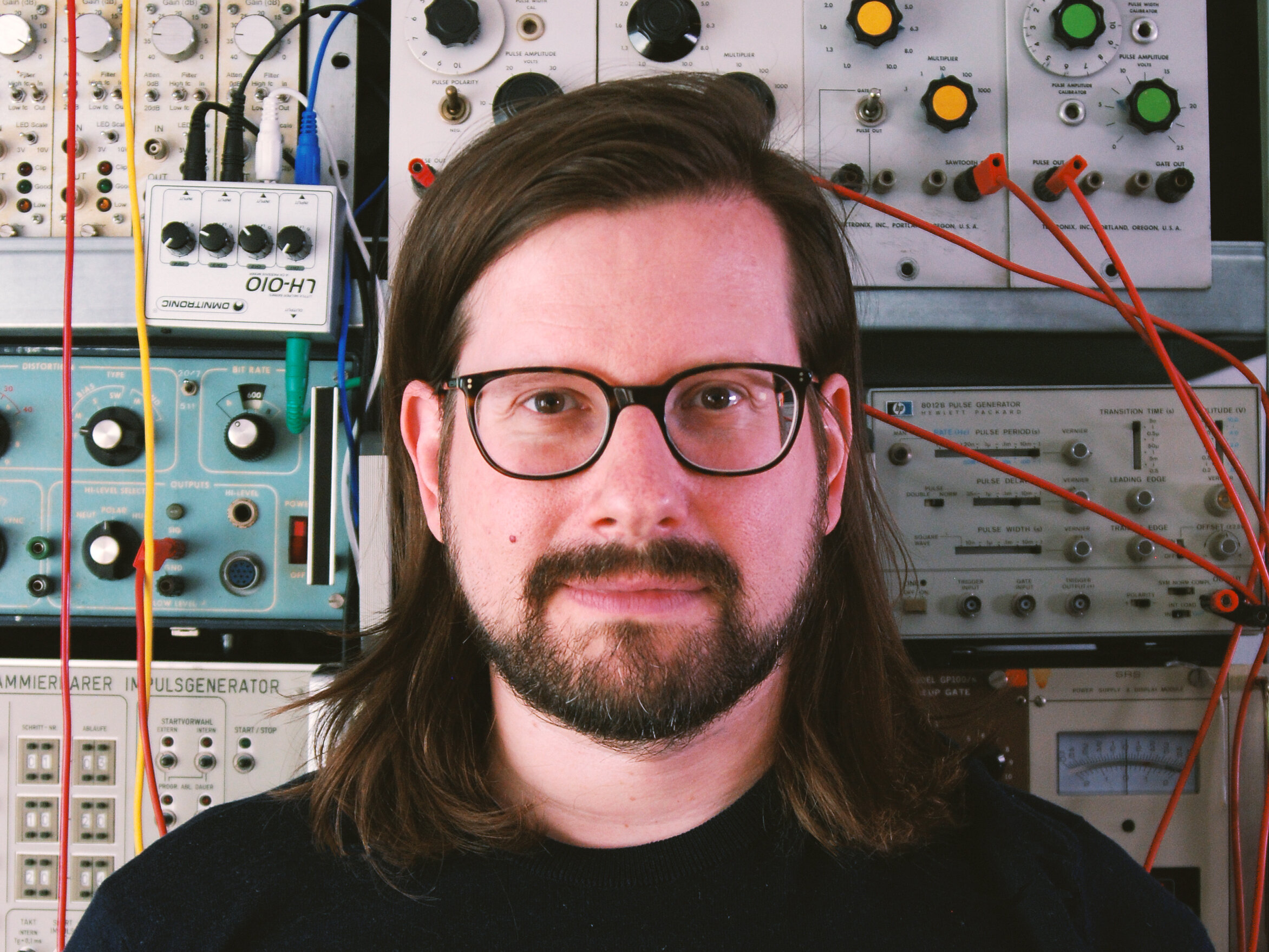
How to listen: There are a couple of ways to proceed. First, you can listen to the whole album, which you will find below, and then read the notes. Or, read the notes as you listen to each track. This will completely change your perspective on the whole release itself and bring you closer to the artist and their work.
Red Light, Green Light, Little White Light
Julian: We chose this song because it sounds so simple and happy in the beginning. In the movie that is all you hear.
Hainbach: I often like to start simple and develop complexity over time – open the curtain, draw the listener in, and take them on a ride.
Bubble Tea
Hainbach: This is based on a piece that I had given Julian for the edit. When it came to working on the soundtrack it just did not fit anymore. So I decided to re-work and make it more floating, light, and see-through.
I used my own software instruments on this because I have the closest relationship to the things I made myself.“
Ceiling Lights
Hainbach: This is the Intro to „Shenzhen Rain Showers“. In the movie, Julian transplanted the intro and we loved that it could stand on its own, in all shortness. So this short xylophone played by a DC motor piece became its own little gem on the soundtrack.
Shenzhen Rain Showers
Julian: During the shoot of the documentary I was listening to a lot of Hainbach’s pieces. He had given access to his vast library of songs, that my brother Felix had curated. On a rainy day, after an extensive shoot, I put this on and I knew: this had to be a core part of the soundtrack.
Routines
Hainbach: This was a classic transition in the movie. You get the atmosphere of Shenzhen at night and I only had to color it with my music. So I employed a light touch – tape noise and digital instruments blending with the cityscape.
There was this game
Hainbach: I am a father of two daughters myself. This track I recorded in the early morning light on holiday in the Black Forest, as they were still asleep. I was quiet, careful yet I wanted to capture the playful atmosphere. It is so rewarding that Julian jumped on this underlying theme when it came to scoring a narration about childhood. I make instrumental music, yet it can speak.
Flashlight Dance
Hainbach: I scored this to picture with Julian and Felix and I employed an instrument that connects us throughout our collaboration. There is one sound on the little OP-1 sampler that was also on their film „War of Brothers“ and a radio play we worked on even earlier. It just works for us. I think it will find its way into our next collaboration, too – It is a recurring theme.
End of Work
Hainbach: Again a transition, this time into the night. It is in function similar to Routines, just a different color. More solemn, tired, but at peace.
The One Who Runs Away Is The Ghost
Julian: This piece comes from darkness, but it breaks free. As the director Lei says: it represents the storm that childhood is.
Stepping Outside Version
Hainbach: Routines, just adapted to a different scene. The mood is more open and bright, we transition to the roof. I added a sound that to me sounds like rain on a tin roof.
A New Name
Hainbach: It is funny how things take on a new life: I had written this piece for a children’s play, Ronja the Robber’s Daughter, as a transition (transitions are, as you can see, a media composer’s bread and butter).
Here it became a crucial piece in storytelling, as it accompanies an important part of the director’s narration. It is sonically the most different of all the pieces, yet its melodic DNA is in all the works I composed to the action.”
Huaqiangbei
Julian: Credit music has to leave the audience with an emotion. It should not be a different emotion from what they just witnessed, but should enhance it. This track does that for me since it is very articulated and clear, yet retains Hainbach’s signature happiness in melancholy.
Watch the full movie here.





![THE DIRECTOR’S CUT – LIVIO IMPROTA – FONDAMENTALISMI [TIELLA SOUND]](https://magneticmag.com/wp-content/uploads/2024/05/tiella002artwork.jpg)

![The Director’s Cut: Rico Puestel – #technohasleftthebuilding [Exhibition]](https://magneticmag.com/wp-content/uploads/2024/04/press-shot-rico-puestel-02-scaled.jpg)