






The E-mu SP-1200, released in 1987, marked a pivotal moment in music production history, particularly in shaping hip-hop’s trajectory. This digital sampling workstation was an instrument and a revolution that introduced a new dimension to beat-making, enabling the gritty, lo-fi sound that became synonymous with boom-bap drums and the golden age of hip-hop.
Its affordable price and unique capabilities made it an indispensable and accessible tool for producers worldwide, and the E-mu SP-1200’s design and sound have influenced virtually every sampler and groove box that followed.
And with the launch of arguably one of the most faithful recreations of this iconic piece of hardware in plugin form to hit the market in years, we decided it was time to sit down with the head honchos at Inphonik, Mathieu Demange & William Lamy, to talk about the legacy of teh original hardware and how that inspired and guided the creation of their latest plugin.
Before we begin, head over to Plugin Boutique to learn more about this faithful emulator and snag it for yourself. But once you’ve dug around a bit on the site, let’s dive into the fun of picking these experts’ brains about the legacy of the E-mu SP-1200.

What inspired the creation of the RX1200, a plug-in emulation of the E-mu SP-1200?

In 2018, we released our first effect plug-in, the RX950 Classic AD/DA Converter. It makes any sound appear as if an Akai S950 sampled it. The goal was to deliver the same warmth and punch that the original hardware is known and praised for. The response from the users, the press, and the connoisseurs was terrific! As a two-person indie studio, we felt so special to enter the audio industry with our RX950.
Soon enough, we would receive spontaneous suggestions from our users to emulate other legendary machines, and the one that made it to the top of the list was the E-mu SP-1200. Contrary to the Akai S950, which we grew up with and knew very well, we never used an SP-1200 or even seen one in real life. Yet we felt ready to take up the challenge. But we knew we would need a lot of time to achieve the level of quality and precision that we were after. So, we bought an SP-1200 unit in October 2018 and started to gather manuals, schematics, documentation, and music to catch up on the subject.
We knew the SP-1200 was a revered machine in the beatmakers’ world, but we didn’t expect how important it was for the music industry on a much larger scale. We quickly understood that we had to work harder regarding the highness of the base material and we think it paid off a ton in the end.
Of course, we weren’t the only ones developing a project centered around the SP-1200. French devs WaveTracing have their brilliant SP950 effect plug-in, and Low-Hiss made an extraordinary complete emulation with his eSPi. But we set ourselves apart from the competition by matching the hardware’s key-dependent results. To achieve this, we had to control the MIDI note and the audio processing simultaneously. That, ultimately, made us choose to build a complete sampler VST instrument.
How does the plug-in emulation aim to replicate the tactile and immediate nature of sampling and beat-making on the original SP-1200?
Besides the importance of emulating a spot-on sound, the unique user interface of the SP-1200, designed by Dave Rossum, with eight pads and eight faders for exposing the tune, mix, and decay settings in real-time, was not only visually iconic but also crucial in the efficiency of its workflow. With very few gestures, you can sculpt your sound in seconds. It’s an accessible design that is attractive, inspiring, and immersive.
It was obvious we had to replicate the same global interface.
However, we decided to exclude the internal sequencer. Of course, we wanted to offer an authentic SP-1200 experience, but above all, we were publishing a VST plug-in that must comply with its standards, too. The integration with the DAW’s sequencer had to be flawless, and a duplicate, internal sequencer would have complicated things and wouldn’t have offered as much value to the user.
Can you discuss the importance of the SP-1200’s limitations in shaping the sound of classic hip-hop and how the plug-in reflects these characteristics?
The more we dived into the SP-1200, the more we understood its influence on our personal life. Nearly all the records that made our musical culture in the late 80’s had an SP-1200 in command.
The SP-1200 was considered technically impressive yet very limited by today’s standards. It’s hard not to be genuinely impressed by the craft of the producers who figured out how to make the albums we still love to this day. In their hands, the SP-1200 sounds hi-fi and lo-fi at the same time. And by all means, it never sounds cheap.
In that aspect, we must pay homage to Dave Rossum, who designed the machine.
All his choices and compromises for manufacturing this breakthrough sampler always favored the music. The machine sounded right, no matter the settings used. We carefully modeled our RX1200 plug-in after the key characteristics the SP-1200 is known for, like the 12-bit resolution and the 26.041 kHz sample rate, and input gain stage, which is essential for bringing harmonic saturation and punch.
Although we overcame the most daunting limitations, like the maximum sample length of 10 seconds, and added support for stereo samples, we kept the basic principles that require composers to invest time in getting smart enough to build beats efficiently. The SP-1200 pushes us to surpass ourselves, leading to more qualitative results in our music.
What advice do you have for producers using the SP-1200 plug-in to capture the essence of the music that the original hardware was pivotal in creating?
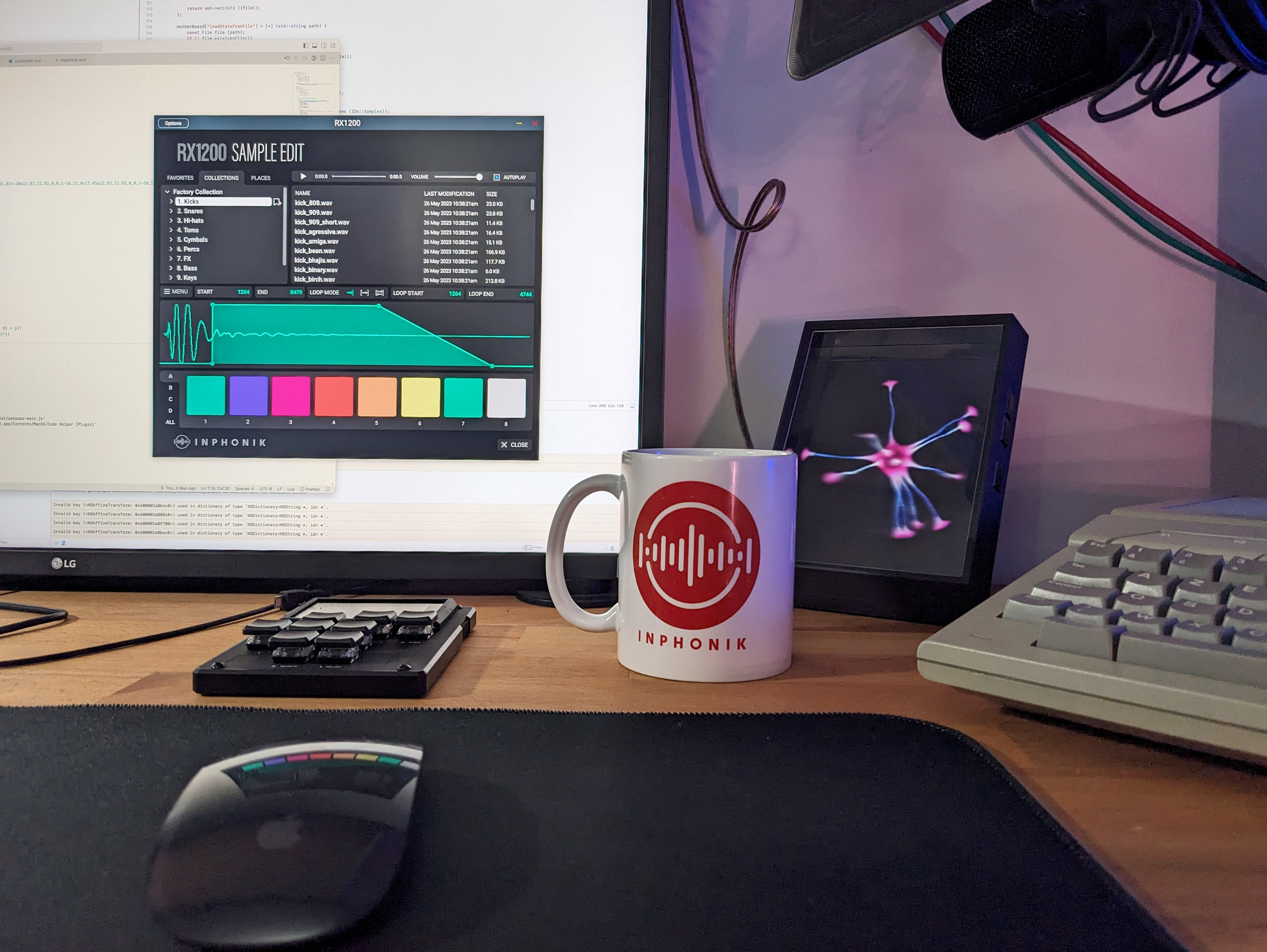
We’d say the SP-1200 is a machine that’s comfortable with chaos. Since there are many sample slots and many straightforward ways of tuning sounds to each other, you should be confident in building rhythms on the RX1200 without overthinking, instead focusing on creativity. It’s a machine made for experimenting instinctively.
Use the RX1200 for what it’s best at: tune the sounds down to the bottom to get the sound that made the SP-1200 famous.
And finally, the most helpful advice comes from our users. Many reported that it is worth importing your old samples into the RX1200. Even the samples you thought you would never use again can have another chance of sounding great in the RX1200.
In what ways did the process of emulating the SP-1200 for a plug-in format deepen your appreciation for its design and impact on music history?
We knew the SP-1200 was a good machine, but we were not suspecting how it was a defining moment in modern music history. We’re both happy to have learned so much about it and designed an accessible instrument that’s a vibrant homage to the SP-1200. We feel like we have fulfilled our duty to our users, our idols from the ’90s, and Dave Rossum, who was kind enough to exchange a few emails.
We also want to thank Low-Hiss and waveTracing, who were super cool in chatting about our SP-1200 projects. We’re proud to call the SP-1200 a defining moment in our history, too.

Will Vance is a professional music producer who has been involved in the industry for the better part of a decade and has been the managing editor at Magnetic Magazine since mid-2022. In that time period, he has published thousands of articles on music production, industry think pieces and educational articles about the music industry. Over the last decade as a professional music producer, Will Vance has also ran multiple successful and highly respected record labels in the industry, including Where The Heart Is Records as well as having launched a new label with a focus on community through Magnetic Magazine. When not running these labels or producing his own music, Vance is likely writing for other top industry sites like Waves or the Hyperbits Masterclass or working on his upcoming book on mindfulness in music production. On the rare chance he's not thinking about music production, he's probably running a game of Dungeons and Dragons with his friends which he has been the dungeon master for for many years.