Of all the different types of playlists on Spotify, none is more of a labor of love for those who make them and career-defining milestones for those who get on them than the massive editorial playlists on Spotify.
Marrying human expertise with machine learning, Spotify’s Editorial Team has perfected the art of delivering personalized music experiences to millions of listeners worldwide. In this exclusive interview, Ronny Ho, the head of dance & electronic development at Spotify, gives us an inside look into this delicate balance between man and machine. Editorial playlists culminate from a touch of professional music curators, while algorithms and data-driven personalization drive the platform’s user-centric model.
The process isn’t just about gathering a collection of trending hits. It’s about discerning the pulse of emerging genres, understanding cultural nuances, and capturing the zeitgeist of musical innovation. As algorithms crunch vast sets of user data to fine-tune personal preferences, the editorial team employs its cultural acumen to keep playlists fresh, relevant, and engaging. In essence, Spotify’s playlist curation is where human intuition meets algorithmic precision, offering listeners a uniquely tailored streaming experience.
How does the Editorial team at Spotify collaborate with algorithms to curate playlists?

The collaboration between Spotify’s Editorial team and algorithms in playlist curation is a dynamic process that enhances the music streaming experience in two main ways: through editorial playlists and personalized playlists.
Let’s dig into both:
Editorial Playlists result from meticulous curation by Spotify’s expert music editors. These professionals deeply understand various music genres, trends, and cultural contexts. They actively scout for new and exciting music, uncover hidden gems, and keep a close eye on emerging artists. This human touch is invaluable in shaping playlists that cater to specific moods, themes, or moments. I would say that editorial playlists are akin to finely crafted mixtapes, offering a unique blend of tracks that resonate with a broad audience.
Alternatively, Spotify offers Personalized Playlists and recommendations. These consider hundreds of external and individual factors, including what you’re listening to and when, which songs you’re adding to your playlists, the listening habits of people with similar tastes, input from artists and labels, and much more. Sometimes, our algorithms take the lead in generating personalized recommendations, like with Mixes and Radio sessions. In other personalized playlists, our editors choose a variety of tracks that capture a mood or moment, with our personalization engines creating a unique playlist for each listener based on those tracks.
In essence, the editorial team acts as a bridge between the art of human curation and the science of algorithms. We harness cultural expertise to assemble an extensive pool of tracks that can potentially captivate listeners. Algorithms, in turn, apply machine learning to refine these selections, offering users a tailor-made experience.
How does human intuition play a role in selecting playlist tracks?
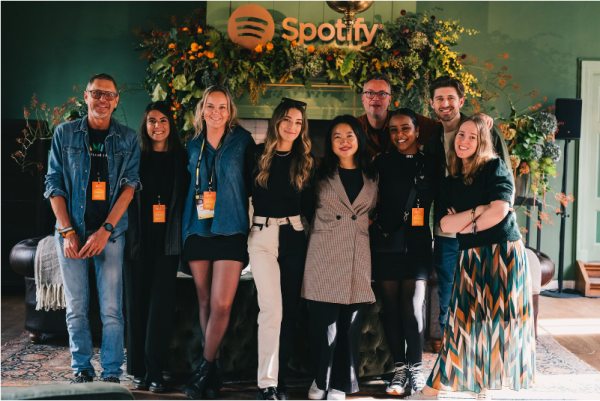
Generally speaking, selecting tracks for our playlists is driven by a combination of the cultural knowledge of our team and our access to a plethora of data. I’ll speak specifically in the context of Dance & Electronic music, given our presence at the Amsterdam Dance Event. As ardent music fans, we are constantly on the ground, immersing ourselves in the global music scene, going to shows, crate digging, and engaging in vibrant discussions about artists and music that are happening right now. This hands-on approach ensures we stay on the cutting edge of what’s happening in Dance & Electronic.
Then, we leverage the wealth of listener data at our disposal, which serves as a crucial feedback mechanism. This lets us analyze how tracks are performing in our ecosystem. It lets us see what resonates with listeners, what they’re gravitating toward, and what’s gaining popularity. Similar to how an incredible DJ can read the room and play to their audience, I’d like to say that we are doing the same.
In sum, our playlist selection process is an artful dance between our team’s instinctive music knowledge and the insights from our data – which results in playlists that strike a chord with our users.
Could you share some examples of how the collaboration between humans and machines has enhanced playlist curation?
As I mentioned earlier, our personalized playlists consist of large pools of tracks handpicked by the editorial team and then personalized to each listener to give them the best-curated listening experience possible. For example, House music is massive right now – but it’s also a vast genre that consists of many subgenres that have their distinct fanbases.
Our global flagship House playlist, Housewerk, is a perfect example. If you’re a tech house artist, you could end up in Housewerk where users with a higher affinity for tech house are likelier to hear your song. If you’re a funky house artist and end up in Housewerk, users with a high affinity for funky house are likelier to hear your song. This dynamic personalization ensures that the right tracks reach the right ears, enhancing the discovery of music within a sprawling genre.
Learn How To Use Playlists Like These To Find Awesome Music To DJ In Your Sets Here
What challenges do you foresee in balancing human curation and algorithm-driven playlists?
We have these conversations all the time!
As editors, we understand that human curation is key for music discovery and ensuring the most delightful listening experiences. As our user base grows, striking a balance between individual tastes and personalized, culturally rich experiences remains a priority.
Personalization continues to become more sophisticated and data-driven, and our challenge is to make sure that we remain committed to music discovery and development to ensure that we can scale alongside it.
What insights have you gained from user feedback regarding personalized playlists?
Users love our personalized playlists because they feel seen and understood. Our personalized playlists have become an integral part of the platform and have enhanced our overall listening experience. But they are only one piece of the broader music streaming ecosystem.
Humans enjoy music for different reasons – some seek personal discovery, while others aim for the top hits or prefer to immerse ourselves in our favorite artists’ playlists. Understanding these preferences is integral to creating a satisfying music experience for all our users.

Will Vance is a professional music producer who has been involved in the industry for the better part of a decade and has been the managing editor at Magnetic Magazine since mid-2022. In that time period, he has published thousands of articles on music production, industry think pieces and educational articles about the music industry. Over the last decade as a professional music producer, Will Vance has also ran multiple successful and highly respected record labels in the industry, including Where The Heart Is Records as well as having launched a new label with a focus on community through Magnetic Magazine. When not running these labels or producing his own music, Vance is likely writing for other top industry sites like Waves or the Hyperbits Masterclass or working on his upcoming book on mindfulness in music production. On the rare chance he's not thinking about music production, he's probably running a game of Dungeons and Dragons with his friends which he has been the dungeon master for for many years.