In the streaming age, album covers can feel smaller than they used to. A cover that once filled a full vinyl sleeve now sits on a phone screen, as a playlist tile, or as a tiny thumbnail in a music app. Still, rap album covers continue to carry a lot of weight. They frame the first impression, define the visual tone, and often become inseparable from the music they represent.
That is especially true in rap, where cover art has often served as the title, the lead single, the press photo, and the artist statement at once. Some covers document a neighborhood. Some build a persona. Some use graphic design to mark a new era. Some are powerful because they refuse to explain too much.
In our interview with Bay Area rapper and producer Alexander Spit, he put it simply when asked about rap covers: “I appreciate the unexpected.” That is a good way to think about this list. The best rap album covers are not always the loudest or most expensive. They are the ones that make the music easier to understand before the first track starts.
Quick answer: The best rap album cover of all time is Nas’ Illmatic. Its childhood portrait, Queensbridge backdrop, and clean visual concept still represent the album’s subject, tone, and place with unusual precision. Kendrick Lamar’s To Pimp a Butterfly, A Tribe Called Quest’s The Low End Theory, Eric B. & Rakim’s Paid In Full, and N.W.A.’s Straight Outta Compton round out the top five.
What Changed In This 2026 Update?
This 2026 update keeps the core classics from the original list while tightening the ranking notes and adding newer covers that have earned a place in the conversation. Travis Scott’s Utopia, Tyler, The Creator’s Chromakopia, Doechii’s Alligator Bites Never Heal, and Kendrick Lamar’s GNX now sit alongside older entries because they show how current rap artwork continues to use photography, character design, and minimal composition in ways that feel immediate.
I also adjusted entries that felt too similar in purpose. Some older covers remain essential to rap history, while others made room for newer artwork with clearer visual identity.
This list is still subjective, but it is not random. Each pick was judged by concept, cultural memory, design execution, artist identity, and how closely the cover supports the music inside.
Illmatic by Nas (1994)
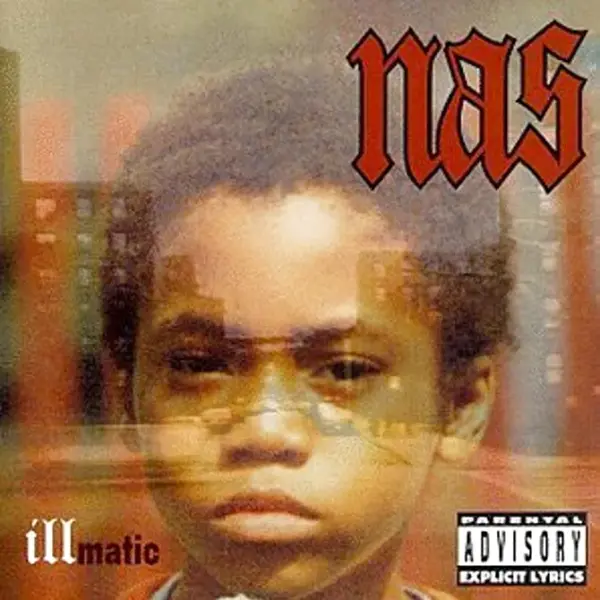
It’s impossible to start such a list without paying due respect to Nas’ Illmatic. The album cover, photographed by Danny Clinch and art directed by Aimee Macauley, captures a young Nas superimposed over a stark image of the Queensbridge housing projects – the place that raised him.
The authenticity of the cover, Nas as a kid with a raw, wise-beyond-his-years gaze, set against the bleak environment of his upbringing, instantly communicates the gritty and brutally honest tales that the album holds. It’s an iconic cover for an iconic debut, its powerful imagery cementing it as one of the best to do it.
To Pimp a Butterfly by Kendrick Lamar (2015)
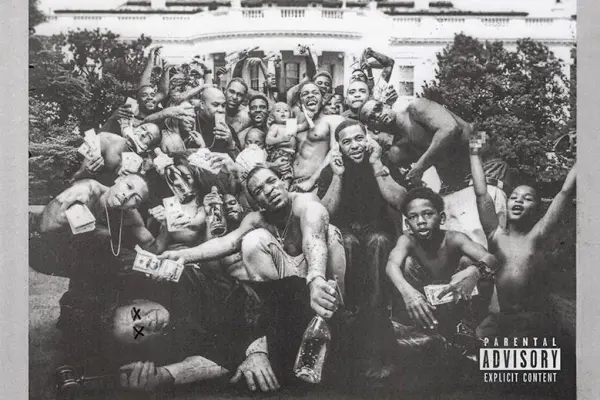
The album artwork for Kendrick Lamar’s To Pimp a Butterfly is an uncompromising and arresting statement. The cover, created by French photographers Denis Rouvre and Vlad Sepetov, features a crowd of black men and children, brandishing cash and champagne, posing triumphantly on the White House lawn over a subdued white judge.
The audacious visual symbolizes the themes of racial inequality and institutional racism that Kendrick tackles in the album. It’s more than an album cover; it’s a visual manifesto – Kendrick’s fearless challenge to the established order.
The Low End Theory by A Tribe Called Quest (1991)

A Tribe Called Quest’s The Low-End Theory album cover is an artistic landmark in hip-hop. The cover, designed by Zombart JK, features a black and green body-painted model referencing the African tribal motifs and the jazz influence that underscore the album.
The simplicity of the design, and its sharp break from the prevailing aesthetic of its era, sets it apart. It’s a visual statement of the group’s innovative blending of hip-hop and jazz, a beacon of the album’s unique sound.
Paid In Full by Eric B. & Rakim (1987)

There’s a reason why Paid In Full by Eric B. & Rakim is seen as a gold standard in album covers. Shot by Drew Carolan and designed by Eric Haze, the cover features the duo in front of a cash-filled backdrop, draped in thick gold chains and brandishing hands covered in gold rings – a raw symbol of their rise from the streets.
It’s not just about the extravagance, though. The cover laid the groundwork for an aesthetic defining the luxury of hip-hop in the late 80s and early 90s, making it a cornerstone of imagery for the genre.
Straight Outta Compton by N.W.A. (1988)
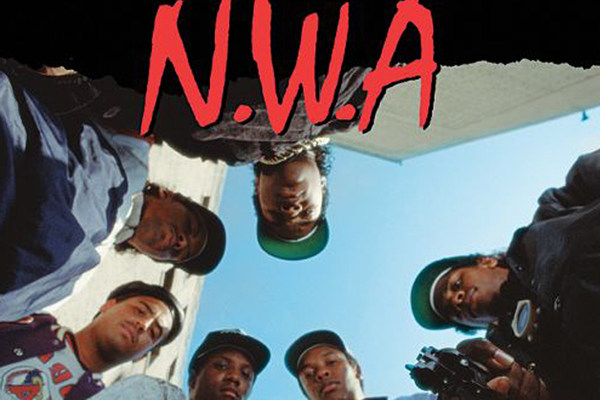
The N.W.A.’s Straight Outta Compton cover, shot by Eric Poppleton and designed by Helane Freeman, embodies the group’s raw and rebellious spirit. The cover depicts the group gazing downward, seemingly a full image reflecting the tension and aggression against law enforcement and the establishment that is the album’s heart. This artwork didn’t just define an album; it defined an era, a movement, and an attitude that still resonates today.
Carter III by Lil Wayne (2008)

The cover for Lil Wayne’s Carter III, created by Ronald “Slim” Williams, features an image of a young Lil Wayne with his face tattoos and dreadlocks digitally added in. This mix of youthful innocence with the recognizable adult Lil Wayne’s features makes for a striking contrast. The album reflects this contrast, as Lil Wayne balances his street-hardened experiences with playful wordplay and inventive lyricism. It’s a powerful visual representation of Lil Wayne’s evolution as an artist.
My Beautiful Dark Twisted Fantasy by Kanye West (2010)
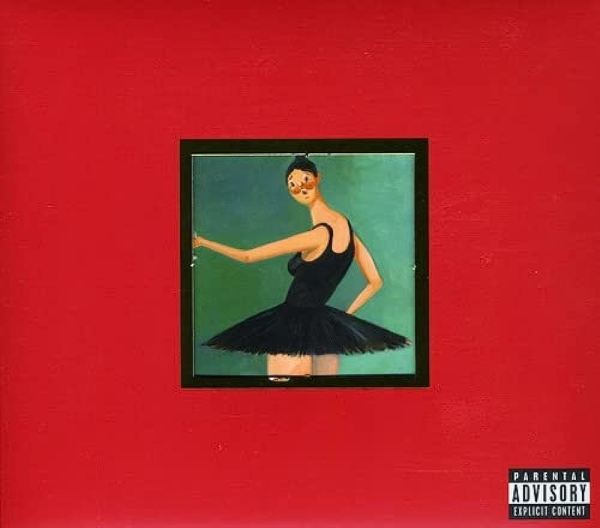
Kanye West’s My Beautiful Dark Twisted Fantasy features a series of paintings by contemporary artist George Condo. One of the most controversial covers depicts a grotesque Kanye figure with a monstrous, nude female creature, which was so provocative that some stores refused to stock it. The main album art is this picture of a dismayed ballerina.
Kanye’s willingness to provoke, challenge norms, and embrace controversy is part and parcel of his genius. It also shows how album art can be an extension of an artist’s personal and musical statement, as is characteristic of Kanye’s work.
Section.80 by Kendrick Lamar (2011)

The cover of Kendrick Lamar’s Section.80, designed by Vlad Sepetov and Kendrick himself, is a simple yet striking image. The minimalistic, vintage aesthetic is a metaphor for the timeless, personal, and raw narratives unveiled in the album mixed with the gilded trappings of the rough upbringings of the artist.
Gold-covered pipes and brass casings are an impactful juxtaposition and a constant reminder of where Kendric has come and escaped from. This cover pays homage to the humble beginnings of hip-hop music, while highlighting Kendrick’s introspective storytelling.
DAMN. by Kendrick Lamar (2017)

The cover for Kendrick Lamar’s DAMN., also designed by Vlad Sepetov, features a simple portrait of Kendrick against a brick red background with a bold, all-caps title – a departure from his previous, more complex covers. Kendrick’s exhausted expression, captured by Danish photographer Anders Overgaard, perfectly conveys the heavy themes of vulnerability, fear, and societal issues discussed in the album.
The simplicity of the cover places the focus squarely on Kendrick, emphasizing that the artist and his message are at the heart of this album.
Stankonia by OutKast (2000)

The album cover for OutKast’s Stankonia is a psychedelic spectacle. Shot by Michael Lavine, it showcases Andre 3000 and Big Boi against a black-and-white American flag backdrop with inverted stars. This aligns with the duo’s audacious fusion of genres and penchant for social commentary. The cover’s disorienting visuals perfectly match the experimental nature of the album.
Raising Hell by Run-DMC (1986)
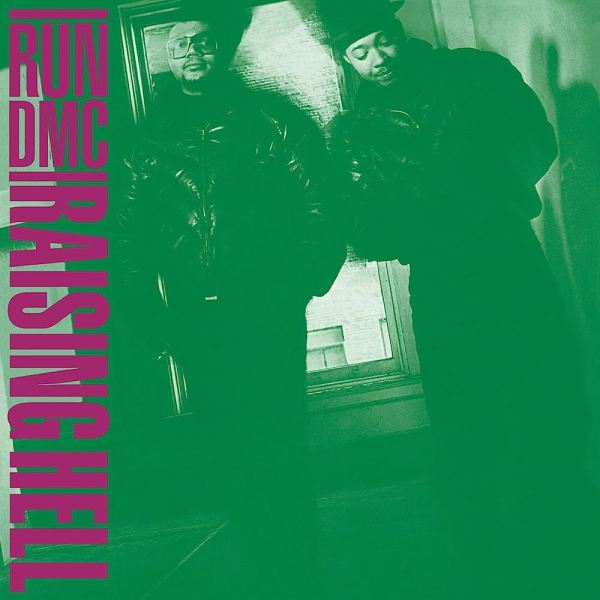
Run-DMC’s Raising Hell features the trio in their iconic attire. The cover, photographed by Glen E. Friedman, became synonymous with the group, turning their street style into a quintessential hip-hop look. It’s an emblem of hip-hop’s roots in the streets and the emergence of a unique, self-assured identity.
Aquemini by OutKast (1998)

Pen & Pixel, known for its flamboyant, often surreal album covers, designed OutKast’s Aquemini cover. The artwork features Big Boi and André 3000 in a cartoonish, futuristic cityscape, with nods to Afrofuturism. The eccentric artwork reflects the album’s expansive, genre-blending sound, while the cityscape symbolizes their roots in Atlanta, effectively capturing the duality of OutKast’s world.
Enter the Wu-Tang (36 Chambers) by Wu-Tang Clan (1993)
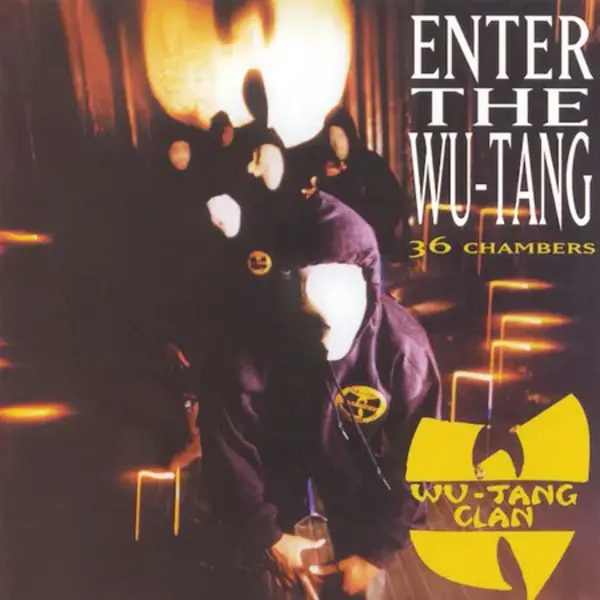
The cover for Wu-Tang Clan’s debut, Enter the Wu-Tang (36 Chambers), is instantly recognizable. It features the Clan members in negative black-and-white with flashes of yellow, their faces obscured by hoods and shadows. Designed by Jacqueline Murphy and photgraphed by Daniel Hastings, the artwork captures the group’s gritty sound and mystery, and the stark, minimalistic aesthetic became a blueprint for countless East Coast rap albums that followed.
Graduation by Kanye West (2007)

Takashi Murakami, known for his bright, colorful, anime-inspired art, designed the cover for Kanye West’s Graduation. The artwork depicts Kanye’s ‘Dropout Bear’ mascot, now turned galactic traveler, bursting out of a surreal, candy-colored world. This visual representation of ‘Dropout Bear’s’ evolution mirrors Kanye’s shift towards a more electronic and experimental sound in the album.
The Miseducation of Lauryn Hill by Lauryn Hill (1998)
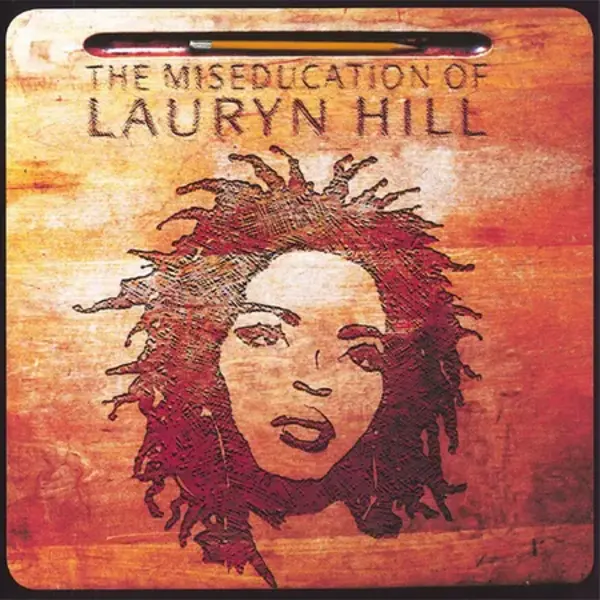
The cover of Lauryn Hill’s The Miseducation of Lauryn Hill, is a sensitive depiction of the artist. Modeled after the classic classroom doodle style, it shows Lauryn as a sketch on a school desk, emphasizing the album’s themes of learning and growth. This artwork reflects Lauryn’s introspection, vulnerability, and wisdom to her seminal work.
Midnight Marauders by A Tribe Called Quest (1993)

The Midnight Marauders cover is a fantastic tribute to the community of hip-hop. The Tribe Called Quest album cover, designed by Zombart JK, features a montage of nearly 70 hip-hop personalities in red, black, and green, signifying the unity and camaraderie in the hip-hop world. It’s a visual celebration of the culture, embodying the spirit of collective identity that Tribe Called Quest stood for.
Madvillainy by Madvillain (2004)
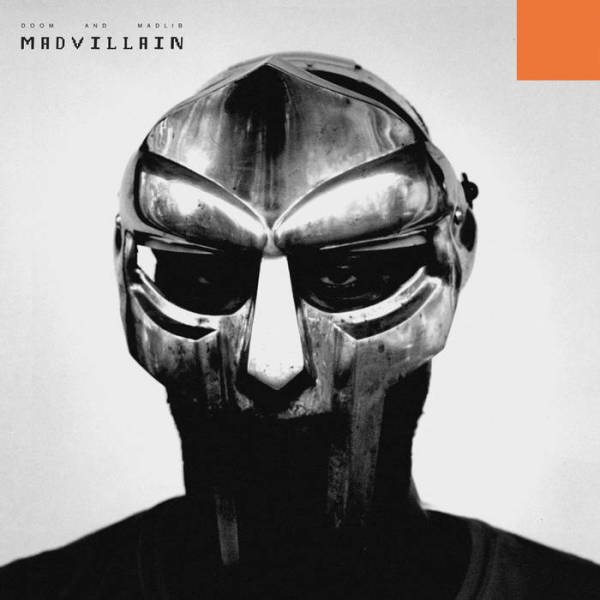
The album cover for Madvillainy, a collaboration between rapper MF DOOM and producer Madlib, is mysterious and iconic. Shot by Eric Coleman and designed by Jeff Jank, the black and white cover depicts DOOM in his characteristic mask, resembling a comic book villain. The cover’s lo-fi aesthetic and the masked figure epitomize the enigmatic character of DOOM and the underground, alternative vibe of the album.
Criminal Minded by Boogie Down Productions (1987)

Boogie Down Productions’ Criminal Minded cover is unabashedly bold. It features KRS-One and DJ Scott La Rock posed with an array of weapons, photographed by Glen E. Friedman. The image was considered controversial for its time, but it was also an unflinching depiction of the harsh realities of life in the South Bronx. This groundbreaking cover set a precedent for the gritty aesthetic of East Coast gangsta rap.
Death Certificate by Ice Cube (1991)
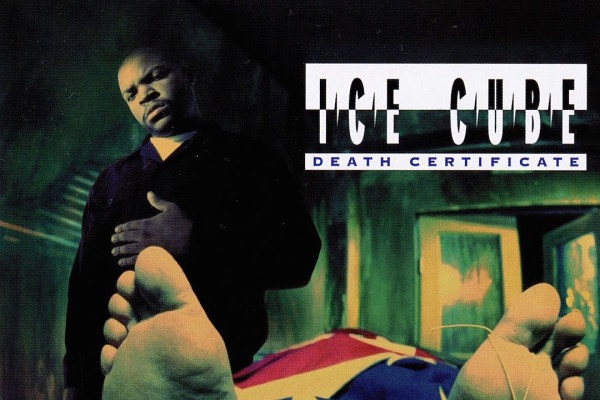
The cover art for Ice Cube’s Death Certificate, created by Kevin Hosmann and photographed by Mario Castellanos, is striking and thought-provoking. It shows Ice Cube standing over a corpse draped with an American flag, symbolizing the death of Uncle Sam. The cover was as controversial as it was impactful, encapsulating the rage, political commentary, and social consciousness in Ice Cube’s music.
The Score by Fugees (1996)
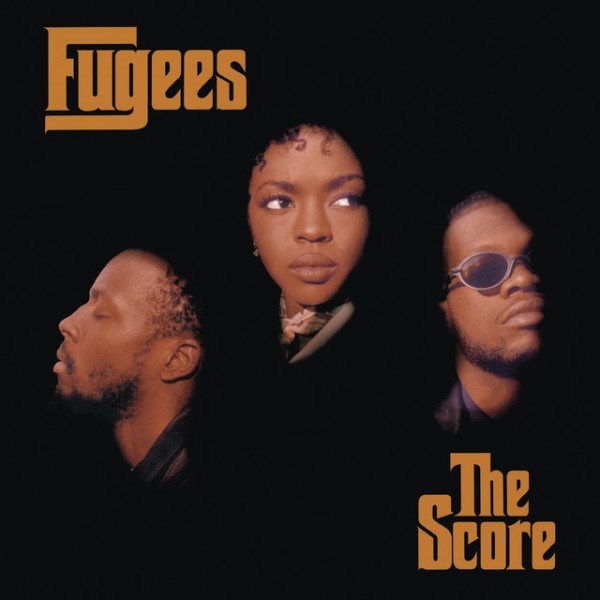
The cover of Fugees’ The Score, photographed by Marc Baptiste, is a cinematic masterpiece. It shows the trio – Lauryn Hill, Wyclef Jean, and Pras Michel – gathered around in an intimate, dimly lit setting, akin to a scene from a gangster film. The cover beautifully captures the album’s atmosphere, a blend of hip-hop, reggae, and R&B, with a distinctive edge of noir.
Oxymoron by Schoolboy Q (2014)

The cover art of Schoolboy Q’s Oxymoron, shot by Slick Jackson, is an honest reflection of the album’s themes. It features a close-up of what looks like the rapper’s face, but it’s actually his daughter hidden under his ski mask. The cover represents the struggle between Schoolboy Q’s life as a father and his past involvement in gang activities. It’s a visually arresting image, embodying the raw and unfiltered narrative of the album.
Reasonable Doubt by Jay-Z (1996)
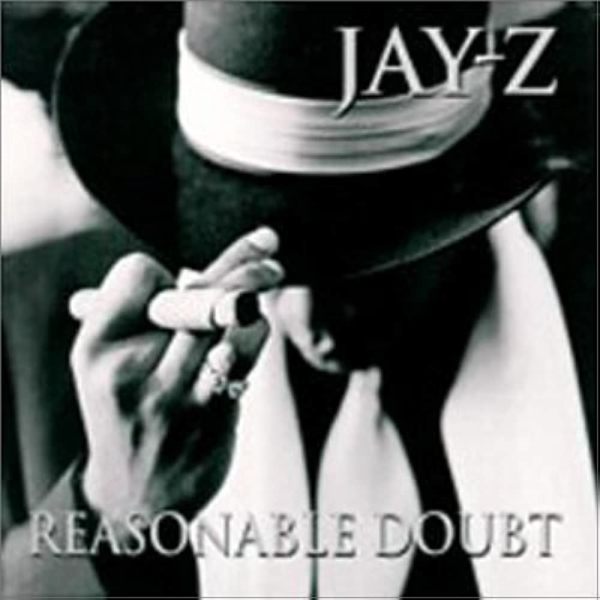
Jay-Z’s Reasonable Doubt cover, photographed by Jonathan Mannion, oozes with mafioso chic. It depicts Jay-Z dressed in a suit, cigar in hand, under dramatic shadows, symbolizing his transition from street hustler to successful rapper. The cover set the tone for Jay-Z’s suave street-wise lyricism and entrepreneurial spirit, making it a timeless piece of hip-hop history.
3 Feet High and Rising by De La Soul (1989)
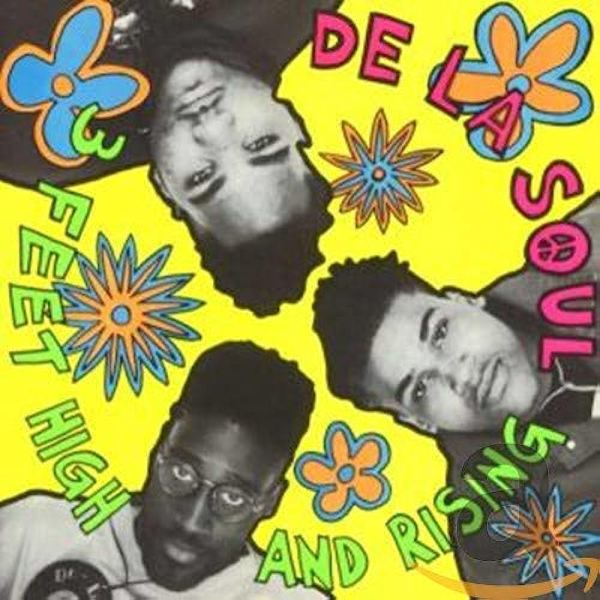
De La Soul’s 3 Feet High and Rising artwork, designed by British collective Grey Organisation, is as innovative as the album. With its day-glo patchwork design, the cover broke away from the dominant aesthetic trends of the time, just like De La Soul’s music broke away from prevailing musical styles. It perfectly encapsulates the trio’s playful, eclectic style and ethos of pushing boundaries.
Fear of a Black Planet by Public Enemy (1990)
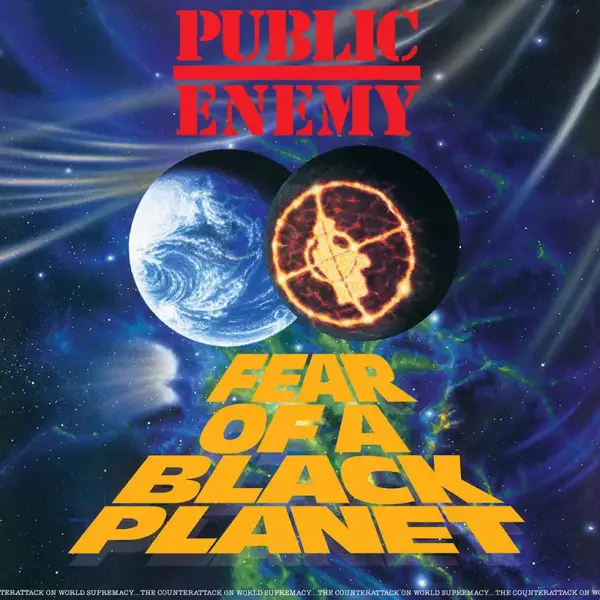
The cover of Public Enemy’s Fear of a Black Planet, designed by B.E. Johnson, visually represents the album’s powerful concept. It features a black planet near Earth, signifying the increasing influence of black culture. It’s a visual testament to Public Enemy’s boldness and political consciousness and how they used their platform to address racial issues.
Life After Death by The Notorious B.I.G. (1997)

The cover of Life After Death, shot by Michael Lavine, is an eerie prediction of future events. It depicts Biggie Smalls dressed in a suit by a hearse, a concept chillingly prophetic given his death just weeks before the album’s release. The cover, like the album, blends elements of gangsta grit with an aspiration for a luxurious lifestyle, underlined with an existential dread that only adds to its legend.
Me Against The World by 2Pac (1995)

2Pac’s Me Against The World album cover, designed by Riskie, is a classic in hip-hop imagery. It features Tupac Shakur against a black background, and his eyes reflecting his life’s pain and defiance. The cover reflects the vulnerability and introspection that Tupac embraced in this album, making it a poignant representation of his artistic persona.
The Blueprint by Jay-Z (2001)

The cover art for Jay-Z’s The Blueprint, photographed by Jonathan Mannion, features Jay-Z in a pensive pose with a cigar against a royal blue background. The simple yet powerful image reflects Jay-Z’s confidence and status as a leading figure in the hip-hop scene. It echoes the album’s content, filled with introspective lyrics and classic beats, underscoring Jay-Z’s dominance in the early 2000s hip-hop world.
808s & Heartbreak by Kanye West (2008)
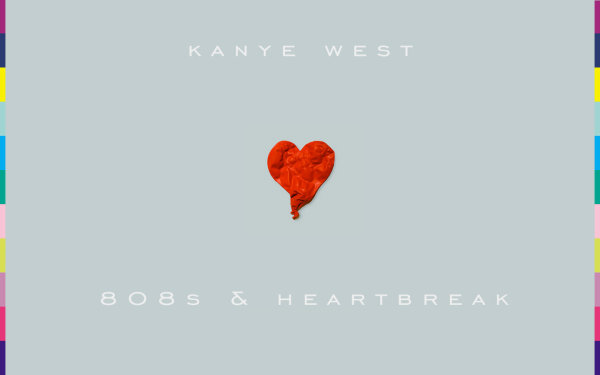
Kanye West’s album art for 808s and Heartbreak is among the best rap album art covers of all time due to its poignant simplicity and alignment with the album’s themes. It is designed by KAWS to feature a deflated, heart-shaped rendering against a solid grayish backdrop, symbolizing raw vulnerability and heartache.
The cover reflects the album’s pivotal role in Kanye’s career, as it marked a departure from his signature sound and delved into emotional depths, exploring themes of loss and introspection. This iconic and evocative artwork perfectly encapsulates the album’s impact on the hip-hop genre, making it a timeless representation of Kanye West’s artistic evolution and powerful journey.
Black Star by Mos Def & Talib Kweli (aka Black Star) (1998)

The cover for Black Star features a striking image of Mos Def and Talib Kweli, both gazing outward in oppositie directions. The image of the duo is layered in a vintage paisley white and bright red, featuring a boombox with two red stars in place of its speakers. The cover’s gritty realism and simplistic approach is a perfect visual representation of the raw, insightful lyricism and socio-political commentary that the album is revered for.
Things Fall Apart by The Roots (1999)
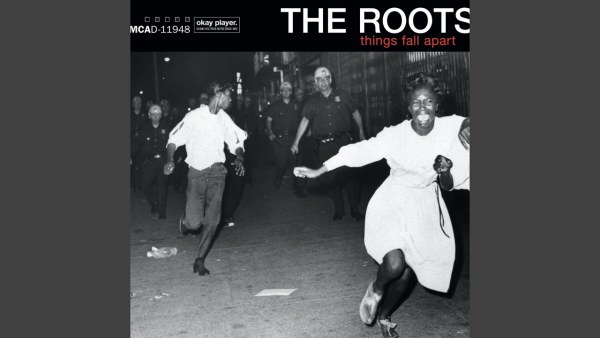
The cover of Things Fall Apart by The Roots is a gripping snapshot of reality. The album artwork features an emotional and provocative photograph of a pivotal moment in African-American history, emphasizing the group’s commitment to social issues. This visceral image underline The Roots’ conscious approach to hip-hop, offering a profound statement on historical and systemic racial injustices.
Pinata by Freddie Gibbs & Madlib (2014)

The artwork for Pinata, created by Jeff Jank, is as distinctive as the collaboration between Freddie Gibbs and Madlib. It features a border of a zebra-stripped pinata, which surrounds Freddie Gibbs at a park. The choice of the pinata, something that’s outwardly appealing but holds undisclosed contents, metaphorically parallels the layered complexity found within Gibbs’ street narratives and Madlib’s intricate production. The cover is also filled with other symbolic details, including Gibbs holding up a single finger, enhancing the uniqueness of this album’s art.
Acid Rap by Chance the Rapper (2013)

Acid Rap boasts an extremely memorable album cover due to its vibrant and psychedelic visuals, which perfectly complement the compilation’s unique musicality and themes. Designed by Brandon Breaux, the cover features a colorful, cartoonish scene with Chance seemingly on acid while wearing a tie-die tank top. Behind him is a silhouetted landscape with a fluorescent, alluring blend of sunset.
The artwork captures the essence of the mixtape’s experimental and genre-blending nature, as it blends elements of hip-hop, soul, and jazz into a cohesive and refreshing sound. Acid Rap‘s history and context further justifies its inclusion in this list, as the mixtape served as a breakout project for Chance the Rapper and played a pivotal role in his rise to fame.
Be by Common (2005)

The cover for Be, shot by photographer Marc Baptiste, features a close-up, image of Common. This straightforward and minimalist approach helps to focus attention on the man behind the music. It’s representative of the reflective nature of the album, which is filled with Common’s narratives and introspection.
The unadorned simplicity of the cover stands in contrast to many other hip-hop album covers, just as Common’s thoughtful, conscious rap style stood out in the mid-2000s hip-hop scene.
Get Rich or Die Tryin’ by 50 Cent (2003)
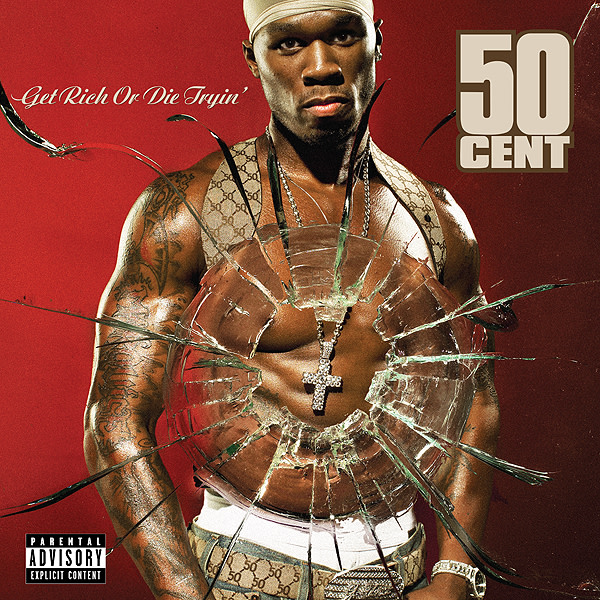
The album cover for 50 Cent’s Get Rich or Die Tryin’, designed by Julian Alexander, is simple. It features a ripped 50 Cent, showcasing his recovery from a shooting incident, and bullet holes in the glass, a nod to his tumultuous past. The artwork is representative of 50 Cent’s unapologetic grittiness and his audacious ascent in the hip-hop industry.
Good Kid, M.A.A.D City by Kendrick Lamar (2012)

The cover for Kendrick Lamar’s Good Kid, M.A.A.D City, designed by Vlad Sepetov, features a Polaroid of a young Kendrick with his family, with their eyes censored. This seemingly simple family photo is layered with meaning, representing the themes of innocence, family, and societal pressures prevalent throughout the album. The cover art underscores the personal and reflective nature of the album, making it a fitting representation of Lamar’s narrative.
Paul’s Boutique by Beastie Boys (1989)
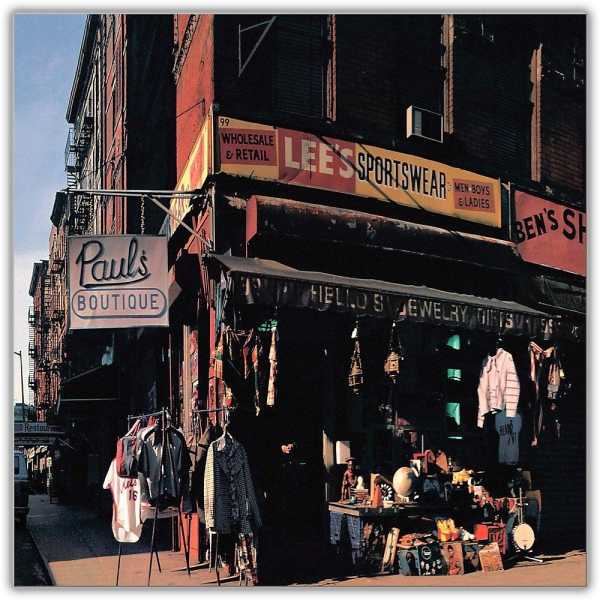
Due to its groundbreaking and intricate design, the cover of Paul’s Boutique reflects the album’s innovative approach. Created by artist Steve “ESPO” Powers, the cover features a visually dense collage of a corner-store setting, capturing the essence of the album’s eclectic and sample-heavy sound. This fictional store is named after Lee’s Sportswear, which is located on Manhattan’s Lower East Side.
The artwork pays homage to the bustling nature of New York City, where the album was recorded, while also incorporating pop culture references that align with the Beastie Boys’ irreverent and playful style.
The Chronic by Dr. Dre (1992)

The cover of Dr. Dre’s The Chronic, inspired by Zig-Zag rolling papers and designed by Eric Wright, has become an iconic image in hip-hop. The simplicity of the artwork, featuring only Dr. Dre’s name and the title of the album, underscores the importance of the music within, marking a significant turning point in West Coast hip-hop.
The College Dropout by Kanye West (2004)
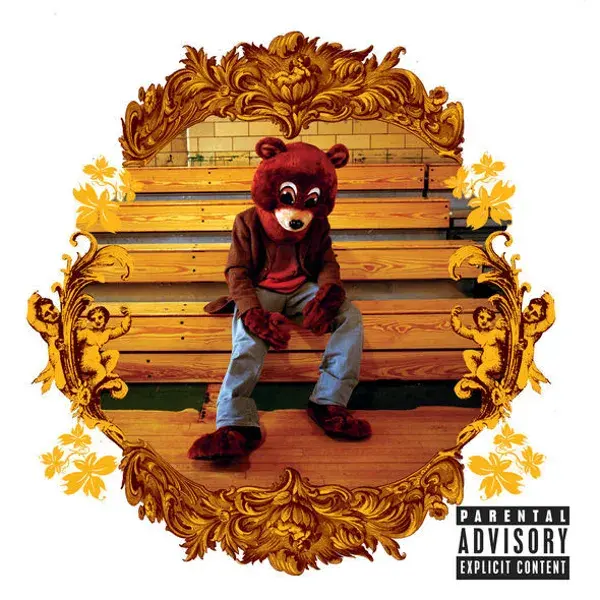
Kanye West’s The College Dropout cover art, designed by Eric Duvauchelle, is memorable and conceptually connected to the album’s themes. It features a bear mascot slumped on a gym bench, symbolizing Kanye’s disinterest in the traditional educational system and his outsider status in the hip-hop industry. This cover introduced the ‘Dropout Bear’, a mascot that would reappear in various forms on future Kanye West album covers.
ATLiens by OutKast (1996)
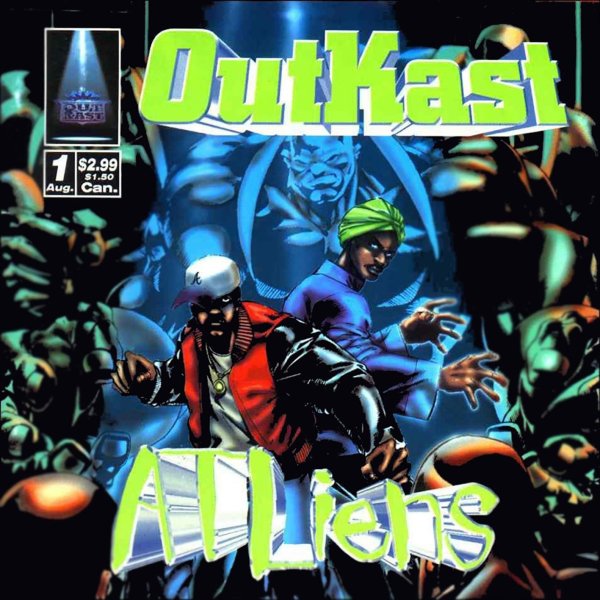
The cover of OutKast’s ATLiens, designed by Frank Gomez, is a comic book-inspired image that signals the duo’s otherworldly creativity. It features André 3000 and Big Boi in a sci-fi Atlanta setting, setting the stage for the album’s exploratory sounds. This unique, illustrative approach perfectly represents OutKast’s innovative style, blending sci-fi with Southern hip-hop.
Ready to Die by The Notorious B.I.G. (1994)
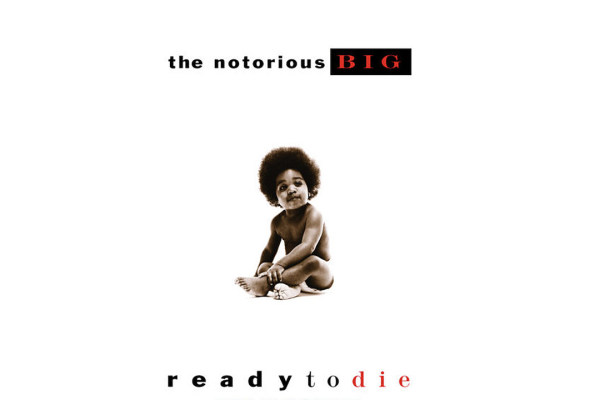
The cover of The Notorious B.I.G.’s debut album Ready to Die, shot by Butch Belair, features a baby seated on a white background, signifying the beginning of Biggie’s life story, which the album narrates. The simplicity of the image contrasts sharply with the complex, gritty narratives inside, underscoring Biggie’s ability to bare his soul through his music.
It Takes a Nation of Millions to Hold Us Back by Public Enemy (1988)

The cover of Public Enemy’s It Takes a Nation of Millions to Hold Us Back, shot by Glen E. Friedman, is as hard-hitting as the album itself. It depicts Chuck D and Flavor Flav behind bars, symbolizing the systemic issues African-Americans face. It’s a memorable image that speaks volumes about the group’s aggressive and politically charged style.
Black on Both Sides by Mos Def (1999)
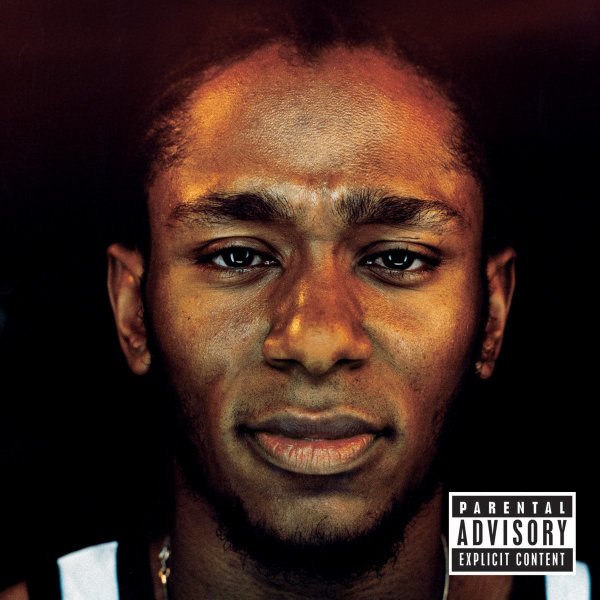
The cover for Mos Def’s Black on Both Sides, designed by Brent Rollins, is striking. It features a picture of Mos Def, staring straight into the eyes of his audience. The imagery is evocative of the album’s themes of black identity, making it a memorable symbol of Mos Def’s thought-provoking lyricism.
The Marshall Mathers LP by Eminem (2000)
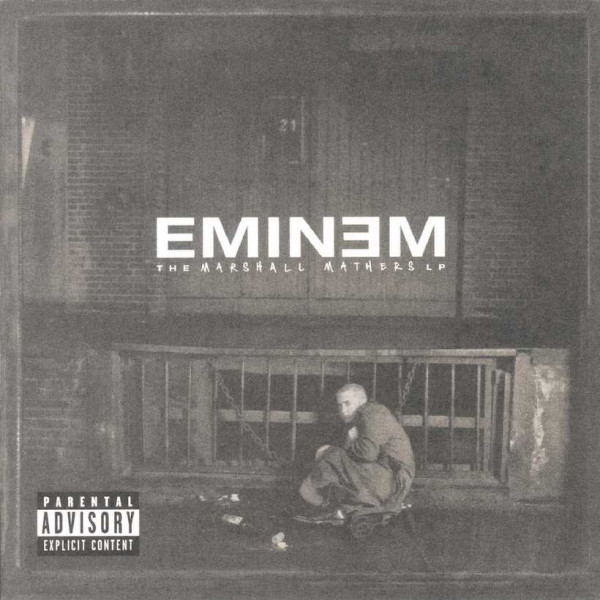
The cover for Eminem’s The Marshall Mathers LP, shot by Danny Hastings, is an eerie representation of the album’s dark themes. It depicts Eminem sitting on the sidewalk in his ominous-looking hometown, a recurring symbol in his music representing his troubled past. The haunting, slightly blurred image captures Eminem’s lyricism’s raw and candid narrative style.
Supreme Clientele by Ghostface Killah (2000)
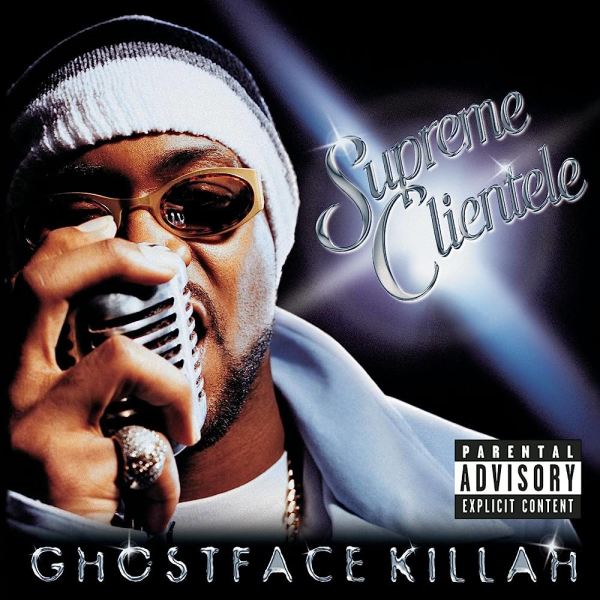
The cover for Ghostface Killah’s Supreme Clientele features a unique spotlight on the artist vocalizing into a mic. The shot of Ghostface is eclectic, designed by Ronald “Cey Adams” Pinn, reflects the dense, multifaceted lyricism and the Wu-Tang member’s distinctive storytelling approach, making it a standout piece of artwork.
Illadelph Halflife by The Roots (1996)

The cover for The Roots’ Illadelph Halflife, designed by Kenny J. Gravillis, is a black-and-white photograph of the band members with a semi-transparent roots overlay. This visual metaphor represents The Roots’ organic, down-to-earth sound and their grounding in the history and fundamentals of hip-hop.
DoggyStyle by Snoop Dogg (1993)
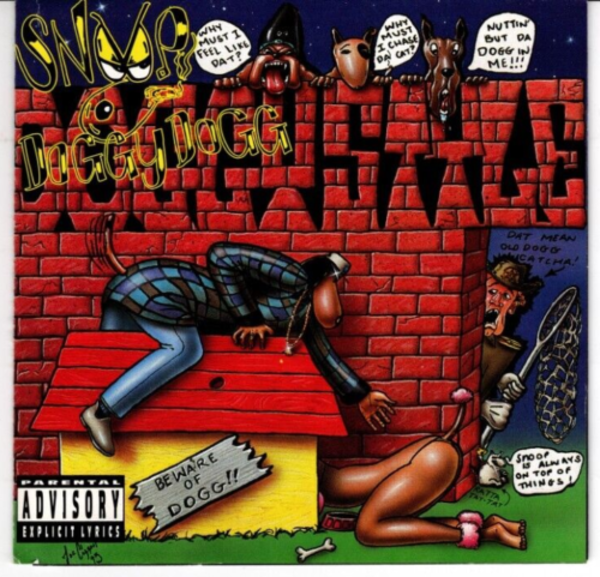
The cover of Snoop Dogg’s debut album DoggyStyle, illustrated by Joe Cool, is an animated portrayal of Snoop’s distinctive brand of West Coast G-funk. It presents Snoop Dogg’s alter ego as a dog in various scandalous situations, capturing Snoop’s music’s provocative, playful, and unabashedly explicit nature. It is a unique representation of Snoop’s charismatic persona and a nod to the explicit content within the album.
Take Care by Drake (2011)

The cover for Drake’s “Take Care”, shot by Hyghly Alleyne, is a simple yet powerful image. It depicts Drake sitting alone at a table with a golden owl, symbolizing wisdom, and a chalice, signifying his success. The image represents the introspective and dynamic content of the album, capturing the solitude that often accompanies fame and wealth.
Food & Liquor II: The Great American Rap Album Pt. 1 by Lupe Fiasco (2012)

The cover for Lupe Fiasco’s Food & Liquor II, designed by Jason Heatherly, is a stark all-black image, a bold choice in the visually saturated world of hip-hop covers. The absence of any explicit illustration or image can be seen as a commentary on how we often judge music by its visual presentation rather than the content itself. The bold choice to eschew traditional cover art focuses on Lupe’s message, emphasizing his reputation as a thought-provoking lyricist.
Watching Movies with the Sound Off by Mac Miller (2013)
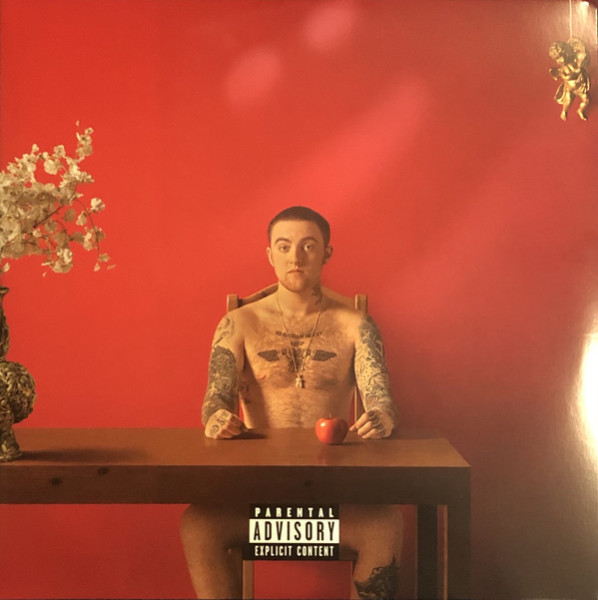
The artwork for Mac Miller’s Watching Movies with the Sound Off, created by Miller McCormick, showcases a trippy, surreal concept. Featuring a bare-chested Mac Miller seated at a table with an apple and a small plant, it hints at introspective themes of self-exploration. An enormous, crimson pair of eyes, Miller’s own, loom in the background, adding a touch of the bizarre and enhancing the album’s eccentricity.
Nothing Was The Same by Drake (2013)

Closing out our top 50, the album art for Drake’s Nothing Was The Same encompasses the powerful and introspective portrayal of the artist’s evolution. The covers of the original album and deluxe version, designed by Kadir Nelson, features two contrasting portraits of Drake – one as a child and the other as an adult – symbolizing his journey from past to present.
This artwork reflects the album’s theme of self-reflection, growth, and the complexities of fame, while the striking and emotive imagery resonates with fans, making it a visually compelling and iconic cover in the realm of rap.
Final Thoughts On The Best Rap Album Covers
The best rap album covers are not just decoration. They are part of how albums are remembered.
A great cover can make an album feel tied to a place, a group, a public conflict, a private memory, or a character the artist is building. That is why the same images keep coming back decades later: Nas as a child over Queensbridge, DOOM behind the mask, N.W.A. looking down into the lens, Tribe’s painted figure, Lauryn Hill carved into a desk, and Kendrick standing in front of a brick wall under one blunt word.
Rap artwork has changed with streaming, thumbnails, AI design tools, and faster release cycles, but the standard has not changed much. The cover still has to make the listener feel the record before pressing play.

Will Vance is a professional music producer who has been involved in the industry for the better part of a decade and has been the managing editor at Magnetic Magazine since mid-2022. In that time period, he has published thousands of articles on music production, industry think pieces and educational articles about the music industry. Over the last decade as a professional music producer, Will Vance has also ran multiple successful and highly respected record labels in the industry, including Where The Heart Is Records as well as having launched a new label with a focus on community through Magnetic Magazine. When not running these labels or producing his own music, Vance is likely writing for other top industry sites like Waves or the Hyperbits Masterclass or working on his upcoming book on mindfulness in music production. On the rare chance he's not thinking about music production, he's probably running a game of Dungeons and Dragons with his friends which he has been the dungeon master for for many years.