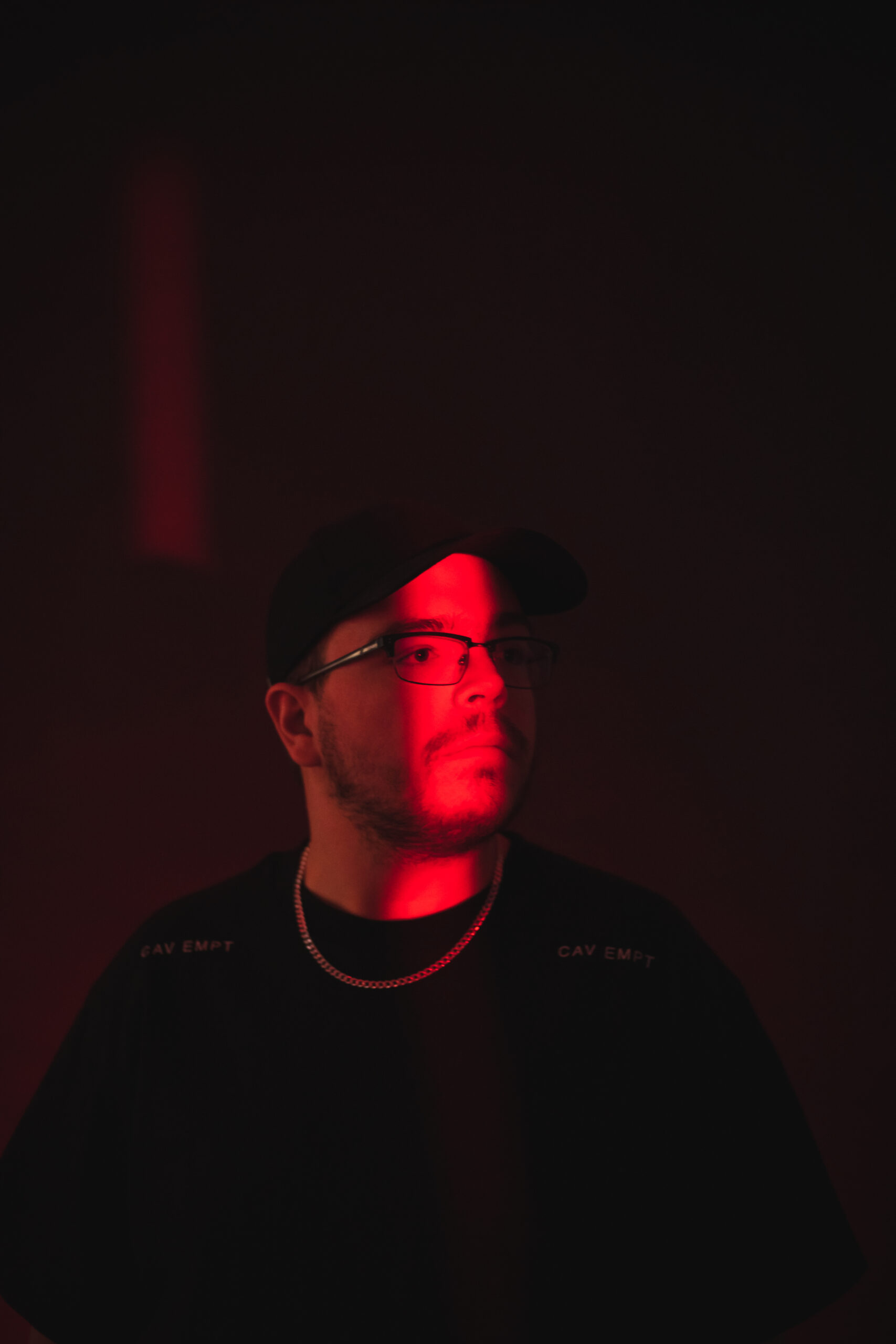
We’re back with our chart column of 15 questions, 15 unfiltered answers, and 15 bass tracks. This time, we had the pleasure of speaking with Ray Volpe. The producer has been on an absolute tear for well over a year, with his tracks getting played out across festivals and clubs around the world.
Ray recently put out a new track on Monstercat, ‘HAPPY SONG.’ The track is destined to set dancefloors on fire with truly in-your-face choruses that will throttle everyone. At time of release, the track had already been played out by Excision, NGHTMRE, SLANDER, Sullivan King, Kayzo, Riot Ten, and Kai Wachi.
Speaking with us about the track, we asked Ray,“what was the idea behind your song, “HAPPY SONG?”
“It’s actually an extremely DJ/producer mindset answer. I was preparing to play EDC Orlando back in November, and I felt that I didn’t have enough heavy “in your face” bangers for it that were unreleased. I get a lot of inspiration last minute the week of a festival, so I threw together the first drop of HAPPY SONG then and there. I remember starting the second drop idea at the airport after too at like 5AM. Nothing beats the “pre show” inspiration for me. My best work hits me there! As for the themes, I’ve always found it kinda funny and interesting how we react to super heavy music. Bass heads (myself included) will freak out with a huge smile on our face when we hear some kind of insane drop. Having a happy reaction to something so dark is just a funny concept at the surface, so I put that on paper into a song.”
Getting beyond the vision for a mainstage banger, we wanted to dive into where he ran into creative roadblocks asking him “What were some of the most difficult parts of the production with “HAPPY SONG?”
“This is honestly so minuscule I’m so sorry in advance haha. The tiny transitions between the melodic “happy” parts before going to the heavy “dark” builds. Transitioning between the two styles was driving me crazy. You never want it to just cut abruptly. I was trying so many different ways to transition it with filters or vocal fills etc, even silence with just a sweep effect. The glitch of the happy section with the evil laugh under it worked really well in the end to show that things were changing/about to get weird quickly. I am super happy with how it turned out in the end, but that was definitely the headache I had over this song haha.”
Before diving inside the mind of Ray Vople, here are his 15 favorite bass music tracks from May 2023. His chart includes Kai Wachi, Automhate, Jon Casey, Effin, Nikko, and more.
RAY VOLPE’S 15 BEST BASS TRACKS OF MAY 2023
INSIDE THE MIND OF RAY VOLPE
In the following unfiltered answers, Ray tells us about production techniques, perspective on what needs to change in electronic music, producer mindset, connecting with fans, evoking emotion through music, and much more.
Ray, your dubstep productions are known for their unique blend of heavy basslines and melodic elements. How do you approach the process of combining these contrasting elements to create your distinct sound?
“I like to look at it from a post-hardcore/metalcore mindset. There’s a balance to be had, and I think those genres always did it really well. It’s about keeping energy. Sometimes I’ll have a thick buzzy bass that follows the bassline/sub progression underneath the pretty chords, this way it has a “heavy” energetic feel to it while maintaining the emotion and pretty aspects. When trying to combine both, you always want to make sure you’re never leaning too far into one side so it doesn’t feel like it’s a different song playing, but instead are complimenting each other and feel like it’s part of the same world even if the tone has changed.”
Can you tell me about any specific production techniques or sound design principles that you frequently utilize to achieve the powerful and impactful drops in your tracks?
“I try to always make sure there’s a main flow that sets the idea, then have variations follow as the drop progresses. When doing that, you’re building and evolving energy as it goes on which is super important (at least to me) to keep people engaged with your song. Sometimes a drop can be repetitive, and that pulls people out or gets them bored. I like to do some type of switch whether it’s just a micro level change in the sound itself or the flow, every 4 bars or so to just keep things moving along. I also really love utilizing open space/dead space. Between bass hits there’s sometimes silence that can be powerful with nothing there. Sometimes having silence can add impact. Other times, it might be too empty so adding reverb between hits to make things swell into the next sound can add power. It really just depends on the song for me! Another thing I love to do is add vocal fills where I can, whether it’s just a scream or laugh (which I do most often) or a more full hip-hop quick phrase or something.”
Are there any favorite plugins of yours?
“AH so many! I love rinsing Decapitator for their saturation lately. I’ve been using a lot of Kontakt expansions too for some live drums for songs that honestly I don’t even know will ever see the light of day. Also Gain Reduction on vocals, love that thing, Joey Sturgis is a genius.”
Your music often evokes strong emotions in listeners. How do you channel and express these emotions in your compositions? Are there any personal experiences or inspirations that influence your creative process?
“My music is definitely raw to my core, so I really appreciate you saying that. When there are lyrics or a vocal, and it’s me singing it, it’s straight from the heart. Real experiences or real feelings. Usually from some point in my life. I absolutely channel whatever i am feeling at the moment into my songs, so even if i’m not singing, you can catch the vibe for how I’ve been feeling depending on what kind of music I’m putting out. It’s easy for me to pour myself into a song, I think that music is an outlet for everyone whether they need it to be happy, or to be sad. Everyone feels when they listen to music, so I really like to use that to my advantage if I can. Lately we’re kinda back in my heavy era. I definitely have been feeling the love from the amount of shows I’ve been playing, so it’s been really motivating to make some crazy energetic music for the tours!”
Collaboration is a significant part of the electronic music industry. Have there been any notable collaborations that have had a significant impact on your musical journey? How do you choose your collaborators and what do you look for in a collaborative partner?
“Working with Marshmello on our song “Old School” was a really amazing moment for me. He’s a really talented guy. A lot of people in the bass scene don’t give him enough credit, in my opinion. I think the bass scene as a whole can be very gatekeepy, and also not very open to things outside of the bass realm. His massive wins and huge success is a win for us too, even by proxy just considering he makes EDM. That helps further legitimize this scene. Helps us all at the end of the day. He was super easy to work with. We’ve known each other for a long time, something like six years, and we both have a huge love for that early 2010s brostep nostalgic sound that introduced a ton of USA to dubstep. Making that style was the immediate move. I think in general, looking for a collaborator just comes down to sharing a vision or love for something. I want to make music with my friends who I know care about this as much as I do.”
Live performances are an important aspect of an artist’s career. How do you adapt and translate your studio productions into captivating and energetic performances on stage? Are there any specific techniques or strategies you employ to engage the audience during your live sets?
“I spend an unhealthy amount of time working on my sets, to be honest with you haha! I love making sure my shows flow a certain way. That goes further than just making sure two songs are the same key & tempo. I like when the songs compliment each other, energy wise, and feel like they fit in the same world. This process definitely leads me down phases where I start producing a bunch of music in the same key. I was working in Eb minor for a long time, and recently I’ve been in a massive C# minor phase with a lot of the songs on my upcoming EP. I also love to throw acapellas of popular songs onto my songs while they’re being worked on, as it gives me ideas for live edits for the sets later on to make things more relevant to the more general listener that might be finding out about me at a festival or something. I really love using familiarity within breakdowns and builds while keeping drops more unique and original. I also love engaging with the audience, I like to believe I’ve found a good balance between talking on the mic but not being TOO much ya know?”
What is something about the current electronic music scene you wish you could change?
“There’s definitely a few things. General toxicity online, lack of PLUR at events, gatekeeping. The list can go on. We should all be nice and kind to each other. We should also try to help lift each other up, not push each other down.”
As a producer with a wide range of musical knowledge and understanding, how do you draw inspiration from different genres when creating your tracks? Are there any specific genres or artists that have had a significant influence on your sound?
“I have so many various inspirations from all over the spectrum when it comes to music! I’m heavily inspired by post-hardcore/metalcore as I’ve said before, so bands like Bring Me The Horizon, A Day to Remember, Motionless In White, Ice Nine Kills, etc. are all great examples there for forming that heavy and melodic combo I strive to achieve. As for EDM, I find a lot of inspiration from Illenium, Dabin, similar artists in that realm. Melodic music comes to me a lot more naturally than heavy music, in terms of listening to EDM. Both of their respective newest albums were incredible, I listen to both a lot. As for the heavy side, I really look to the underground and the up and coming names in the scene. They’re at the forefront of change and innovative ideas. My goal is to fuse that with current and older trends, mash it into something that’s fresh but feels familiar at the same time!”
Dubstep has undergone various transformations and adaptations over the years. How do you see the future of the genre evolving, and how do you personally aim to contribute to its growth and development?
“I have no idea honestly… I wasn’t even sure where we could go with dubstep back when Terror Squad came out in 2013. It keeps evolving and I have zero idea how. I think we’re in a phase now where a lot of these plucky fakeouts like in HAPPY SONG exist, also that older sound UK influence is coming back majorly now too. I think going in that more minimal route will end up with us going into an overproduced crazy phase again later on, if I had to make a prediction based off of nothing haha. As for how I am to contribute, I actually take it back to the end of the last question! I really love the idea of fusing ideas. Bringing together current trends and the ones that we’ve always known and loved. Finding that balance of familiarity but also freshness. I’ll probably have a few bars of a UK influence bass tune inside a drop sprinkled in somewhere someday, just as a nod. I did similar with color bass on my song “Pretty Much” just a touch of it at some point to fuse the styles a bit. That’s what I’ve always done and want to continue doing. I like to think I’m like “commercial bass” haha – an easy-to-get-into artist for someone that maybe never listened to bass before.”
How do you engage with your fans and maintain a strong connection with them? Are there any specific ways in which you involve your fans in your creative process or decision-making?
“Something I’m really grateful for is my relationship with this amazing community. I’ve been very grateful to be close with them. I’ve met so many people on multiple occasions and even get to catch up with them every time with what’s going on with their lives. I know we all say it, but it’s true when we say that we’re nothing without the fans. But I guess I really take it to heart. I know that without them, I wouldn’t be alive today. I was bullied my entire childhood. Getting into making music and finding a community where I felt accepted changed everything for me. I will never take that for granted, and I will continue to be as responsive to them and give them as much love as I can. It’s the least I can do as a thank you for what they’ve provided for me. As for my process, I definitely gauge their reactions at shows to see what I want to do next, all the time. The reactions for HAPPY SONG were so strong that I knew I wanted it to be the first single. That choice wouldn’t have been made without them. I also am always listening to what merch they want. We had a strong ask for bucket hats, and we took the chance and they sold out almost immediately. I try to give them everything they want and more if I can!”
Can you provide any insights into your upcoming projects or releases? What can fans expect from your music in the near future? Are there any new directions or experiments you’re excited to explore?
“Everything this year is leading to my next EP, “VOLPETRON ASCENDS” – It’s coming in the fall. “HAPPY SONG” was the first single off of that. It’s definitely more of a statement piece than anything else. After the success of Laserbeam, we really made a jump into a new level of growth. With that, comes a lot of pressure and potential fear of what comes next. This EP is the “hey, I’m here, and I’m not going anywhere” release. I’m very excited to be working with Monstercat for this. I’ve looked up to the label since the beginning, and to finally do my own work with them is a dream come true. They’re a lovely team, super passionate about the music they release, which is something important for me. We’re all here for the right reasons!”
Finally, what advice would you give to aspiring producers who are looking to establish themselves in the dubstep or electronic music industry? Are there any key lessons or experiences from your own journey that you would like to share with them?
“I’d suggest really planning things out. It’s important to have a plan. Spend time coming up with your brand, your vision, and even your discography. I think a lot of people that want to make this a career don’t want to spend time on the business side. It’s extremely important to. They treat music as a hobby and want business results. Things realistically don’t work that way, at least most of the time. Maybe that’s a hot take but it’s the truth that I think a lot of people don’t want to hear. Invest in social media, invest in your vision, invest in yourself. Music isn’t the only piece of the puzzle. Putting in all that work and being patient will go a long way. I’ve been making music since 2010, thirteen extremely long years. I’ve had some parts of success and some parts of major lows where I was told my career would never succeed. I was legit told to end this project back in 2019. You have to push yourself to the limit and keep going. Consistency and persistence. You’ve got this. If I was able to, you can too.”
Any parts of your music journey you feel hasn’t been covered that you would like to talk about?
“I don’t think so! This has been a lovely conversation. These are questions I’ve never really been asked before. I’ve really enjoyed spending the time to think about it and actually give an answer that has some depth to it, at least I hope!”