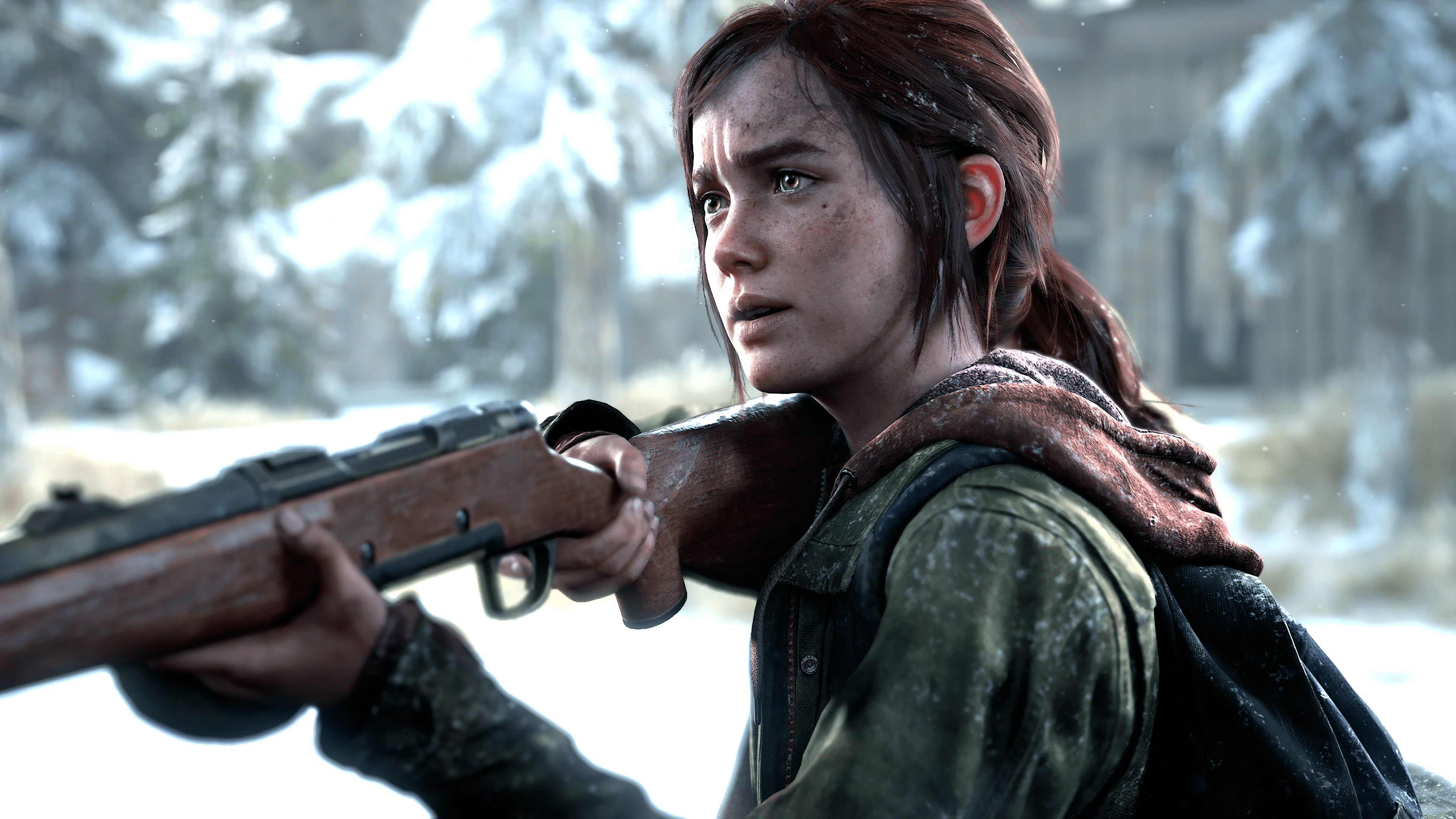
As I booted up The Last of Us Part 1, I was giddy with excitement. This is one of my favorite games ever developed, and it has finally made its way to PC. The critically acclaimed game, followed by the critically acclaimed HBO adaptation, Sony’s track record with PC ports- what could go wrong?
I preloaded the game and when 9pm PST rolled around on March 27th I saw that the game wouldn’t be released for another 11 hours. Hm, a bit odd but no big deal. Booting up the game a second time on the 28th I was greeted with a strange 10 minutes long verification process on Steam. Weird, but still, no biggie.
TLOU Runs PC Hardware Red Hot
I finally launched (for real this time) the game and to my surprise my PC sounded like a jet engine, very similar to what my PS4 Pro used to sound like when playing TLOU Part 2 for the first time. I threw Riva Tuner statistics up on display and oh my- temperatures and utilization are through the roof. With a I-9 13900k and an RTX 3080ti sitting inside a massive 11-fan tower built entirely around cooling- I knew we were in trouble, and we haven’t even got to the main menu yet.
I quickly scrambled to turn the default settings down from 4K ultra to 4k high in hopes of cooling things down despite nothing being rendered on screen. Meanwhile, I see that the game is pulling a herculean 250w of power for the CPU and pushing temperatures into the 90 C range- my PC is red hot, and again, we haven’t even gotten to the menu yet.
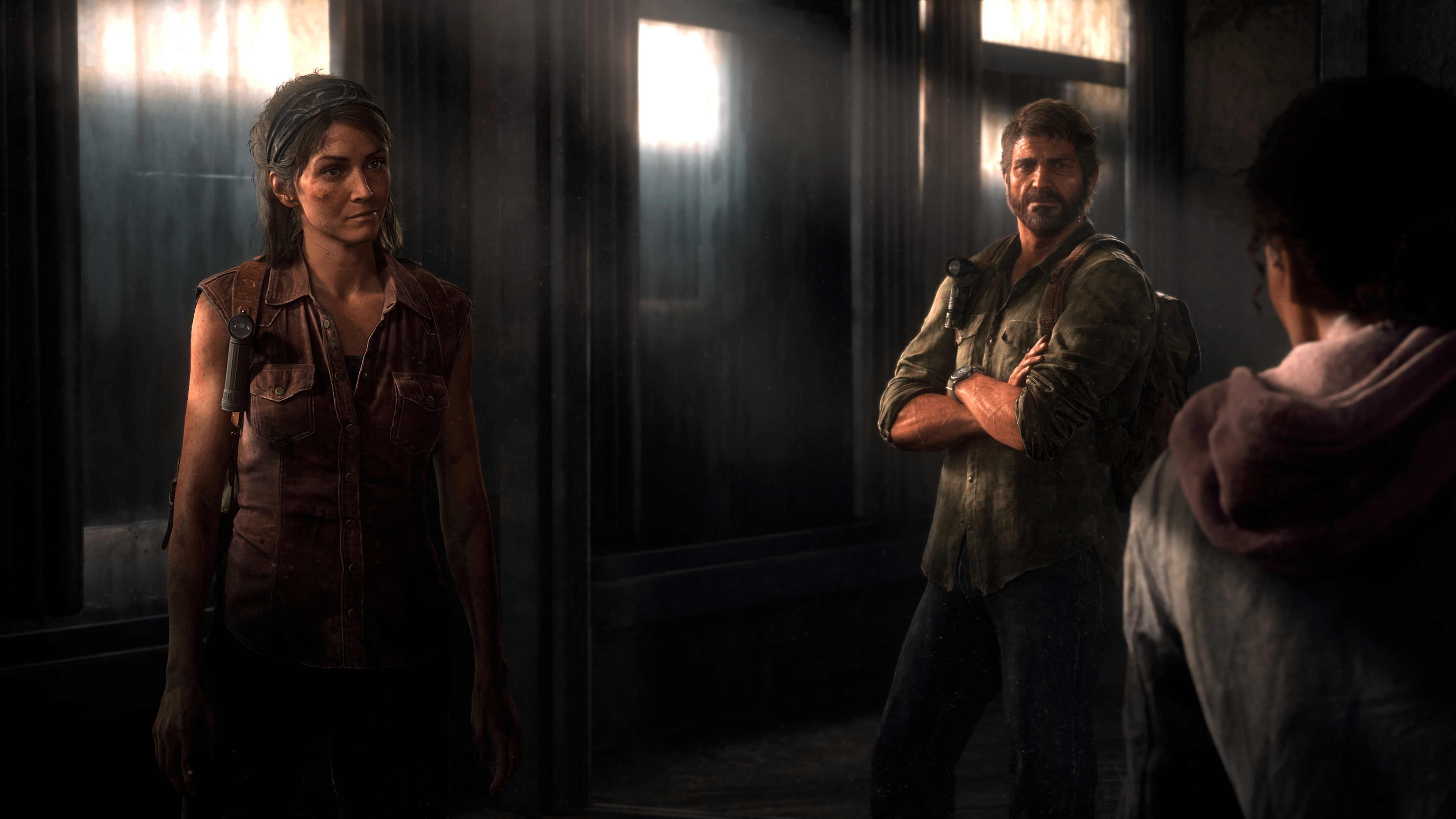
Changing graphics settings slowly started to cool the system down while shaders started to compile in the background—finally, some good news. The compilation took about 10 minutes to complete…and we’re looking at only 60 fps with DLSS turned on- in the menu screen. These first few moments of booting The Last of Us might have been the weirdest and most demanding sequences for PC hardware I’ve ever seen, all of which came from a menu selection screen.
Before we continue any further, I feel now is a good time to preface that this isn’t a review of The Last of Us but a review of the PC port specifically. As it has spanned across three entire console generations and has won more awards than participation trophies handed out at the end of a kid’s soccer season, there simply isn’t much left to be said. I’ve now played TLOU Part 1 for the fourth time, and it still tugs at my heartstrings and leaves me watery-eyed. The game is phenomenally gut-wrenching and is an absolute must-play for anyone who enjoys the medium of video games.
*Exhales* Here goes nothing.
All PC Ports should have these Options
The Last of Us Part 1 PC port on paper should be incredible. It has all of the things PC players are often left without regarding ports. A plethora of display and graphics settings that take several mouse wheel scrolls to flip through is fantastic to see. Within these graphics options are disclaimers for which settings impact your GPU and CPU and to what degree they’re affected. We have 21:9 support which seems to be a rarity anymore. DLSS and FSR is available which is a necessity for anyone trying to run games at a reasonable framerate and resolution. Unlocked refresh rates come in all shapes and sizes for those looking to push past the 60-fps mark. There’s even shader compilation that spools up in the menu before you start the game which is meant to keep gameplay stutter-free.
All controllers are accounted for so anyone with a Switch Pro controller, Xbox Elite or Xbox adaptive controller, Dual Sense, Steam controller- you name it’s there. In fact, it goes so overboard I was nearly expecting to see a flight stick or a Dance Dance Revolution pad support.
There are a host of accessibility options in classic Naughty Dog fashion to alter how things are displayed on screen for people that are visually impaired, lower various difficulties that the game may present, or cater the game to one’s playstyle in any way they see fit.
So, when I say on paper this all looks good right? Well… here’s where things get pretty rough.
TLOU Part 1 on PC is Demanding
To say that The Last of Us on PC is a demanding title at launch is an understatement. Even as someone who is fortunate enough to have a high-end PC, I was turning down settings to smooth things out. VRAM is gobbled up immediately even at medium settings while GPU utilization is maxed out. RAM usage is incredibly high, hanging out well above the 20 Gb mark. In addition to the list, the game is quite CPU-heavy as well. Even loading a saved game will take around 30 seconds on NVME M.2 storage.
I know that the technology implanted into TLOU over the years has come a long way since its release back in 2013, and the game looks incredible. However, the game doesn’t justify being this demanding for what’s being displayed on screen, especially with the absence of ray tracing and the inclusion of DLSS and FSR.
If TLOU was exclusively hardware intensive that would be one thing, but the lack of technical polish and the avalanche of bugs and system crashes I encountered as a whole left a sour taste in my mouth. This is The Last of Us, Sony’s magnum opus. We’ve seen ports of Spiderman, Days Gone, and God of War just to name a few that were all exceptional ports. How on earth did the game release in this poor of state?
Some folks during launch week speculated that the HBO adaptation was at fault, claiming Sony was trying to take advantage of season 1 ending near the PC version’s launch. Others blamed Iron Galaxy, who worked on the port, citing that their previous track record regarding quality was enough evidence to leave TLOU in the state that its in. While parts of what people are saying could possibly be true, the game was delayed to give the developers more time to iron things out (sorry I couldn’t help myself). As a side note, Iron Galaxy also recently worked on the Metroid Prime Remaster which I reviewed this year calling it a “masterpiece.” To boil the complexities of game development down to a black-or-white scenario is a bit naïve when we can’t see behind the curtain.
If there’s one thing that I can agree with the community on is that the game needed more time in the oven. During launch day, The Last of Us Part 1 fell to a score of 33% and is now sitting at a 40% on Steam’s store page. Some users couldn’t boot the game, were running frame rates of 10-20 fps, and claimed it took two hours just to compile shaders. The latter affectively nullified some players’ refund opportunity on Steam by surpassing the ‘two hours played’ rule even though they weren’t playing and they were waiting for shaders to cache. Others claimed constant crashes, memory leaks, and much more.
Sony’s Magnum Opus Has Issues to Iron Out
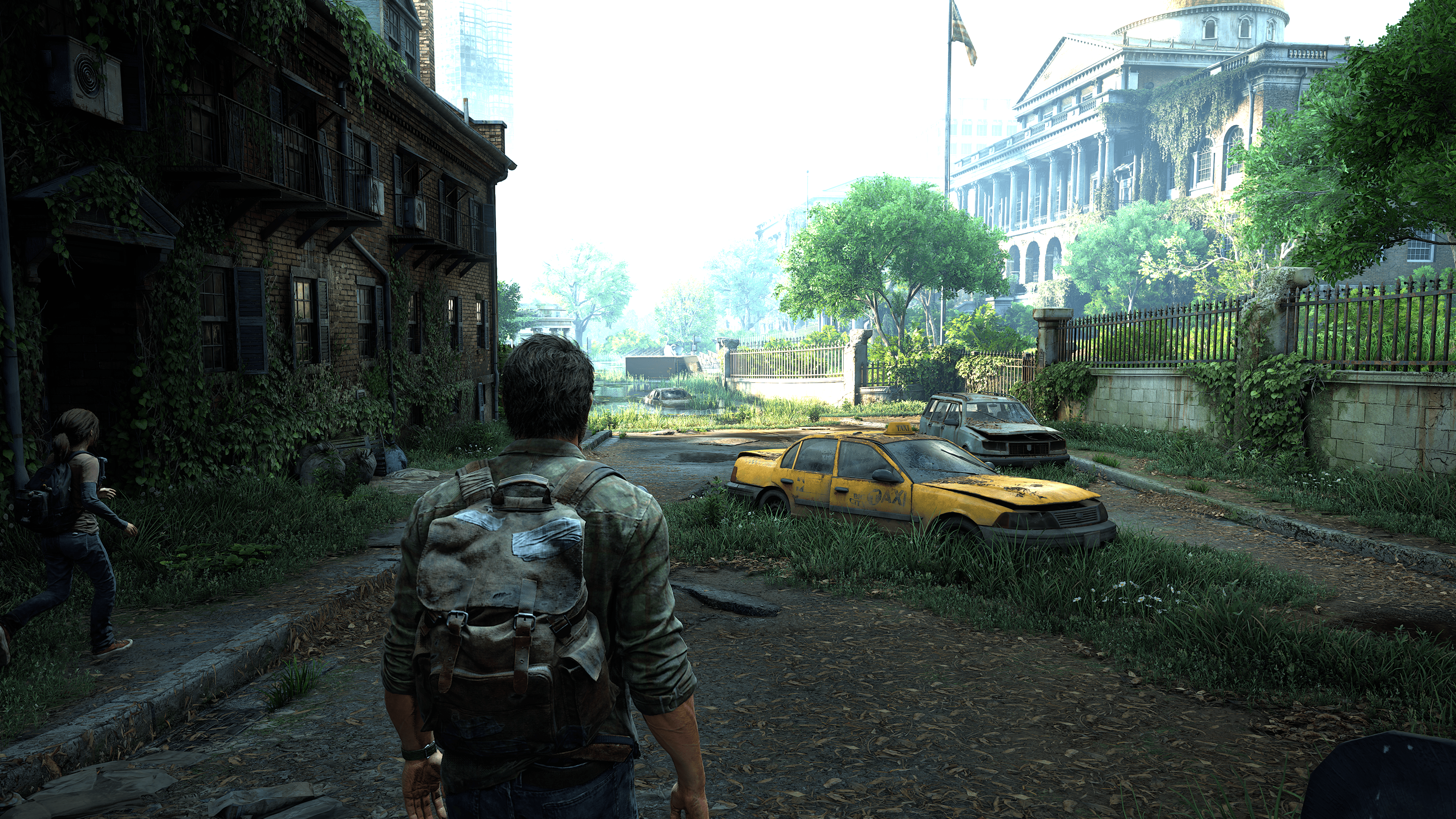
During my 12-hour experience completing the main story, I ran into a handful of issues. Graphical bugs were regularly present which included characters disappearing during cutscenes, odd flickering lights on buildings that were specifically painted white, and seeing the inside of Joel’s head when he got too close to a wall or too close to the camera. There are also frequent frame time spikes that happen, albeit they’re not egregious. I had two crashes, both of which came directly after set-piece moments. Another regularly occurring bug was where the scripting would break, causing Ellie to never jump onto the pallet and forcing me to restart from the last checkpoint.
While a few of these issues can be overlooked, one particular issue that still hasn’t been fixed with the last two patches that is the worst offender- the stuttering camera when using mouse and keyboard. Anytime you move your mouse to look around in any capacity the screen stutters, and it constantly ruins the experience.
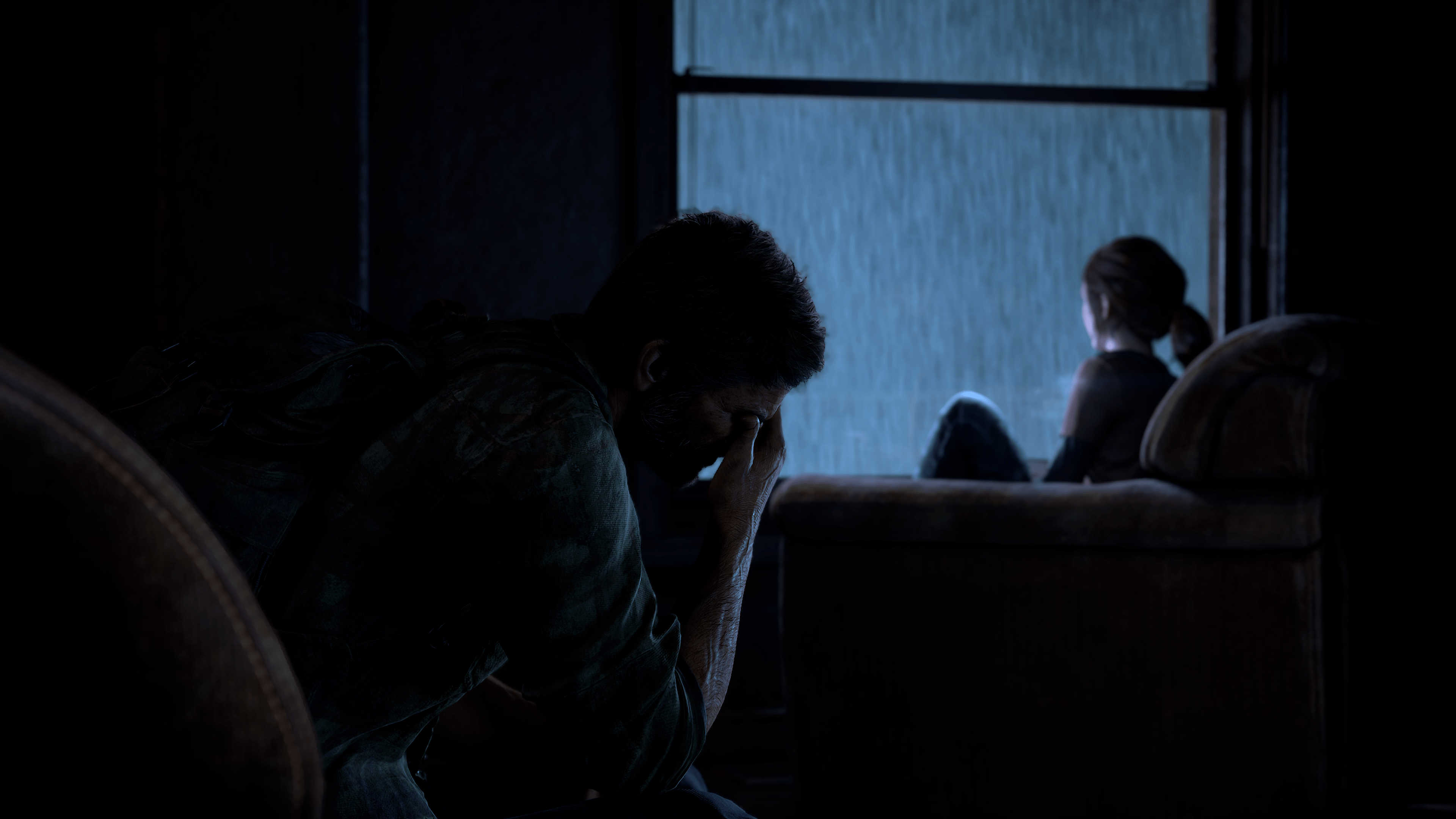
To be frank, its nearly unplayable at times. I don’t think I’ve ever seen anything quite like it. It’s not like screen tearing or shader compilation stutter. It’s also not like a fps drop, framerates falling out of G-sync or VRR’s effective range, it’s incredibly strange. What’s even weirder is that there are a few specific moments where it entirely goes away near the end of the game, usually indoors or in the snow. I couldn’t tell you exactly what’s causing it other than outdoor areas with lots of vegetation make it much worse, even when framerates are well above 60 fps. The real slap in the face is that controller support is largely exempt from this problem as I tested the Switch Pro, Xbox Elite Series 2, and Dual Sense controllers. Sorry PC faithful, your primary input method is tarnished.
The Last of Us, Part 1 on PC, is bittersweet. On one hand, it’s incredible to experience on high-end hardware where the cutscenes are truly jaw-dropping, the tightness of mouse and keyboard is there (stuttering aside), and framerates rarely dropped below 60 fps with 4k high settings and DLSS on quality mode. On the other hand, there are so many technical issues surrounding the game it can be hard to enjoy, and for other players with mid-ranged hardware, it seems to be unplayable.
Sony has built a solid reputation of making quality IP’s that are generally polished and are free of the industry’s pitfalls of releasing broken games. It’s unexpected whiplash, especially since it had to happen to The Last of Us. “When you’re lost in the darkness, look for the light” is the best quote from the game to describe the situation: once the light is found, I think we’ll have a great PC port on our hands.