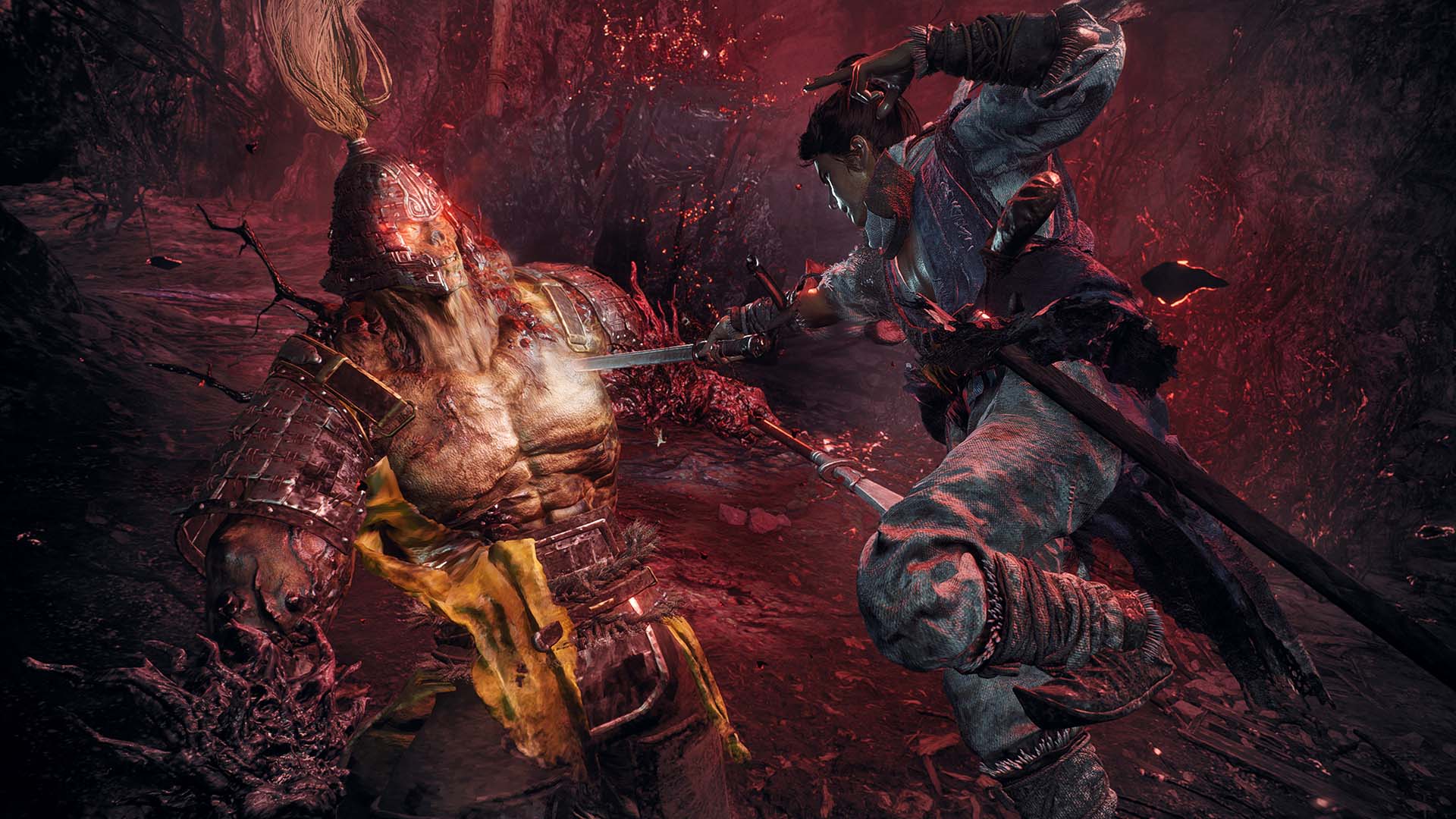
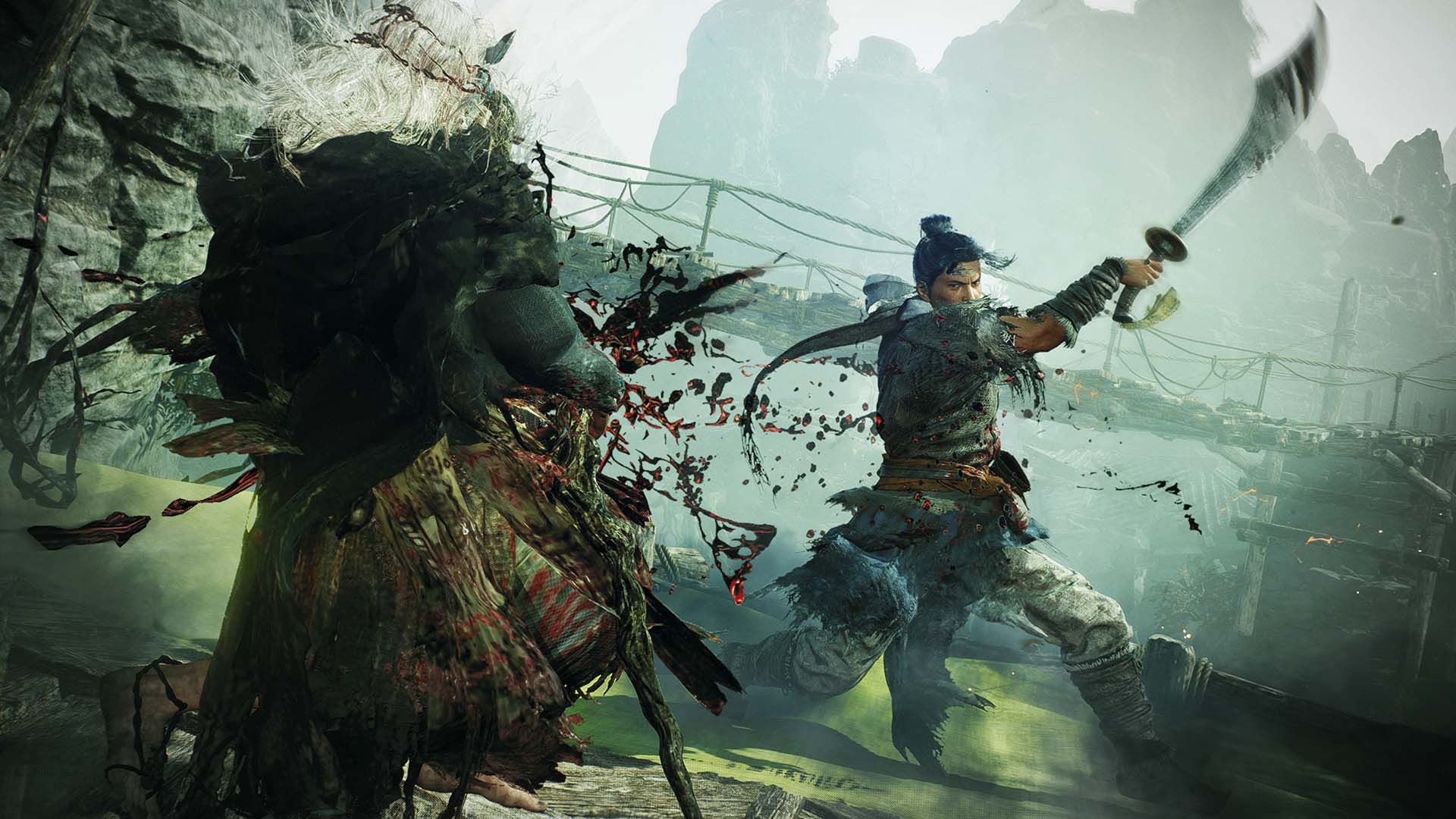
Wo Long: Fallen Dynasty has tons of systems to master, weapons and builds to experiment with, spells to cast, Divine Beasts to conjure, and more. If that all sounds like a lot, that’s because it is. Luckily, the game does a decent job of introducing these systems and making experimenting with them accessible. The beginning tutorial was actually very helpful and going back into the menus to review it was easy. Each spell you buy or special attack attached to a weapon comes with a short video previewing what you can expect. You can respec your character as many times as you like without cost for example. I found myself doing this often to experiment with the 13 different weapon types in Wo Long. My favorite for most of the game was the dual swords (to get in close and deal lots of lower damage attacks that quickly add up) and the glaive (to keep foes at a distance and deal slower but more powerful strikes). But there are many more that are worth trying out from dual halberds to giant hammers. It all lends itself to a more natural flow to its systems rather than intentionally keeping them vague.
Combat in Wo Long: Fallen Dynasty
As you enter into combat in Wo Long: Fallen Dynasty you will notice its biggest shift from other games in the soulslike genre, including Team Ninja’s own Nioh series, the lack of a Stamina Bar. Instead Wo Long focuses on the Spirit Gauge. The Spirit Gauge acts as both your stamina & magic meter combined. Spirit attacks (heavy attacks), magic spells, special weapon attacks, blocking, and dodging all lower your spirit gauge. As you land light attacks and successfully deflect (more on that in a moment), your spirit will raise. Such is the intricate ebb and flow of combat in Wo Long: Fallen Dynasty. It’s all about keeping on the offensive long enough to build your spirit gauge up to unleash more powerful attacks in the form of Spirit Attacks, Martial Arts, and Spells. This is extra important because each one of those powerful attacks you land shrinks your opponent’s spirit gauge, allowing you to fill their negative spirit quicker. Just like your nameless hero, each enemy has a spirit gauge that acts almost identically to the players. The more hits you land on them, the deeper their spirit goes into the negative, and when it reaches its limit you can initiate a Fatal Blow that will kill most standard enemies, and is essential to getting through boss fights without a serious battle of attrition.
The other way to make quick work of bosses is through the deflect system. Defense in Wo Long consists of 3 elements: Dodging, blocking & defecting. Dodging and blocking are as they sound, each bringing down your spirit when you evade or block a strike. Deflecting is Wo Long’s solution for parrying: press deflect as an opponent’s attack lands and you will parry the blow dealing massive spirit damage to your opponent while also gaining spirit for yourself. Each weapon type has its own deflect difficulty, and you can increase that through skill points. Most enemies have attacks called Critical Blows that are signified with a red glow during their wind-up. Deflecting or dodging at the perfect moment during these Critical Blows is practically required during boss fights to lower their total Spirit gauge and also inflict large amounts of spirit damage, opening them up for Fatal Blows that take off huge chunks of their life. Each of these attacks looks absolutely spectacular, usually with an acrobatic flurry from your character and a sea of particle effects that fill the screen.
Wo Long’s combat system had its hooks in me from the first boss fight and I’m still hopping back into the game to get that instant feedback of satisfying blows, quick deflects, and flashy special attacks. It will be interesting to see at the end of the year if Final Fantasy XVI can outshine it for the best combat of 2023
Progression in Wo Long: Fallen Dynasty
Wo Long is not an open-world game, but rather a series of levels that the player can embark on from a hub world. Selecting each mission from a list takes away some of the magic of having a single interconnected world a la Dark Souls, but it allows for a bit broader scope in regards to the areas you will do battle in. You will see snowy mountains, sandy deserts, bamboo forests, and more. Each level is also intricately designed allowing for multiple shortcuts to be opened up and hidden treasure around just about every corner. This level structure also makes way for one of my favorite elements of Wo Long: Fallen Dynasty: Morale & Fortitude.
Morale determines the damage you deal and the damage you take. Higher Morale means you are dealing out more damage and receiving less, with max morale of 25. Fortitude represents the lowest your morale can drop to. For each level, you begin with 0 Morale and Fortitude, meaning you are at your weakest and must gather power throughout the level to gain an advantage over the enemy or the area’s boss. This can be done through combat, or finding Battle Flags and Marking Flags. Battle Flags act as checkpoints, allowing you to rest, save, level up, and generally gear up before you continue on while adding 2 points to your Morale Rank. Marking Flags are additional points on the map that serves as a one-time refill for your health and health potions. They don’t allow you to stop and rest like a Battle Flag but add a point to your Fortitude rank. Each time you die in Wo Long, your Morale Rank is reset back to your Fortitude rank, unless you can return to the enemy that killed you and slay them. This makes exploring each of the levels to find as many flags as possible while taking out all the enemies along the way a vital strategy not just for completionists, but also for those looking to enter the boss arena with a leg up on their adversary. Overall this flow to progression made me feel my confidence and power were rising as I made my way through a level. Just be watch out for those Critical Blows from enemies. If you fail to evade or deflect one, it will lower your Morale by 1.
You level up at Battle Flags by spending Genuine Qui, earned by killing enemies, to put skill points into one of 5 Virtues. I enjoyed how each of these virtues is based on an element: Wood, Fire, Earth, Metal, and Water. Each Virtue levels up certain traits of your hero, unlocks spells in that affinity, and increases your proficiency with weapons that scale with that particular Virtue. Each virtue is also linked to a status effect and can be counteracted by the opposite virtue. For example, a water spell will nullify the effects if an enemy throws fire on the ground. Making quick use of these in combat adds another strategic element to a fantastic combat system.
Difficulty in Wo Long: Fallen Dynasty
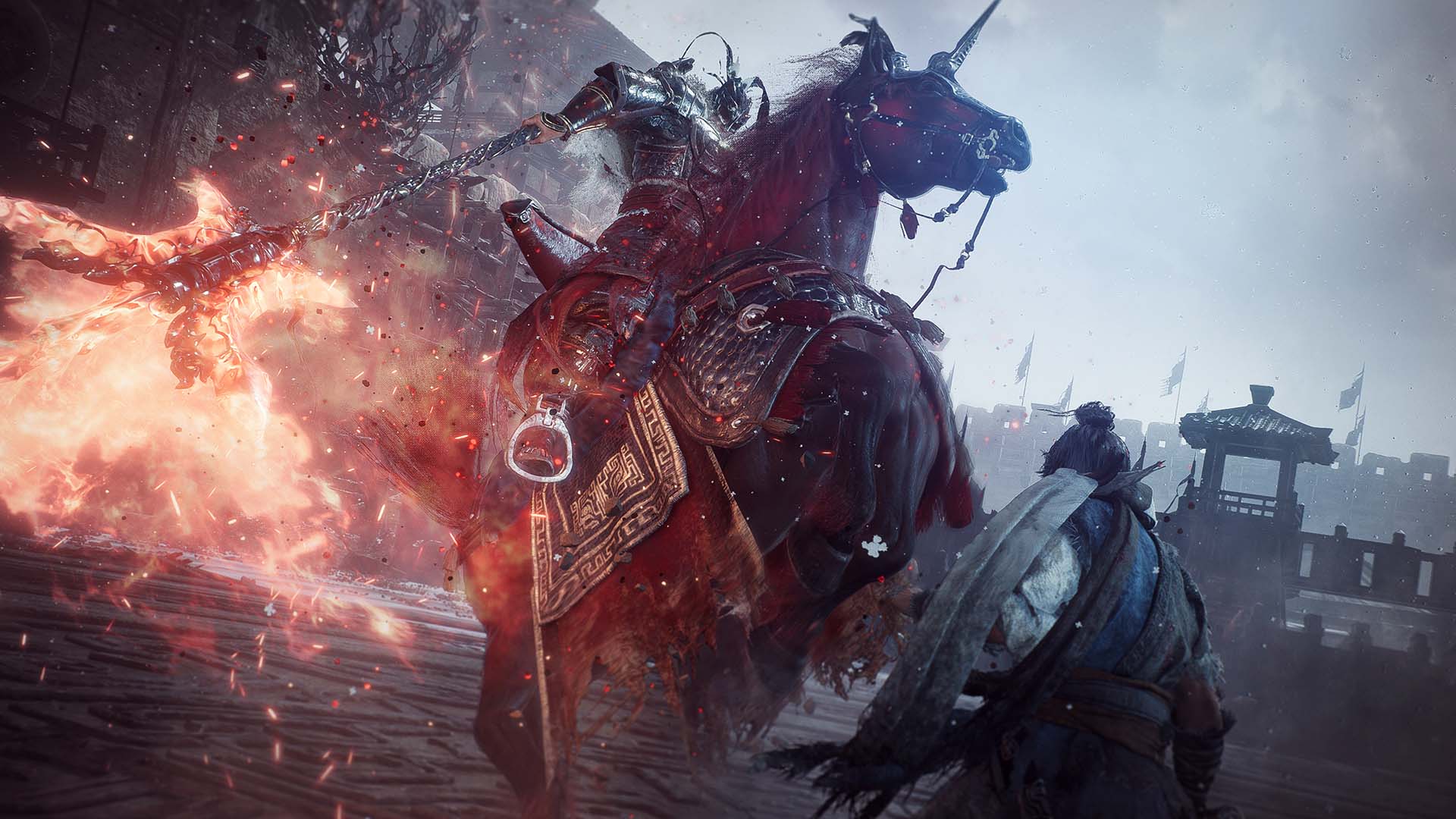
Being a Soulslike from the developers of Nioh, I anticipated Wo Long to give me just as much of a challenge, if not more so than their previous work, but outside of a few insanely tough bosses (looking at you Lu Bu) I found Wo Long to be completely manageable. I would compare it more to Elden Ring rather than Nioh 2 or Bloodborne. In addition to the Morale system described above, you almost always have access to an NPC who will help you out in battle. I found that for a more true challenge, I would dismiss them before a boss battle so they couldn’t draw the boss’s aggro and allow me time to heal or restrategize.
Bosses can be tricky while you learn their moves, but once you learn their attack patterns and how to deflect them, most can quickly be taken down within a minute or two. It didn’t take away from my satisfaction at all, though, in fact, knowing that I executed without any room for error almost heightened my satisfaction.
Battle Flags are almost always within a short distance of the boss arena, and luckily you aren’t punished for dying to a boss. When you enter the arena again, you regain your Genuine Qui and Morale Points for rechallenging them.
Rough Edges in Wo Long: Fallen Dynasty
The combat in Wo Long truly shines to a high degree, keeping me engaged throughout its 30 or so-hour campaign, especially when the myriad technical problems in its PC version were so prominent. I could hold a consistent 60FPS for most of my time with the game, but often I would have to restart my game to achieve this, as when I loaded in, the frame rate was awful. Luckily a quick restart fixed this. The game crashed on me multiple times, and I was riddled with odd graphical artifacts. They ranged from the aforementioned crashes & FPS weirdness to my character flashing white every few seconds. Lastly, the game doesn’t look great, unfortunately. The character models are detailed, and the art is good, but the quality of the assets and textures feels muddy.
Final Thoughts
It’s a testament to the game design that none of these shortcomings make me even hesitate to recommend Wo Long: Fallen Dynasty to any action RPG player who enjoys souls likes. The combat, level, and character design, and systems underneath it all make for a delightful game, even if I could do with a more streamlined loot system and UI in the next one.