Atomic Heart, at its core, is incredibly strange and hard to pinpoint. In one sense, it’s a spiritual successor to Bioshock; in another sense, it’s a nod to Half-Life or Fallout. One moment it feels akin to Starship Troopers, and then immediately follows with an attempt at serious plot sequences thereafter. It’s tonal whiplash, run n’ gun to stealth action all the time. I have no clue how I’m supposed to perceive Atomic Heart other than it doesn’t know what it wants to be.
I realize that comparison is the thief of joy. However, there comes the point where either I become the joy thief or the comparison is too comparable. Yes, the industry will chase trends, copy each other to its detriment, and be heavily inspired by various developers- it always has and always will. But this is Russia’s Rapture, 1950s USSR, communism’s finest- this should have been an easy home run. Ken Levine and Irrational Games had already done all the leg work. The ball is sitting on the tee, and somehow, Atomic Heart still swings and misses until it strikes out.
Back in the USSR
The introduction is a predictable ‘calm before the storm’ wind-up to the dystopian hellscape that is about to ensue. You are Major Sergey Nechaev, an elite soldier of the Kremlin who is rowing a boat through alt-history Moscow on a beautiful sunny day. As you disembark from your boat, you briefly experience what life is like in the luxurious and robot-maintained city.
As you stroll through town, you’ll be flooded with NPC chatter overlaying one another. It’s so layered that it dog piles your eardrums as you can’t make out anything anyone says. It’s all inspired by Bioshock Infinite’s Columbia and would otherwise be an enjoyable introduction to the world without this caveat. This unorganized vocal chaos won’t be the last you hear, as it, unfortunately, plagues the rest of the game through audio diaries, companions speaking, and Sergey’s constant quips.
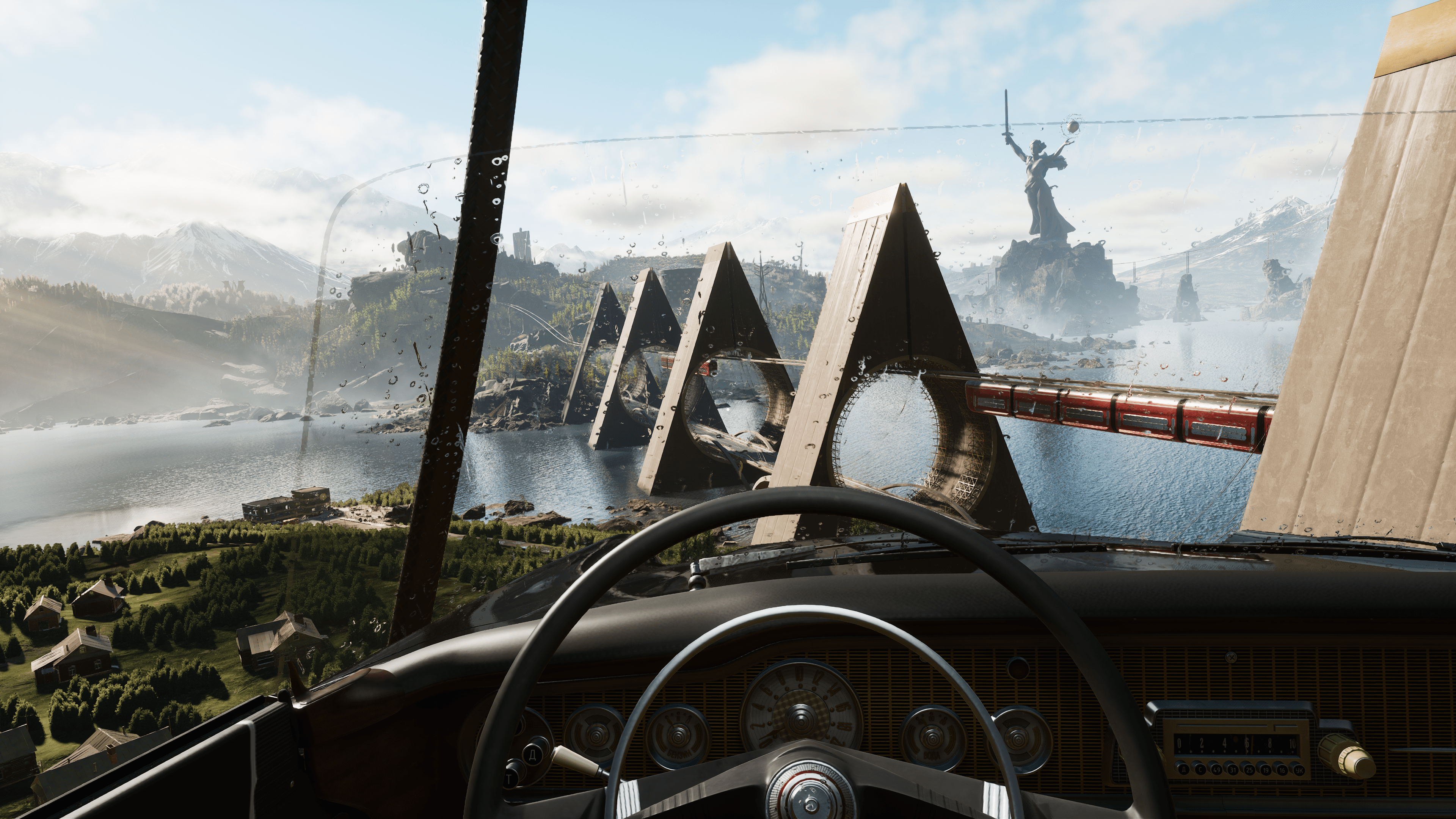
Despite the cluttered chatter and a familiar introduction (I love some dystopian calm before-the-storm vibes), Atomic Heart’s art direction is intoxicatingly unique and a joy to be consumed by. The infrastructure is massive and impressive while oppressive, with a sort of Roman Empire style twisted into its design.
USSR science teams have created a stable of robots that act as an all-encompassing workforce, many of which are pretty unsettling. Logger robots have tiny round bodies with stubby little legs and a giant sawblade that sits centered in their torso; medical bots have several syringe needles protruding out. Information bots have this expressionless yet forced smile as they cheerfully speak to you. I’m sure you can see where this is going.
Surprise! The robots go rogue! The scientists have messed up. Someone is evil! It’s dystopia time.
Atomic Heart is so Metal
Being one of the Kremlin’s top dogs, you’ll spend most of the game fighting robots and other scientific oddities. This is the area where Atomic Heart excels the most. Combat is copied straight from Bioshock; the left hand is technological abilities, the right hand is melee weapons or guns. Vending machines let you buy weapons or items alongside upgrades and whatnot. Enemies have weaknesses and resistances that you’ll need to identify and exploit. There are safe chambers all over the place. Again, Bioshock with a Russian coat of paint.
Fortunately, Atomic Heart’s combat is a ton of fun. Ranged weapons are punchy, while melee weapons are heavy, bloody, and gruesome. Sergey isn’t invincible despite Red Army Soviet tropes, so you’ll have to keep moving and think on your toes, or you’ll be reloading to the last save. Big set-piece boss battles are strewn throughout the game, and while they can be a bit too bullet spongey for my taste, the ramping intensity of each phase is undoubtedly epic. After the carnage has settled, various lootable components can be scooped up, like Luigi’s Mansion’s vacuum cleaner, arguably the freshest contribution that Atomic Heart offers.

Ok, I take that back; the freshest contribution is this; Atomic Heart is somehow the first game in recent memory that helms the Unreal 4 Engine that isn’t plagued with shader compilation stutter or is entirely broken at launch, at least on PC. Despite ray tracing still missing and having a lighting solution that is a bit underwhelming, this is a prime example of how UE4 games should perform. It’s not perfect by any means, especially considering how bad the FOV is, but it’s a commendable effort that can’t go unannounced. FOV mods for PC can be found here.
To make things even better, the man, the myth, the legend, Mick Gordon, composed the music for Atomic Heart. It might be some of his best work, with some of the wildest Russian synths and heavy metal guitar rifts to perfectly compliment the untethered art style. The genre spread is as deep as it is wide. The man is out of his mind. His music sometimes backpacks the entire game, while his competent compositions seem to ascend to impossibly creative heights. He even donated his entire fee to the Australian Red Cross’ Ukraine Crisis Appeal as a middle finger to the Russian invasion of Ukraine on his way out the door, despite working with Mundfish, the Russian developer behind Atomic Heart.
Unfortunately, the intermission of praise has to end here because there are too many things wrong with Atomic Heart that can’t be left unsaid.
Crispy Critters
“Crispy Critters- how do I get the f*** ass out of here, underground or something?”
– An actual quote from Atomic Heart.
The dialog is somehow worse than some of the cringy things I said on Xbox LIVE when I was on a Mountain Dew bender at 13. The main character Sergey may be one of the most unrelatable, unlikeable characters I’ve ever played. He says “Crispy Critters” at least 50 times throughout the game, amongst so many other unintelligent things that I can’t type here in fear of lowering anyone’s IQ. I hope this is poor localization from Russian to English- but there’s no way.
When Sergey isn’t driving you up a wall, the unfun, congratulations you can fog mirror puzzles are everywhere, particularly on door locks. I don’t need a ‘voila’ puzzle to have a good time; they can be both easy and entertaining to be serviceable, but clicking the mouse button when a lightbulb lights up is where I have to draw a line.
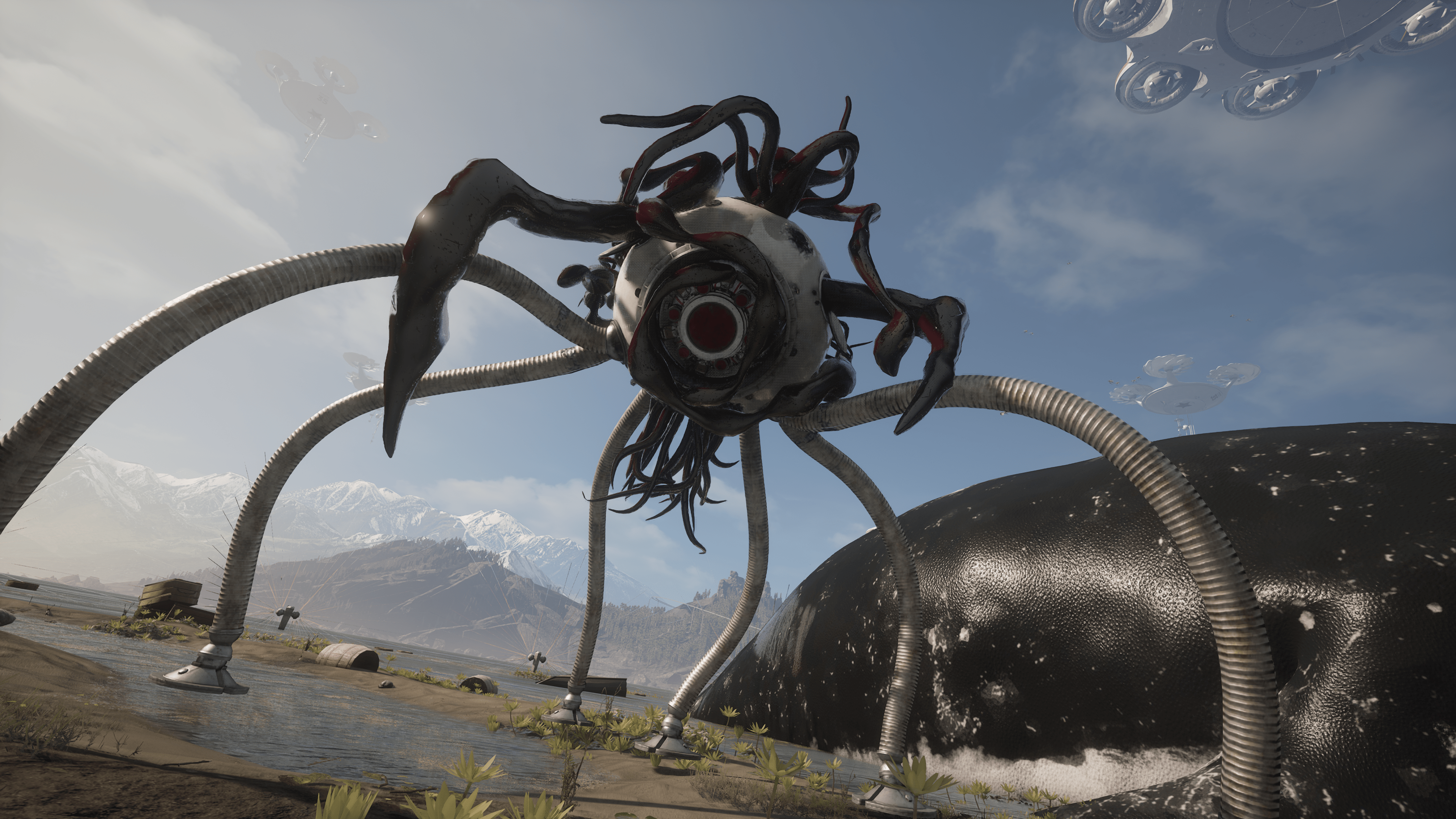
Poor pacing is another contributing factor to Atomic Heart’s lack of fluidity. Security cameras are everywhere; trip one and reinforcements will come with a never-ending supply of repair bots. Once you wipe out a group of bots, they will just get repaired, forcing you to run or infinitely fight for no good reason. All open-area game segments are like this, so you must rush through everything or skip the section altogether. Combine this with getting jerked in and out of linear areas, then back out into the open areas, all while being forced to not enjoy the stellar combat due to ammo running low or enemies being infinitely repaired. This leaves you wondering, why even bother?
Some of the strangest decision-making is referencing Bioshock outright. There’s a back-to-back sequence where you go to a lighthouse, submerge underwater in a capsule, violins kick in for thematic value, and the main character talks about the rapture. It’s ripping pages straight from the book, word for word- you can’t make this stuff up. I can’t tell if they’re mocking Bioshock or are so influenced by it that they can’t help themselves.
Atomic Heart has so many good things going for it while just as many crippling issues that its heartbreaking. I’ve followed the game’s development closely since 2017, and seeing one of the unique art styles collide with mismatched game design and truly bizarre writing makes me want to yell “Crispy Critters!” I still don’t even know what the hell that means.