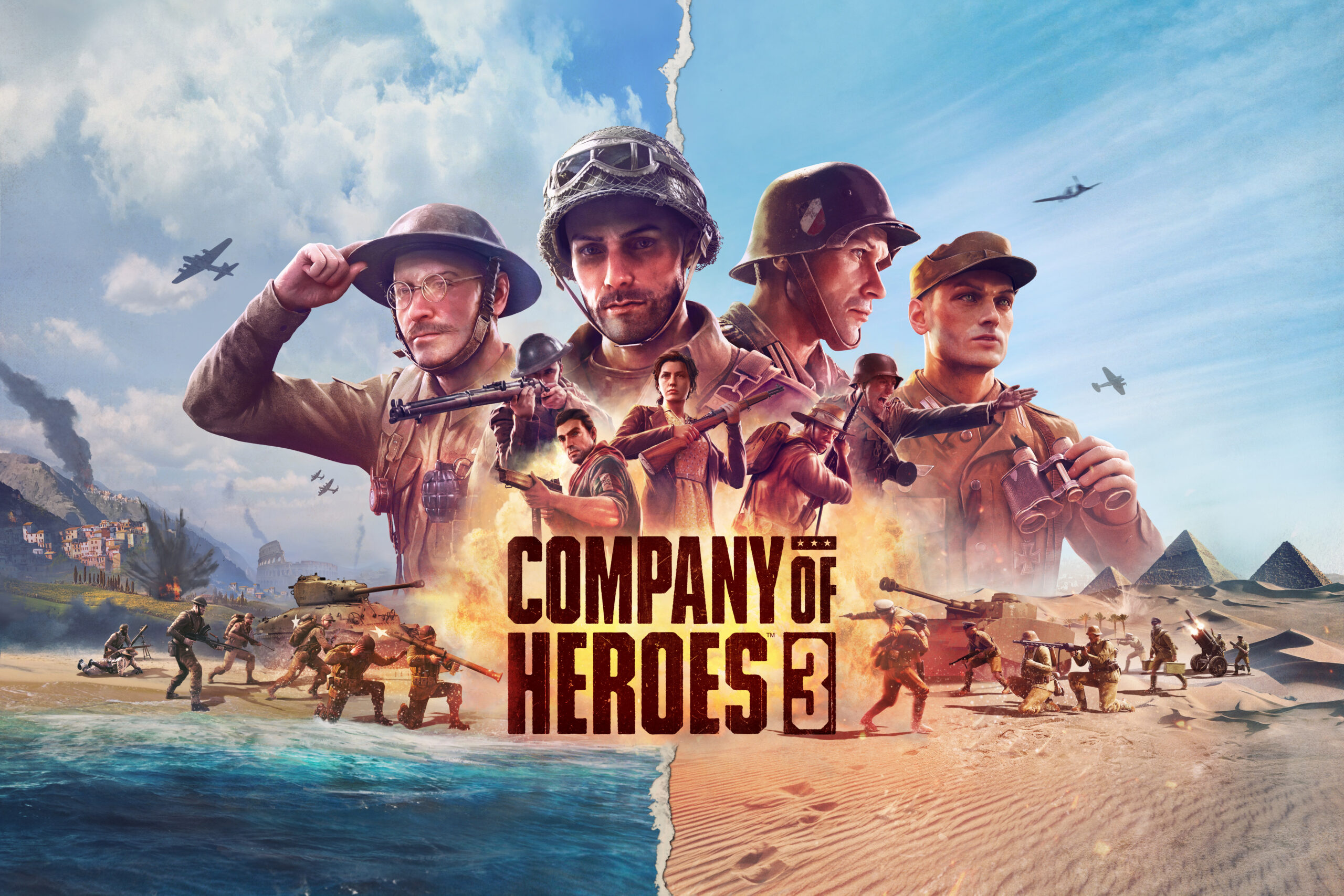
After a 10-year hiatus, Company of Heroes has returned. What feels like just moments after the return of Age of Empires, Relic Entertainment is genuinely doing the lord’s work shock, paddling two of the most renowned RTS franchises back to life.
As someone who cherishes memories of Battlefield Bad Company 2 and is keenly interested in WW2 history, Company of Heroes 3 has been an old friend welcomed home. In an age where 4k textures and motion-captured performances reign supreme in the industry, it’s always refreshing to submerge yourself in a dynamic playground of destruction alongside an appropriate setting.
Like COH2 before it, Company of Heroes 3 focuses on the harsh realities of war. Devastating consequences lie ahead as you command either the Afrika Korps, British, Wehrmacht, or U.S. Forces in both Italian and Northern African theatres of WW2. These two theatres oftentimes get overshadowed by historical spotlights such as D-day or the Battle of the Bulge and its nice to see representation away from the expected.
COH3’s Creative Destruction
Company of Heroes 3 is undoubtedly the most refined game in the series regarding its gameplay. Fully destructible environments make their glorious return to the battlefield and while it’s nothing new to the franchise, it’s a core pillar, and without it things would come crumbling down. Tank tracks are ferociously loud as a Sherman tank plows through a wall and debris realistically lies on top of the turret. Those bits of debris will settle across the tank hull for as long as gravity allows until boom- the recoil of the tank barrel shakes it off, or the driver lurches to a stop sending chunks of stone flying. Brick-by-brick buildings get ripped apart by artillery fire; parked cars get caught in the crossfire in a city street and explode, and tires go flying off jeeps, it’s all a great improvement over COH2’s destructibility.
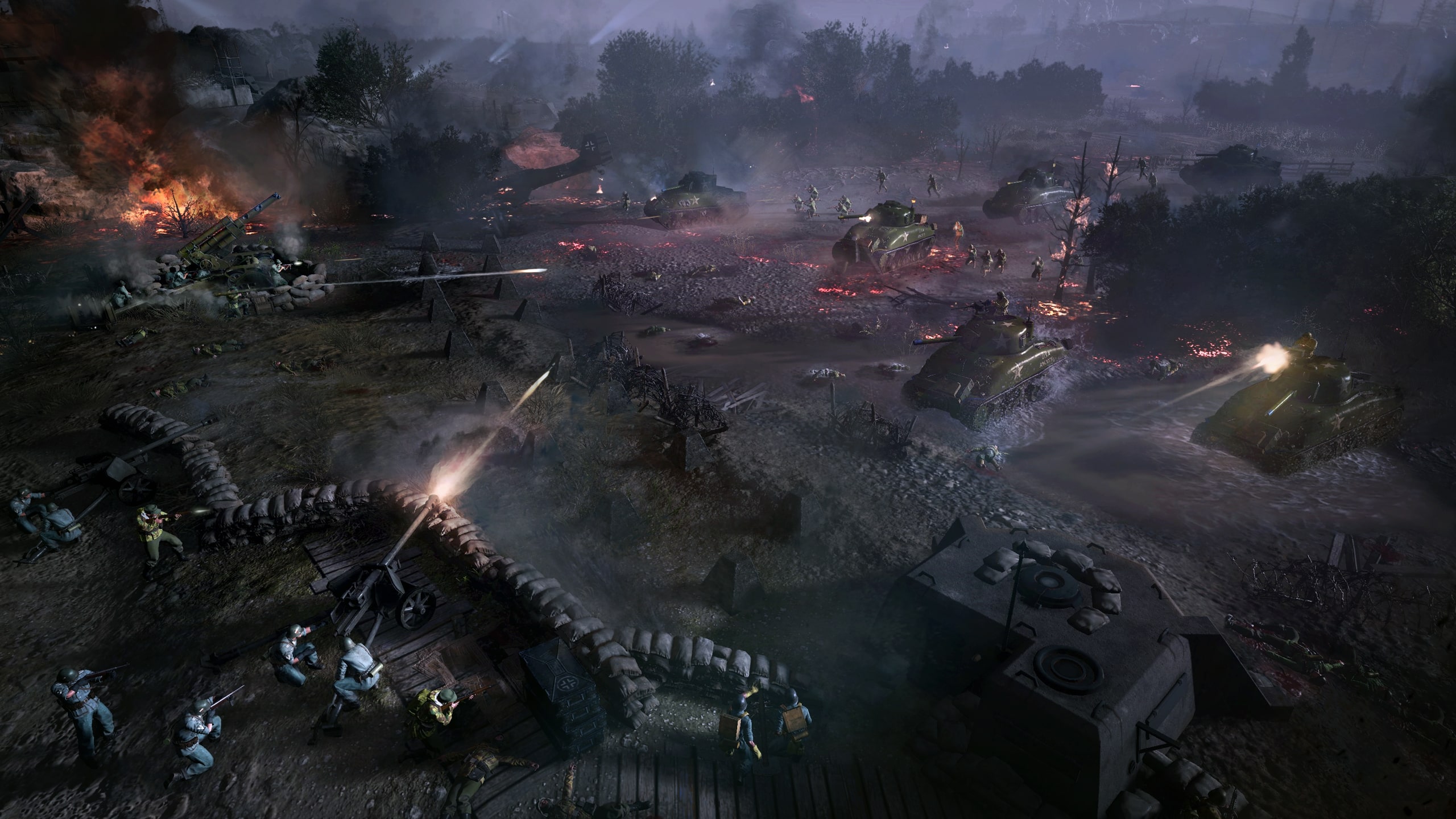
Of course, this demolition isn’t just for show, as units on the battlefield must adapt to their cover being blown apart realistically. In past entries of COH, players would have to impromptu their way through dire straits. However, this time around Relic has added a tactical pause to the game. As simple as it sounds, press the space bar to pause the action, allowing for moment-to-moment planning as things unfold. Sent a whole squad into a terrible situation? Pause and send them back. Maxed out your army’s population and can’t juggle every single company? Pause and manage each one. I didn’t think I needed this feature until I spent much time with it. Previously I would send my troops to the meat grinder because I didn’t have time to oversee them, but now that’s all changed.
Speaking of changes, Company of Heroes 3’s campaigns have evolved significantly since 2013, with one campaign having you control Allied forces in Italy and the other Axis forces in Northern Africa. I spent most of my time in Italy with Relic’s new dynamic campaign mode. From beach landings in the south and journeying all the way north to Rome, the new take of COH’s campaign can be a mixed bag. The premise is based on the “Race to Messina” and completing the Allied conquest of Sicily between General Patton and Montgomery. Both generals have been renamed to Buckram and Norton for reasons I can’t explain when Rommel is still Rommel in the North African campaign- maybe I missed something? I digress.
African Coast to Italian Coast
Instead of a more traditional approach to RTS campaigns that stitch missions together one after the next, Company of Heroes 3 shoots for a more continuous and fluid-structure a la the Civilization or Total War series. As an unnamed commander, you’ll conquer cities and towns as you force north. With each battle, you’ll have decisions on whether to take an airfield, a major city, or a smaller settlement.
The backseat driving these decisions is Patton, Montgomery, and an Italian resistance leader who will advise you on what they want to see happen. Your decisions will affect your relationship with each country’s leader and depending on who you butter up there will be perks or lack thereof. Knowing of the reckless rivalry between Patton and Montgomery is a great nod in a historical sense as each takes turns constantly contradicting one other’s decision-making. Despite this, your relationship decisions don’t seem to mean much, as eventually, everyone likes what you do as long as you maintain some level of success.

As the Allied forces push north, you’ll realize that Axis forces never mount legitimate counterattacks. Sometimes scripted events will have them attack your newly conquered city, but these are more milestone moments than anything. This leads to the dynamic campaign not exactly feeling dynamic. Enemy’s turns don’t seem to move units, with the exception to reconnaissance aircraft. If you enter enemy territory, they’ll respond as you’d expect, however, don’t expect an attack on your territory, and don’t bother with defenses as they’re a waste of resources. Walking blindly into the fog of war is as dangerous as it gets.
With how expansive the map of Italy is, if Axis forces did counterattack as one would expect, it may have made things drag on to the point where players may not finish the campaign. In this case, I can see where Relic had to draw a line somewhere, and it’s understandable. It’s not all sour grapes here because the campaign is much more interconnected and engaging, as you feel like progress is being made during this massive push north. A war of attrition only works for so long as game mechanics are concerned.
Personalizing War
One aspect of the campaign’s presentation I can’t overlook is the personalization of individuals living and dying in this conflict. RTS games are very macro in that vast swathes of land are constantly being destroyed while hundreds of thousands of men die horrible deaths at their commanders’ whims. In Company of Heroes 3 there is a very grounded feeling of its setting and the people within it.
A monologue will wearily sound off describing an individual’s point of view. Letters are exchanged between a brother and sister, Tony and Ida. Ida loves flying as a hobby and now flies for the war effort in WASP (Women Airforce Service Pilots). Tony isn’t too pleased with this and feels his sacrifice fighting on the frontlines is wasted, knowing that his sister may not be safe. Ida, meanwhile, is ecstatic about helping in any way she can.
Further writings mention of warm summer nights of feelings back home. The mention of how sacred chocolate is due to rationing. How lucky a particular soldier is for receiving a bicycle when most are melted down for shell casings.
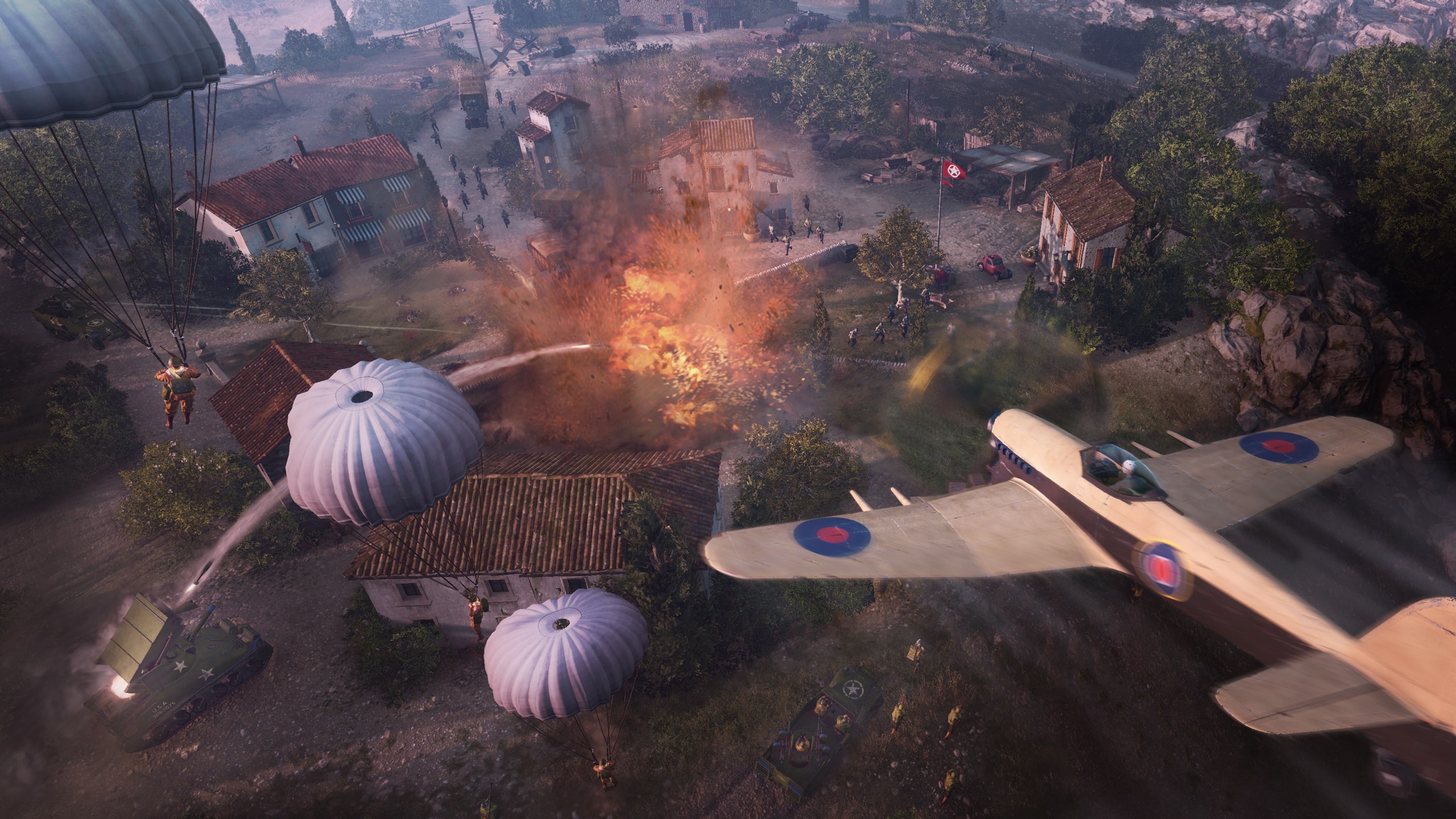
It may not mean much at a glance, but the perspective of individuals during the war and what they’re experiencing is equally interesting as the warring nations themselves. The anxiety of waiting on a simple letter saying that someone is ok or the small things that get us through the day-to-day like a piece of chocolate, feels truly period-eques in-between battles.
Company of Heroes’ Hero
As the saying goes, if it ain’t broke, don’t fix it, which is seemingly true for Company of Heroes 3. Combat has been refined in small ways, such as removing tank crews so that repair spamming doesn’t happen, the weather is no longer a factor allowing for infantry to be viable at all times, and heavy artillery needed to be towed by a truck instead of independently mobile are all great tweaks to the formula. These are all small changes, but needed ones regarding competitive play and various cheese tactics players have used in COH2 for years.
Luckily, mod support is available from day one for those who liked or disliked any changed aspects of COH3. Your best bet is that the modding community will support the game with population increases, bringing weather back, new maps, and zooming out further, to name a few.
Company of Heroes 3 is a no-brainer if you enjoy the RTS genre or want a WW2-focused experience. The new campaign is a good step in the right direction in many ways, even if it isn’t fully realized. Destruction is still unparalleled sandbox madness leaving each skirmish ending unique. In the meantime, I’ll be comp-stomping the AI with my colleagues in the coming weeks.
Beat that Montgomery.