It often feels like modern culture never cares where it came from, and this is especially true in club and dance music culture. But the history upon which electronic music and the culture that surrounds it is arguably more fascinating than the humdrum of the modern-day industry.
But to truly see club culture’s vibrant history, you need to talk to somebody who was there for it. Here say simply doesn’t cut it.
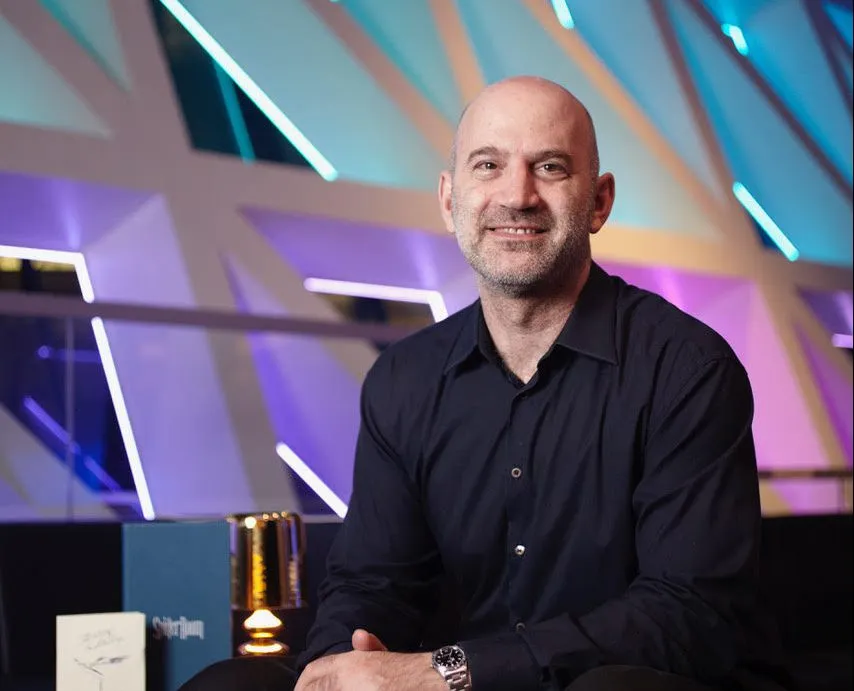
And nobody had more boots on the ground and irons in the proverbial fire than Steve Adelman, who over the course of his long-stated career had to wear multiple hats at once to turn the music industry into what we know it is today.
He was a ringmaster, counselor, dealmaker, musical soothe-sayer, and more along his winding road to industry infamy; all of which he chronicles in his upcoming memoir, Nocturnal Admissions: Behind the Scenes at Tunnel, Limelight, Avalon, and Other Legendary Nightclubs.
We caught up with Adelman to talk about his upcoming memoir out on June 7th and nightlife’s past, present, and future.
Our Interview With Steve Adelman
As electronic music evolved out of the underground rave parties and into the nightclubs, something incredible happened. A global nightlife scene was born that would reign supreme for over a decade, producing some of the most memorable music, labels, artists, and parties the culture had ever seen and may ever see. This era was a golden age, if not THE golden age of electronic dance music, and if you were there, you’d probably agree.
The days of Michael Alig, Junior Vasquez, The Tunnel, The Limelight, Winter Music Conference, Groovejet, Giant, Spundae, Funky Tekno Tribe, Buzz, and Avalon – the list goes on and on. There were club kids that towered over the crowd like sparkling deities, music was played on wax, and the concept of the DJ as a “rockstar” was starting to take shape.
Places like San Franciso, Boston, Los Angeles, Miami, New York, London, Paris, Ibiza, and just about everywhere were bound by an electronic beat. Every city had its sound, spirit, and scene while paying respect to a global disco ball in the sky, a disco god or cultural lighthouse that leads the way and sets the pace. Steve Adelman was one of the anointed ones helping to shape and guide the culture of that great disco ball in the sky, starting off in New York and eventually ending up in Boston at the Avalon, which became one of America’s most prominent club venues/brands.
After over three decades in the business Adelman is returning to a scene that desperately needs some TLC and refreshing. He has written a memoir entitled Nocturnal Admissions and is returning to nightlife to revive the Avaland Club Night in Boston, a homecoming of sorts, and if we are lucky, a new chapter in the Adelman saga.

Can you tell our readers briefly about your history in the nightlife industry and how the idea for the book came about?
I began my career in the late 80s as the Director of NYC’s largest nightclub, Roxy, on a recommendation from RuPaul of all people, and by the mid-90s had become a Director at Limelight, Tunnel, Palladium, and Club USA, working with then NYC Club King Peter Gatien, at a time many consider the heyday of NYC nightlife. In 1997, Avalon in Boston opened, followed by locations in NYC, LA, and Singapore over the next fifteen years. Avalon in Boston has wildly been credited with launching what is now called EDM in the US due to “Avaland,” the weekly Friday night, combining the world’s best DJs with over-the-top production and decor.

What’s the wildest thing you’ve ever seen happen in the DJ Booth?
Wow, how to choose? One thing I won’t forget was Sasha, Judge Jules, Danny Rampling, and Paul Oakenfold together for their first time in the US at Limelight promoting the “Hacienda” sound. At the time, Techno was ruling much of NYC with the likes of Joey Beltram and Richie Hawtin. Thirty minutes into their first set, the dance floor just stopped in confusion.
As legendary, surly ex-World nightclub owner Arthur Weinstein, turned lighting operator, surveyed the scene, he made the on-the-spot decision to kick them all out of the booth, borrowing a famous line as he announced to the crowd, “The British are leaving.” A truly rough start to where we are today in US dance culture.
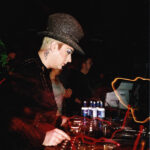
If you could relive any DJ set at Avaland or one of your venues, what would that one set be?
Again, a top 100 would be an easier question to answer.
Some that come to mind are Danny Tenaglia and Carl Cox in Boston and John Digweed and Tiesto in Hollywood. I can still feel the energy from those nights as if it were yesterday.
When you look back at club culture in the late nineties and early 2000s, what do you see as the fundamental differences between today’s nightlife culture and those days?
Without large festivals, creativity and innovation took place in the clubs, which I now see missing somewhat. There is also a current shift toward a more concert-like experience, where the patrons cheer the DJ on from the stage, with sets usually lasting two hours.
This is a big fundamental shift from DJs playing 4-5 hour sets and taking the crowd through a dance experience, with the night’s creative aspects playing a supporting role. I love what is currently happening, but I feel it’s now the perfect storm for the dance floor to once again become king.
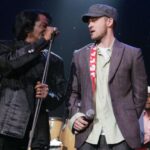
Out of all the club venues you’ve been to in the world, what was the most memorable one and why?
My highly prejudiced answer would be Avalon Boston. It was the perfect mix of International DJ talent meets production meets a highly diverse crowd. There were so many talented contributors, from John Lyons’ groundbreaking sound system to production.
To tell you the truth, I’ve never seen that replicated to this day.
What was your biggest mistake, and what was your biggest triumph when you look back on your career so far?
My biggest mistake was not taking the time to stay in touch with those who I considered friends as I’ve moved around the country and overseas. They say you always get a second chance in life, so with the Avaland 25th Anniversary taking place in June in Boston, I’ve had a chance to reconnect with dozens of people, which has been life changing for me. As for triumphs, overcoming obstacles and following my passion have led to some incredible opportunities around the world.
That, and getting my wife Michele to agree to marry me.
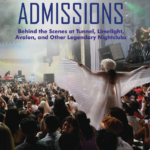
Can you tell us a little bit about the book and some of your favorite moments from it?
Most people are surprised when I say I consider myself a writer who got sidetracked by nightlife for three decades. When I was living in Hollywood, I began keeping a journal of my nightlife adventures. I showed it to my literary agent, who burst out laughing, telling me it read like “a season of Curb Your Enthusiasm on acid.” That was in 2005, and it has taken me this long to complete it due to my work schedule.
One literary agent told me she’d never seen a writer make fun of themselves as much as me. I don’t know if she was referring to my getting booted from my own club by both Bob Dylan and Alanis Morissette, insulting Brian Grazer about VIP cards earning me the nickname “Shmohawk,” or leaving my 86 year-old Nana on the dance floor during a set by Jeff Mills, but I took it as a compliment.
In the end, its crazy its unpredictable; its the world of nightlife and not a place you should take yourself to seriously.
If you could do it all again, what would you do differently?
I get asked that question a lot, and I always answer it by saying “nothing.” It’s not that I don’t wish I had some do-overs, with rolling up on the back of John Lyon’s Harley to the entrance of Avalon clutching him from behind, coming to mind, but its those moments that become something to learn from, making us who we are.
Favorite WMC moment?
Easy, The Avaland Sasha and Digweed boat cruise. I must say, if that boat went down at sea, EDM in the US would have ended right there. Should I have jumped on a boast with forty already drunk DJs, free food, and an open bar? Absolutely
Would I ever do it again? Absolutely not.
Any advice for young people getting started in the nightlife business today?
Entertaining people at a high level is hard work. Be ready to put in the time. And oh yeah, read Nocturnal Admissions because it contains everything you’ll ever need to know.
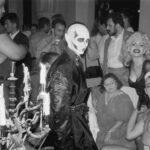
“I have no doubt that the new era of nightlife to be ushered in will define a new Golden Age, the perfect storm of pent-up demand meeting a changing society.” – From Nocturnal Admissions
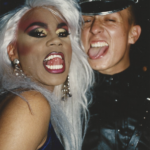
From Nocturnal Admissions

Photo by Rukes
The book is already being hailed as a humorous and engaging look into the life of one of the biggest personalities in club culture at a time when boundaries were being broken and new modes of expression were being created.
This memoir takes us back to the roots of club culture overall and the founding of such institutions as Roxy, Limelight, Tunnel, and Palladium during their hay-days.
As Steve navigates crazed business partners, cultural boundaries coming head to head with each other, and citywide crackdowns on club culture, you begin to realize just how many hats it took for him to get to be where he is today and just how much went into launching electronic dance music into the cultural mainstay that it is today.
Preorder your copy of Nocturnal Admissions: Behind the Scenes at Tunnel, Limelight, Avalon, and Other Legendary Nightclubs on Amazon today and reserve your copy for when the book sees its official release on June 7th, 2022.

David Ireland is a professional strategist, creative, and marketer. He began his career in 1995 as creator and publisher of BPM Magazine. In August 2000, BPM Magazine merged with djmixed.com LLC, an online media company based in Los Angeles, which later evolved into the Overamerica Media Group [OMG] in 2003. In 2009, Ireland left Overamerica Media Group to serve as the VP of Marketing at Diesel. In 2011, he returned to his roots in media and cofounded the online electronic music publication Magnetic Magazine and created The Magnetic Agency Group. In June 2018, Ireland joined Winter Music Conference (now owned by Ultra Music Festival) as the Director to lead the reboot for 2019 and usher in a new era for the iconic brand. He served as Chief Marketing Officer at Victrola for three years, guiding product innovation and brand growth. He currently serves on the advisory board of Audiopool, a new music tech startup focused on AI-generated music licensing and artist revenue models.