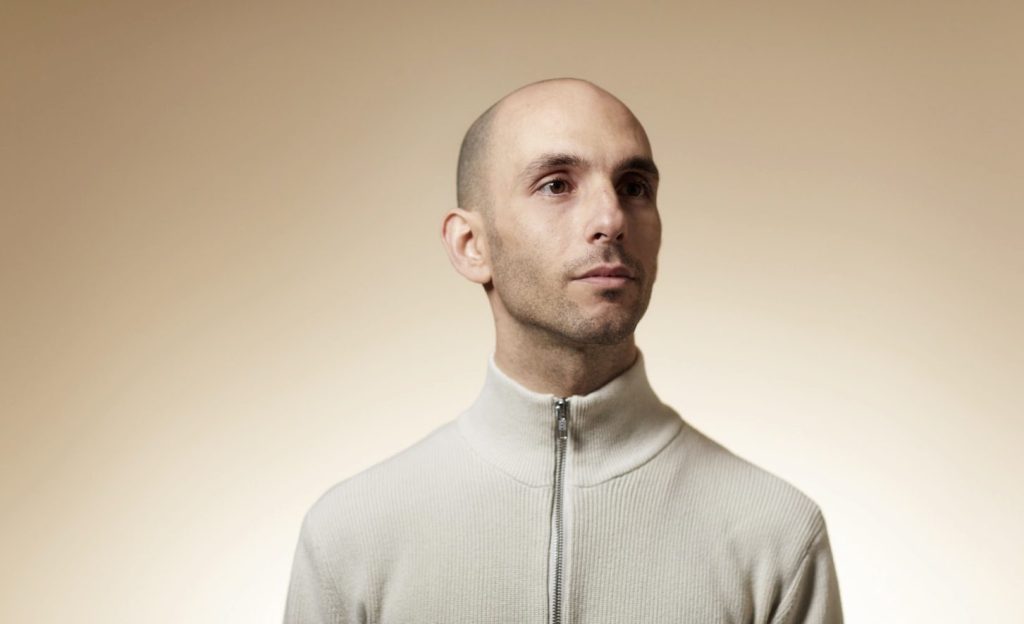
The new collaboration between Arvet, the record label from Sailor & I, artists Precursor and Bad Spirit sees each artist bringing their own unique flavor to the new indie-electronic single “Biomarker.” This emotional rollercoaster takes the listener through the hardships of life, from blissful ignorance into unfolding darkness.
Biomarkers are essential in medicinal practice but may offer a grim reality to those on the wrong side of the numbers. The melancholy of this song pours from a colorful sound palette, channeling life’s unpredictable forces. Raw emotion is expressed through words that touch those who are caught in nature’s cruelty.
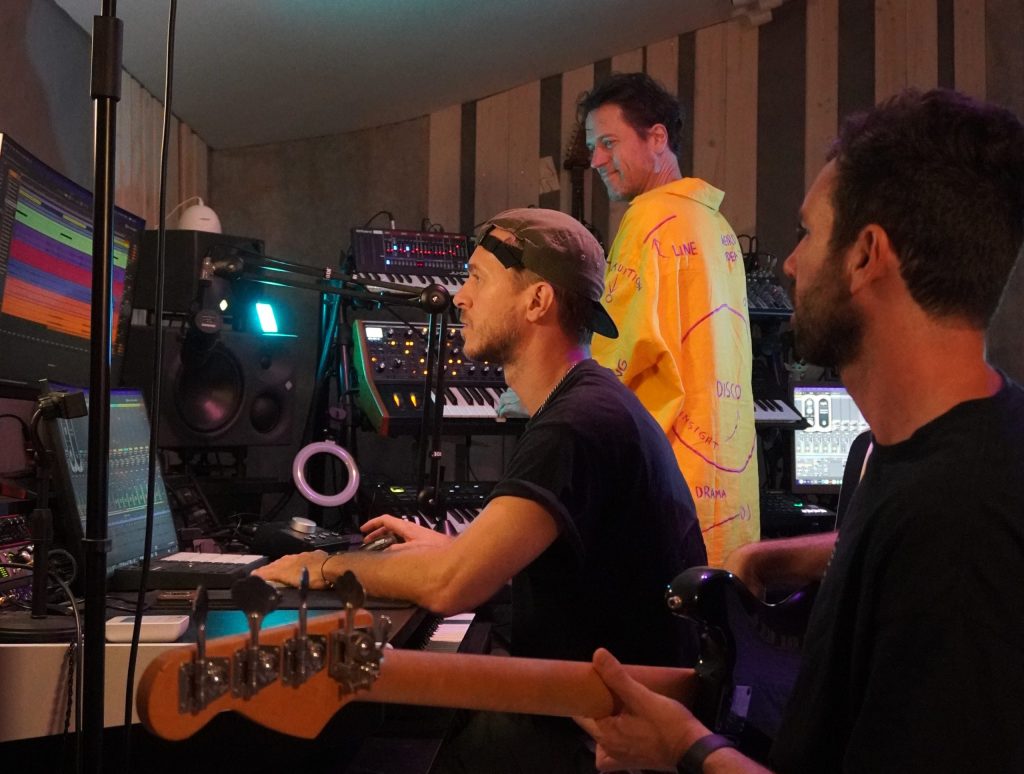
Below, Precursor gives us a peek into his studio for the latest installment of My Toolbox.
Words and photos by Precursor and Jimi de Groot

1. Korg Minilogue XD
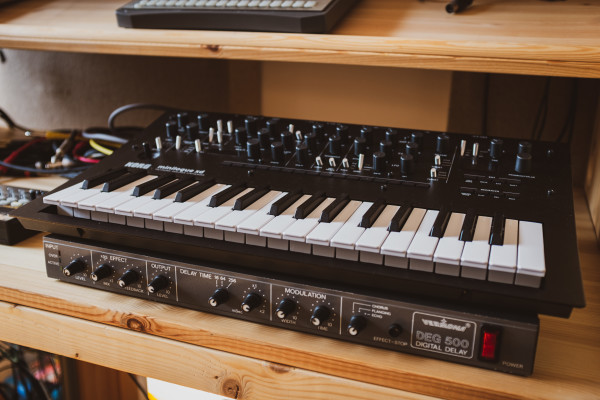
My first synthesizer was the Korg Minilogue. I bought it as a gift for myself after finishing my first album as Precursor. Mostly, I felt like I was bad at making pad sounds and I hoped to fix it by recording it from hardware. I also could not play the piano so I wanted something to practice on, while at the same time being able to produce electronic music. The Minilogue did not let me down. It is an incredible first synth for anyone because of its versatility and friendly price. It has everything you’d expect from a standard modern synthesizer and the original version had a cool delay effect on it too.
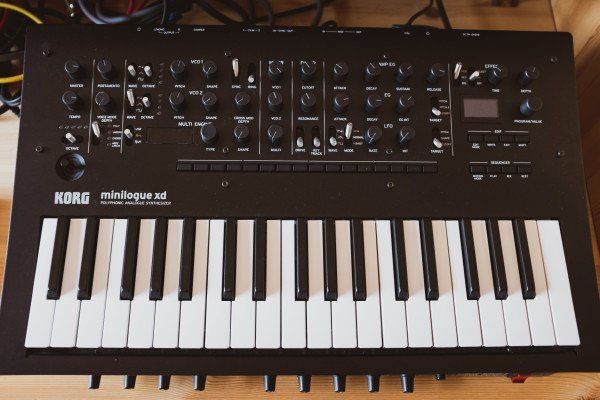
But the filter did not sound so good. In fact, I was quite gutted by the filter and often used digital filters instead. A few years later Korg revised it and a new version came out: Korg Minilogue XD. A silly name, but a huge improvement to the synth. They expanded it with an extra (digital) oscillator, more effects, a better filter, and an overdrive function. I immediately sold my old one and bought it and it now it is exactly what you need even as an experienced producer. It’s no surprise that artists like Bonobo, Moderat, and Rival Consoles have used it on their albums and live shows. I use it for all kinds of sounds, but mostly pads!
2. Modular Synthesizer
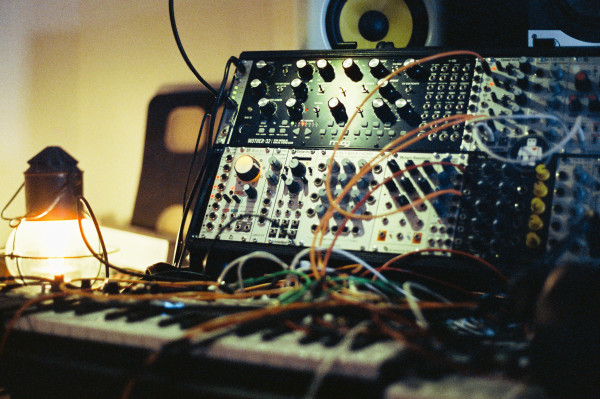
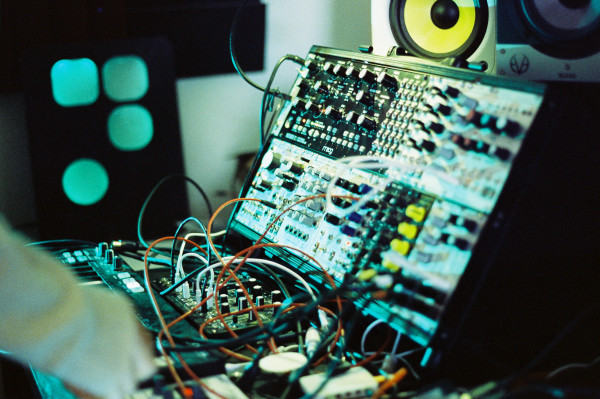
These days my modular synthesizer is the heart of my creative process. In 2017 I invested in some bitcoins and turned a small profit before the inevitable crash that followed. I decided to cash out and start a modular system, something that I always dreamed of, but it just seemed too expensive and tedious. In a way it is tedious to work with, wiring it up and breaking it all down for every single sound, but even a small system has near-infinite sounds that keep inspiring. The very first patch I built ended up in my upcoming album and the second patch I made ended up becoming the basis of my track “Verge,” so it was quickly apparent this would be a major influence on my sound.
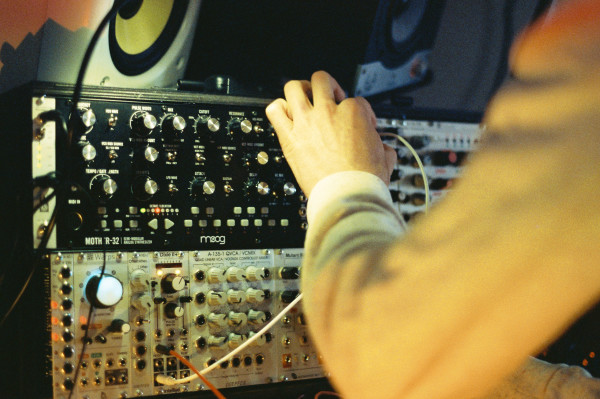
When I just started out, I would make a sequence on my Beatstep Pro and let it generate notes in a loop. Then I continued by patching and playing with the sounds of the modular until it started to sound interesting and then I would just record it and use it in a track. These days my creative process can be infinitely more difficult. For my latest single “Myelin” on Arvet Records, I used a random midi generator that I was beta-testing for a small modular company to mimic the seemingly random firing of neurons in the brain. I started layering these notes with different sounds from the modular and also let the computer join in to randomize notes and create more layers. In this way, I try to combine my love for science and my love for electronic music and I’m really excited for the sounds that I am able to produce by following this path.
3. MFB Tanzbär

The Tanzbär is something that I found browsing YouTube and I guess it was my first real experience with GAS (Gear Acquisition Syndrome). I just loved how it looked, it was a cool drum machine and that is why I bought it, even though the price is anything but friendly. On paper, it is a ‘clone’ from the 808 and 909 drum machines, with some sounds from each synthesizer. In reality, it doesn’t sound a lot like a clone and it has its own character. Producers like Ruede Hagelstein and Hannes Bieger use it all the time and it makes sense: it just sounds like techno. Berlin techno.

When I first got it though, I kind of hated it. It’s incredibly hard to program, not very intuitive. However, I quickly found out I could program it from my Beatstep Pro and that made life a lot easier. I still don’t really use it to jam with, and I stopped using it in live shows too, but from time to time I will have a recording session with it. The sounds of the Tanzbär aren’t crazy fat – I would call it more surgical and precise – except the 808-like kick, which is absolutely booming. I guess that is why people like it. You barely have to mix it and it sounds good in any track. The clap and high hats are not exactly to my taste, but the percussion is very nice. All in all, it produces high-quality sounds that just work in a track, and sometimes that is precisely what you need. For my new album, I have used it extensively, recording it through some tubes that gave the samples a nice saturated sound.
4. Analog Signal Path
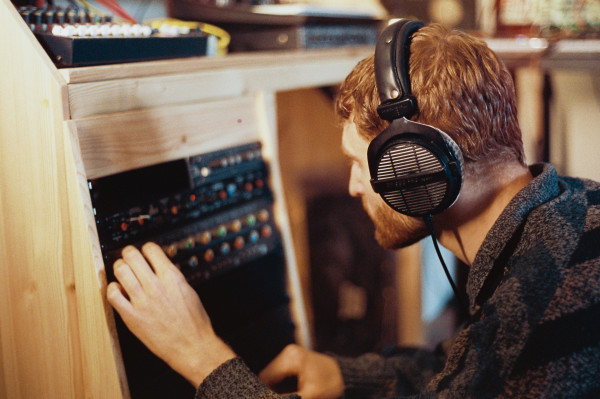
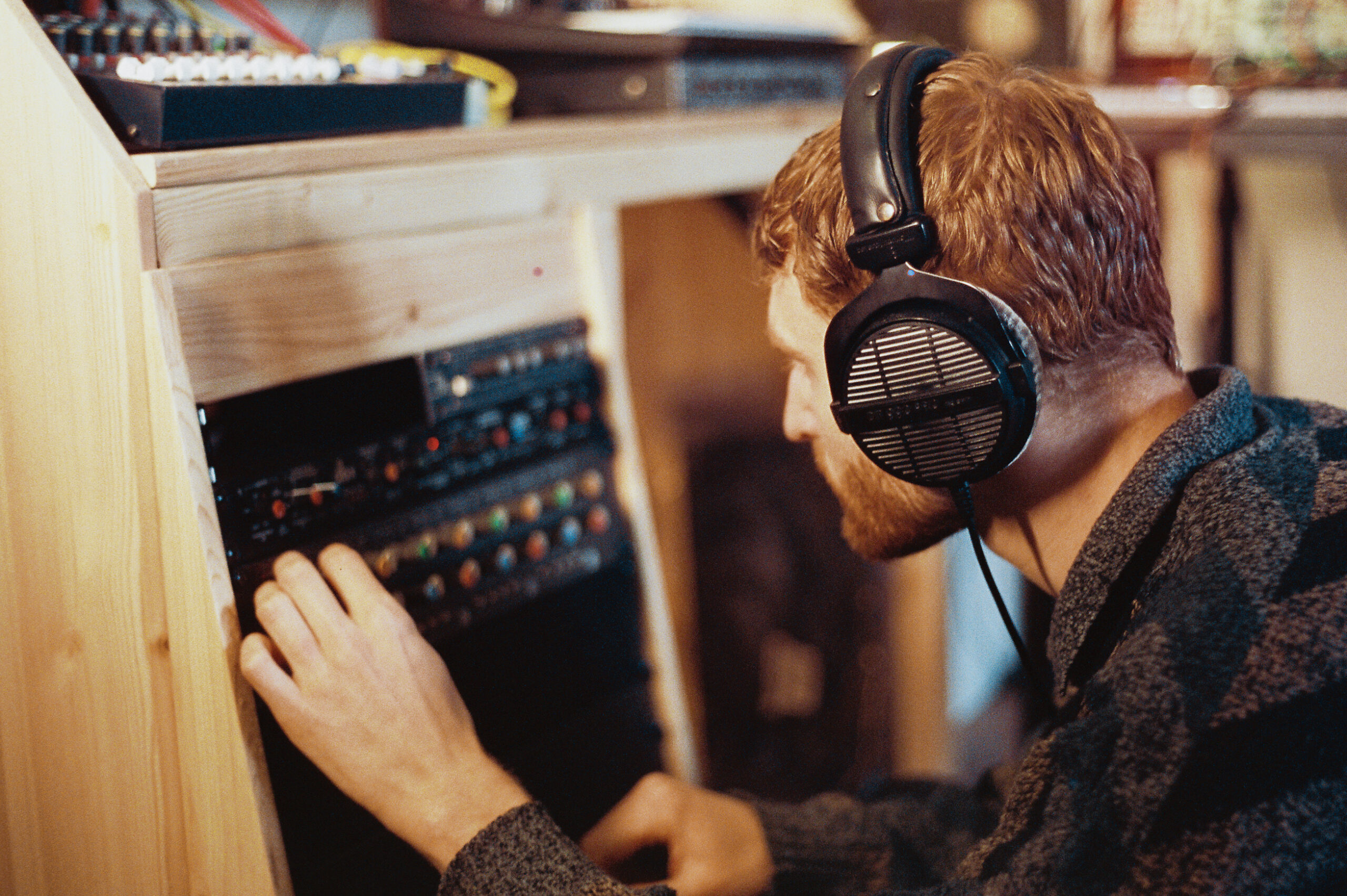
One thing leads to another and before long you are buying machines left and right. In my current set up I am running a dbx 166 (the original, non-revised version), which is essentially a stereo version of the famous dbx 160. It’s not fancy, it’s not expensive, it doesn’t have a lot of options, but it’s a compressor that just sounds right. Often when I mix for other producers, I use it to make the drums pop. Before and after my compressor I have an EQ, so I can choose to EQ before or after compression, or both if needed. For this, I am using a vintage Tascam PE-40.
I really like the sound of it, although mine produces some ground-loop noise. There exists a lot of digital EQs these days that sound really good, but somehow nothing sounds like an analog. I always try to explain it by saying “pushing a digital EQ adds something on top of the sound, but pushing an analog EQ changes how the sound sounds.” It doesn’t ruin the phasing or the dynamics, it just accentuates some part of the sound in a really organic way. I use it quite often to highlight certain parts of a synthesizer sound, vocals, or record drums through it.
Finally, I have an Aurex DR aural exciter. This can give that sparkling high-end that some people associate with analog equipment and again, it’s not actually expensive. None of my hardware effects are, although they might be hard to find being so old. Recently I added a pair of Behringer Vintager Series – another kind of EQ and exciter, but with tubes to add some extra warmth to my recordings.
5. Behringer ARP 2600
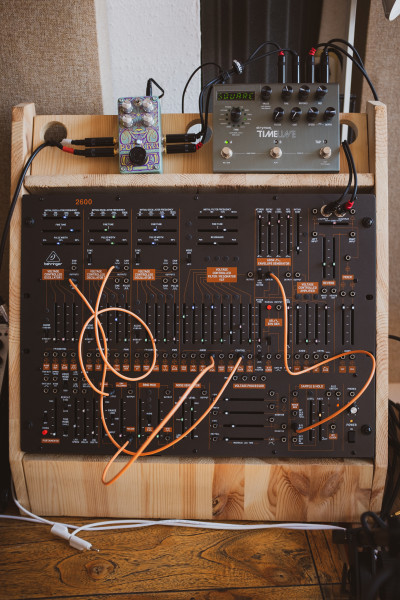
My latest tool in the shed is a Behringer ARP 2600. To me, the original ARP2600 is the most legendary synthesizer ever made. It has been used to create the R2-D2 sounds of Star Wars and many great artists have used it, including techno artists like Stephan Bodzin and Hannes Bieger, but also world-famous artists like Stevie Wonder or Deadmau5. I have fancied for years to own one, but at a price tag ranging between 5.000 up to over 10.000 euros for an original, it was never within my reach to get one. I have considered long to buy a TTSH-4 ARP clone – a high-quality clone that is almost identical to the original and sounds amazing, but its price was still out of my budget… Until Behringer announced their cheap ‘clone’ from the ARP2600.
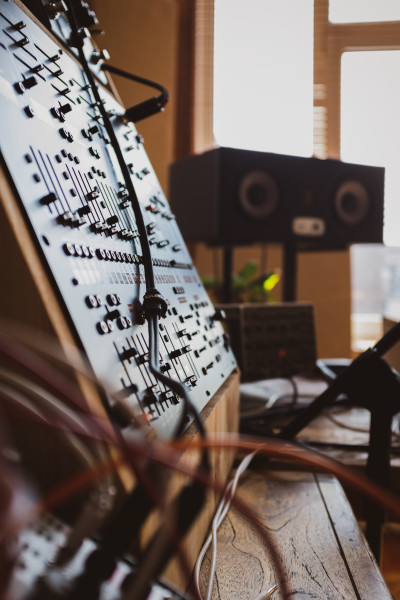
I don’t want to go into the discussion of what Behringer is doing by cloning or remaking a lot of synthesizers for cheaper, but for this almost unattainable synth, I think it is absolutely marvelous that Behringer managed to recreate it at a price affordable for everyone. It may not sound as mean and dirty as some of the originals (mind you, they all sound different!), but it does have the characteristics of the real deal. And because it’s not so mean, it actually needs very little mixing to work in a track. I’m really happy with it and it pairs incredibly well with my modular synthesizer. I will use it for anything from leads to SFX to pad layers or even drum sounds. I hope that one day I will be able to replace it with an original, but until that day comes I am more than sure I will be enjoying the Behringer ARP2600 to the fullest.
Grab your copy here.





![My Toolbox: Lost Desert [Souksonic/All Day I Dream]](https://magneticmag.com/wp-content/uploads/2024/04/lost-desert-press-shot.jpg)